

Whipped body butter delivers long-lasting hydration, barrier support, and soothing relief for dry and sensitive skin — making it one of the most effective natural moisturizers you can add to your daily routine. The Cleveland Clinic notes that shea butter, a core ingredient in most whipped formulas, contains fatty acids and vitamins that soften skin and offer anti-inflammatory benefits for many people. Jeffi’s whipped body butters are built on exactly these principles: all-natural, ingredient-transparent, and Non-GMO Project verified.
Who benefits most:
- 🌿 People with very dry skin, especially on elbows, knees, and feet
- 🌿 Those with sensitive or reactive skin who need a gentle, fragrance-free option
- 🌿 Anyone managing eczema-prone patches who wants an occlusive barrier without harsh chemicals
One quick note: whipped body butter is formulated for the body, not the face. If your skin is oily or acne-prone, avoid applying it to facial skin — the occlusive nature of butters can clog pores in those areas.
Key Takeaways
Whipped body butter is one of the most effective natural moisturizers for dry and sensitive skin when used consistently on damp skin with a fragrance-free, ingredient-transparent formula.
| Point | Details |
|---|---|
| Apply to damp skin | Pat dry after showering and apply immediately to lock in surface moisture. |
| Patch test first | Apply to inner forearm for 24 hours before full-body use, especially for sensitive or eczema-prone skin. |
| Choose fragrance-free | Fragrance and essential oils are the top irritation triggers — go unscented for sensitive skin. |
| Daily use builds results | Consistent daily application, especially in dry or cold climates, visibly improves softness and elasticity over time. |
| Jeffi for dry skin | Jeffi’s Non-GMO verified, all-natural whipped body butters are formulated to nourish and moisturize dry skin with full ingredient transparency. |
Table of Contents
- What are the real benefits of whipped body butter?
- Why the whipped texture makes a real difference
- What ingredients do the work, and which ones to watch
- Is whipped body butter right for your skin type?
- How to use whipped body butter for maximum hydration
- Risks, allergies, and when to stop using it
- What to look for when shopping for whipped body butter
- What dermatologists and clinical guidance say about occlusives
- The thing most people get wrong about whipped body butter
- Jeffi whipped body butter: natural ingredients, real results
- Sources
What are the real benefits of whipped body butter?
Whipped body butter does more than just moisturize. Here is what you can realistically expect when you use it consistently, along with the ingredient-level reason behind each benefit.
- Long-lasting hydration. Butters and oils form an occlusive layer that slows water loss from the skin’s surface, keeping skin hydrated for hours after application.
- Barrier repair. Fatty acids in shea and cocoa butter replenish the lipids your skin barrier needs to stay intact, especially after harsh weather or frequent washing.
- Reduces flakiness and rough texture. Emollient ingredients fill the gaps between skin cells, smoothing rough patches on elbows, knees, and heels almost immediately.
- Soothes irritation and itchiness. Shea butter’s anti-inflammatory properties can calm reactive skin, making it a go-to for eczema-prone areas.
- Supports skin elasticity. Regular use of fatty-acid-rich butters helps skin stay supple. Consistent daily application is especially common in colder months or dry climates, where it can visibly improve softness and elasticity over time.
- Nutrient delivery. Vitamins A and E found in shea and other carrier oils act as antioxidants, protecting skin cells from oxidative stress.
- Moisture-sealing protection. An anhydrous (water-free) whipped butter forms a protective barrier that locks in moisture, making it particularly effective on very dry spots.
- Long shelf life without harsh preservatives. Because most whipped body butters contain no water, they resist microbial growth and can last for a long time without synthetic preservatives.
- Calms post-shave or post-wax skin. The emollient and anti-inflammatory combo makes whipped butter a gentle option for soothing skin after hair removal.
- Improves the look of dull, tired skin. The natural sheen from carrier oils gives skin a healthy glow without glitter or artificial shimmer.
🌿 Skin-soothing signal: The Cleveland Clinic highlights shea butter’s fatty acid content as a key reason it softens skin and reduces inflammation — which is why it appears in so many dermatologist-recommended dry-skin formulas.
Why the whipped texture makes a real difference
The texture is not just a marketing choice. Whipping body butter incorporates air into the fat structure, which increases surface area and breaks down the dense, waxy consistency of raw butters like shea or cocoa. The result spreads more easily, requires less product per application, and absorbs faster than a solid block of butter.
Here is how the three main formats compare in practice:
- Traditional solid body butter: Dense, requires warming in hands, can feel heavy and slow to absorb. Best for very dry or cracked skin that needs maximum occlusion.
- Whipped body butter: Lighter feel, spreads quickly, absorbs faster while still providing occlusive protection. The sweet spot for most dry and sensitive skin types.
- Body lotion: Lightest texture, absorbs fastest, but contains water and typically less occlusive power. Better for normal or slightly dry skin in humid climates.
Formulators can push the “non-greasy” quality even further. Adding fast-absorbing oils, starches, or esters during the whipping process changes how the product feels on skin without reducing its moisturizing ability. That is why two whipped body butters with similar ingredient lists can feel completely different at application.
Pro Tip: If your whipped butter feels too heavy, try applying a thinner layer to damp skin right after your shower — the water on your skin helps it spread further and absorb faster.
What ingredients do the work, and which ones to watch
The benefits of any whipped body butter trace directly back to its ingredient list. Here is a quick breakdown of the most common ones:
| Ingredient | What it does | Best for | Comedogenic note |
|---|---|---|---|
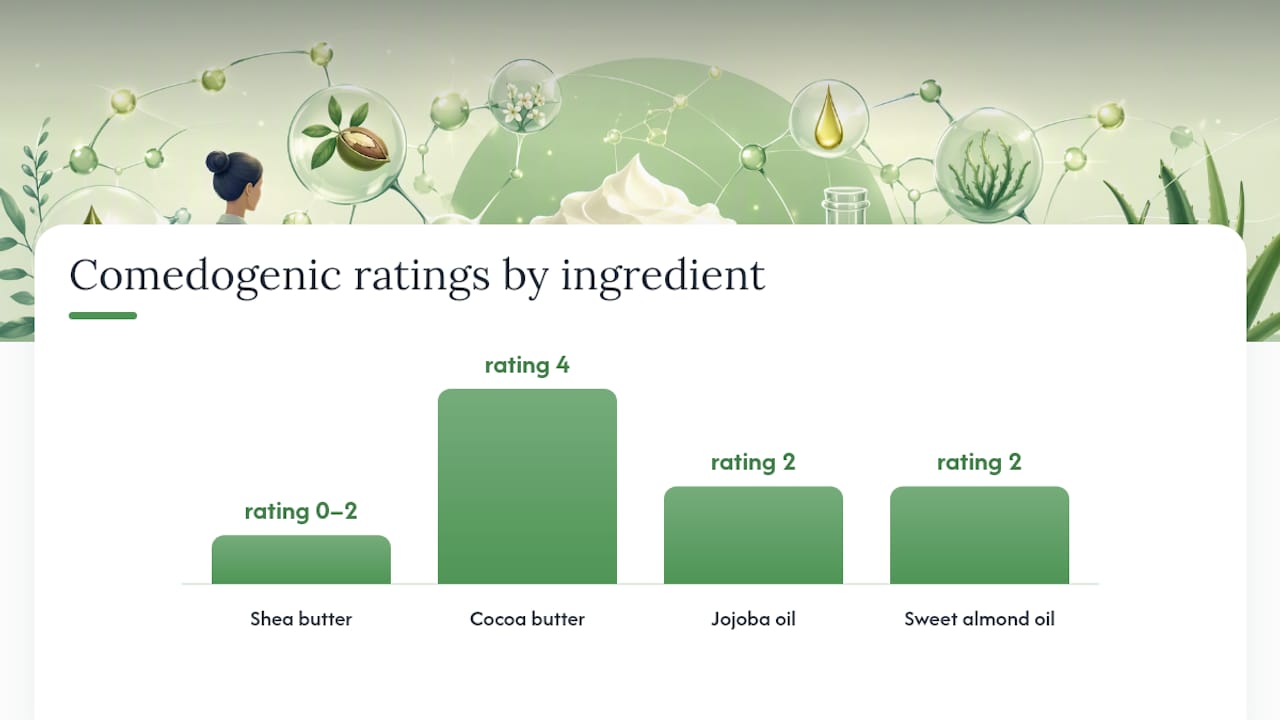
| Shea butter | Emollient, anti-inflammatory, barrier support | Dry, sensitive, eczema-prone | Low (rating 0–2) |
| Cocoa butter | Occlusive, softens rough skin, adds richness | Very dry, cracked skin | Moderate (rating 4) — avoid on acne-prone areas |
| Jojoba oil | Lightweight, mimics skin’s natural sebum, non-greasy | All skin types | Very low (rating 2) |
| Sweet almond oil | Emollient, vitamin E source, gentle | Sensitive, dry skin | Low (rating 2) |
| Arrowroot starch | Mattifying, reduces greasy feel | Oily-feeling skin | Non-comedogenic |
| Vitamin E (tocopherol) | Antioxidant, slows oil oxidation, skin conditioning | All skin types | Low |
| Fragrance / essential oils | Scent only — no skin benefit | None | Irritation risk for sensitive skin |
Vitamin E deserves a special mention: formulators add it not just for skin conditioning but to slow the oxidation of oils and butters, extending shelf life naturally. Arrowroot starch is another smart addition — it absorbs excess surface oil and gives the product a silkier, less greasy finish.
Fragrance and essential oils are the most common irritation triggers in body butters. If your skin is sensitive or reactive, look for fragrance-free formulas first. Even “natural” essential oils like lavender or citrus can cause contact dermatitis in some people.
Is whipped body butter right for your skin type?
Dry skin: Yes, absolutely. Whipped body butter is one of the best natural moisturizers for dry skin. The occlusive and emollient combination addresses both the symptom (rough, tight skin) and the cause (compromised barrier).
Sensitive skin: Generally yes, with one condition: choose a fragrance-free formula and do a patch test first. Apply a small amount to your inner forearm, wait 24 hours, and check for redness, itching, or swelling before using it more broadly.
Eczema-prone skin: Whipped butter can be very helpful on eczema-prone patches, particularly during flare-free periods. The fatty acids in shea butter support barrier repair, and the occlusive layer reduces the transepidermal water loss that worsens eczema. For active flares or severe eczema, check with a dermatologist before introducing new products.
Oily or acne-prone skin: Use with caution on the body, and avoid the face entirely. Cocoa butter in particular has a moderate comedogenic rating, so if you are prone to body acne on your back or chest, look for formulas built around jojoba or arrowroot rather than heavy cocoa butter.
Combination skin: You can use whipped body butter on dry areas (shins, elbows, feet) while skipping oilier zones. A lighter formula with fast-absorbing oils works well here.
- ✅ Patch test: apply to inner forearm, leave for 24 hours, check for any reaction before full-body use
- ✅ For eczema: use on calm skin, not active weeping or broken skin
- ✅ For oily skin: choose jojoba-based or starch-containing formulas over heavy cocoa butter
How to use whipped body butter for maximum hydration
Getting the most out of your whipped body butter comes down to timing and technique. Follow these steps for the best results:
- Shower or bathe first. Warm water opens pores and softens skin, making it more receptive to moisture.
- Pat skin dry, leaving it slightly damp. Do not rub completely dry — a little surface moisture helps the butter spread and locks in hydration more effectively.
- Scoop a small amount (roughly a dime to quarter size for each area). Less is more with whipped butter. You can always add more, but too much leaves a heavy residue.
- Warm it between your palms for 5–10 seconds. This softens the texture further and makes spreading easier and more even.
- Apply to high-need areas first: elbows, knees, heels, shins, and any particularly dry patches.
- Allow 2–3 minutes before dressing. This gives the product time to absorb and prevents transfer onto clothing.
Frequency: Daily use is the most effective approach, particularly in winter or in dry climates. If you live somewhere humid, every other day may be enough to maintain soft, healthy skin.
Pro Tip: For extra-dry heels, apply a generous layer of whipped body butter at bedtime, then slip on a pair of cotton socks overnight. You will notice a difference by morning.
Risks, allergies, and when to stop using it
Whipped body butter is safe for most people, but a few real risks are worth knowing before you commit to daily use.
Main risks to watch for:
- Allergic contact dermatitis from tree nuts (shea and cocoa are tree nut derivatives) — rare but possible, especially if you have a known tree nut sensitivity
- Clogged pores on acne-prone areas, particularly from cocoa butter or other high-comedogenic oils
- Fragrance irritation from synthetic fragrances or essential oils, even in “natural” products
- Preservative reactions in water-containing whipped formulas — anhydrous (water-free) butters carry much lower risk here
Stop using immediately and consult a dermatologist if you notice:
- Rapid itching, burning, or stinging within minutes of application
- Redness, hives, or swelling at the application site
- Pustules or worsening breakouts in the days following use
- Symptoms that spread beyond the application area
🌿 Patch test first, always. A short, simple patch test on your inner forearm is one of the most effective ways to spot an irritant or allergic response before applying a new product all over your body. Apply a small amount, leave it for 24 hours without washing, and check the area carefully.
Shelf life note: Anhydrous whipped body butters are naturally resistant to microbial growth and typically have a long shelf life. Water-containing whipped formulas require preservatives — check the label and follow the manufacturer’s recommended use-by date.
What to look for when shopping for whipped body butter
A good whipped body butter for dry or sensitive skin does not need a long ingredient list. Here is a practical checklist:
Look for:
- ✅ Fragrance-free option (or unscented) if your skin is sensitive or reactive
- ✅ Short, readable ingredient list with recognizable names
- ✅ Shea butter or jojoba oil as a primary ingredient (listed near the top)
- ✅ Vitamin E (tocopherol) as a natural preservative and antioxidant
- ✅ Non-GMO or organic certifications for ingredient transparency
- ✅ Arrowroot starch or a similar mattifying agent if you dislike heavy residue
Avoid:
- ❌ High fragrance content (listed as “fragrance” or “parfum” near the top of the ingredient list)
- ❌ Unknown synthetic preservatives in water-based formulas
- ❌ Cocoa butter as the primary ingredient if you are acne-prone
- ❌ Vague ingredient labels with no percentages or sourcing information
Pro Tip: When trying a new whipped body butter, start with the smallest available size. A 2 oz jar is enough to do a proper patch test and a week of use on one area before committing to a full-size product.
Ingredient transparency is one of the clearest buying signals. Brands that list every ingredient clearly, disclose their sourcing, and carry third-party certifications are giving you the information you need to make a confident choice.
What dermatologists and clinical guidance say about occlusives
Dermatologists consistently recommend occlusives and emollients as the foundation of dry-skin care. The clinical reasoning is straightforward: occlusives physically slow transepidermal water loss (TEWL) by forming a layer over the skin surface, while emollients fill the microscopic gaps between skin cells, improving texture and reducing irritation.
Shea butter sits at the intersection of both functions. The Cleveland Clinic describes it as an emollient with anti-inflammatory potential, attributing those properties to its fatty acid and vitamin content. That is why it appears in so many dermatologist-recommended formulas for eczema and dry skin.
🌿 Clinical context: Occlusives reduce transepidermal water loss, which is the primary driver of dry, tight, and flaky skin. Fatty acids from ingredients like shea butter also support the skin’s own lipid barrier, addressing the underlying cause rather than just the surface symptom.
Topical occlusives work immediately and locally. For people interested in supporting skin health from the inside as well, ingestible beauty nutrients can complement topical care over the long term, though they work through a different mechanism and on a longer timeline.
For severe eczema, persistent rashes, or reactions that do not resolve after stopping a product, a dermatologist visit is the right next step. Over-the-counter body butters are not a substitute for prescription treatment when the skin barrier is significantly compromised.
The thing most people get wrong about whipped body butter
Most people treat whipped body butter as a luxury item — something to use occasionally after a bath when they feel like pampering themselves. That framing undersells it considerably.
The real value of a well-formulated whipped body butter is consistency. Barrier repair and lasting hydration do not happen from a single application. They build over days and weeks of regular use, especially on chronically dry areas like heels and elbows where the skin barrier has been compromised for a long time. Using it once a week and wondering why your skin is still rough is like watering a plant once a month and wondering why it looks dry.
The other thing people overlook is ingredient quality. Not all whipped body butters are the same. A formula built on high-quality shea butter, non-comedogenic carrier oils, and vitamin E will outperform a cheaper product padded with mineral oil and synthetic fragrance — even if both claim to be “moisturizing.” Reading the ingredient list takes 30 seconds and tells you almost everything you need to know.
Jeffi whipped body butter: natural ingredients, real results
Jeffi’s whipped body butters are built around the selection criteria covered in this article: all-natural ingredients, Non-GMO Project verified, and formulated with ingredient transparency at the core. If you have been reading this guide and checking boxes, Jeffi checks most of them.

Three things that set Jeffi’s whipped body butters apart for dry and sensitive skin:
- 🌿 Ingredient transparency: Every product lists its ingredients clearly, so you know exactly what you are putting on your skin — no mystery “fragrance” blends hiding irritants.
- 🌿 Natural formulation: No DEET, no harsh synthetics. The same commitment to clean, effective ingredients that goes into Jeffi’s bug bite relief products carries through to the skin care line.
- 🌿 Dry-skin focus: Formulated to nourish and moisturize dry skin, with shea butter and carrier oils that deliver the occlusive and emollient benefits described throughout this guide.
Ready to give your skin the hydration it has been asking for? Browse Jeffi’s whipped body butter collection and find the right option for your skin type.
Sources
- Shea butter benefits | Cleveland Clinic
- DIY Whipped Body Butter Recipe (Non-Greasy) - Almost Zero Waste
- How to make a whipped body butter - Mini Monai | Formulate cosmetics
- The Ultimate Guide to Whipped Body Butter