

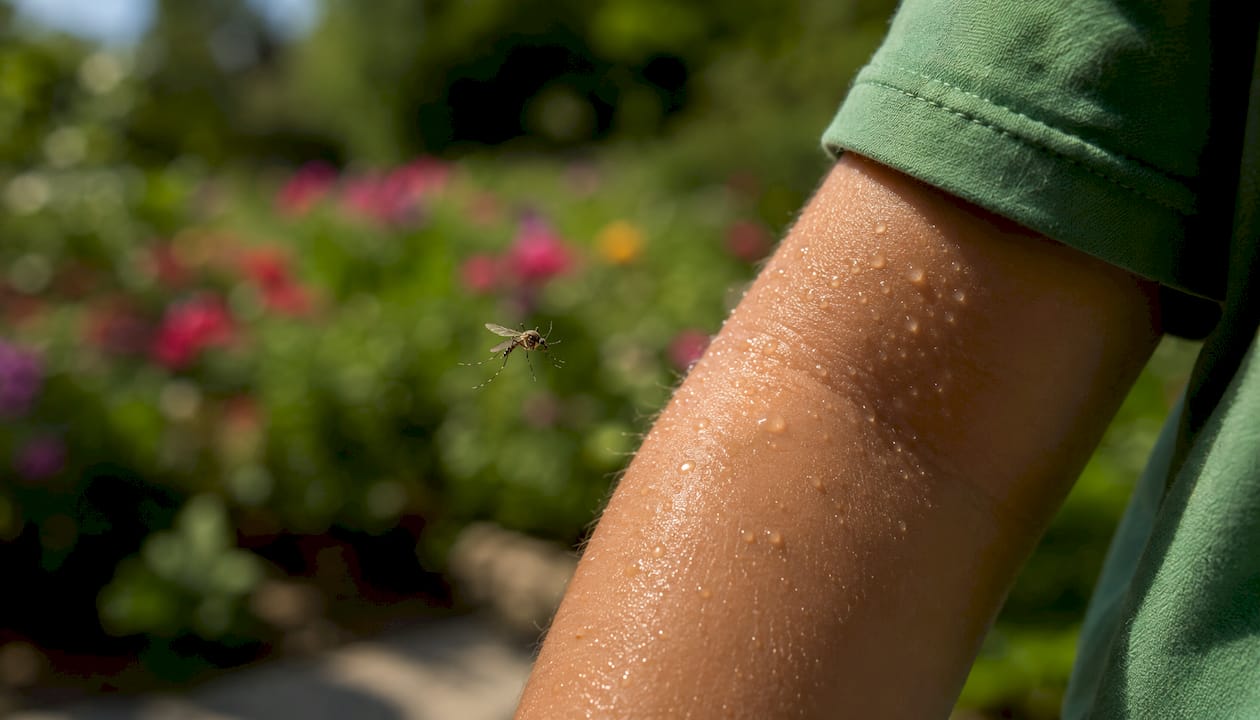
Yes, sweat can make children more attractive to some mosquitoes — because skin microbes transform sweat into odorous compounds that mosquitoes detect and follow. Here’s what that means in practice:
- Microbial VOCs are the real culprit. Fresh sweat is nearly odorless. Bacteria on your child’s skin convert sweat components into volatile organic compounds (VOCs) like ammonia and short-chain carboxylic acids that mosquitoes can smell.
- ️ CO2 and lactic acid work together. Lactic acid in sweat becomes highly attractive to mosquitoes when combined with exhaled CO2 — and active, running kids produce both in increased amounts.
- ⏱️ Aged sweat is more dangerous than fresh sweat. Research shows incubated sweat — sweat that has been sitting on skin and processed by bacteria — is significantly more attractive than sweat just produced.
Understanding what role sweat plays in attracting mosquitoes to kids helps you make smarter, safer choices for your family. The sections below break down the biology, then give you a clear action plan.
Table of Contents
- How mosquitoes find your child in a crowd
- What in your child’s sweat actually attracts mosquitoes
- Why some kids get bitten more than others
- Practical, child-safe ways to reduce mosquito bites
- What to do after your child gets bitten
- What the research actually proves (and where the gaps are)
- Key Takeaways
- Jeffi’s take on sweat, science, and child-safe skincare
- Jeffi’s natural products for a child-safe mosquito-care routine
- Useful sources and further reading
How mosquitoes find your child in a crowd
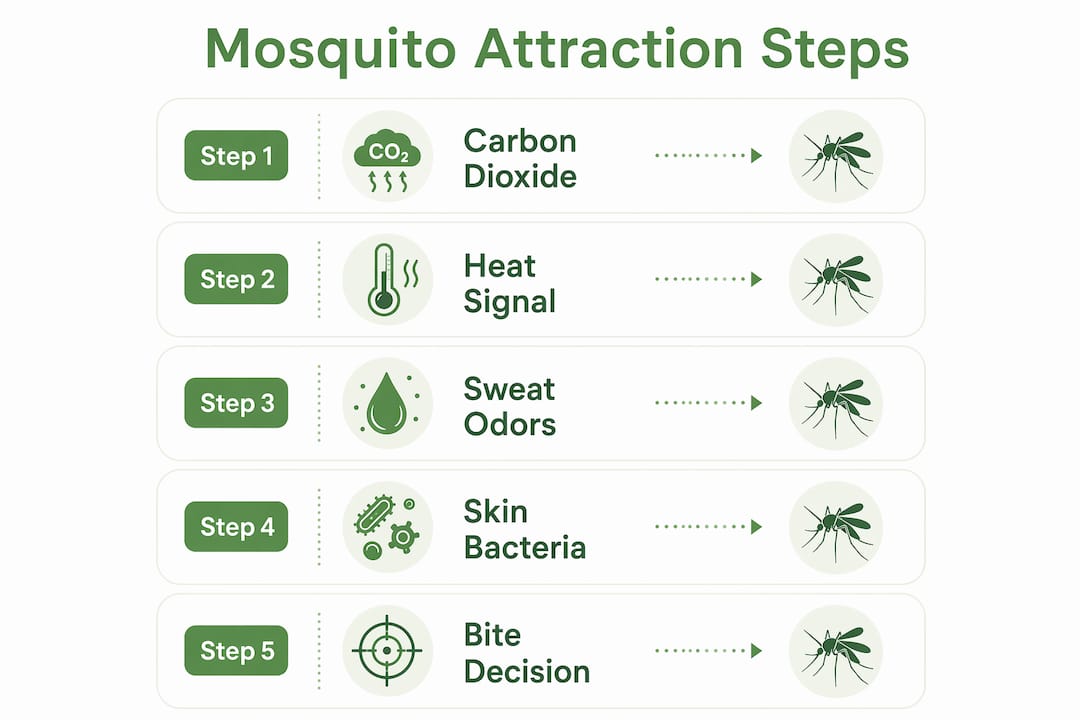
Mosquitoes don’t just stumble onto people randomly. Their host-seeking behavior follows a precise, layered sequence — from long range to skin contact:
- CO2 detection (long range, 30+ feet). A mosquito first senses exhaled carbon dioxide. This activates and orients it toward a potential host.
- Skin odor guidance (mid range). Once CO2 draws the mosquito closer, sweat-derived VOCs — lactic acid, ammonia, carboxylic acids — guide it toward the source.
- Heat and humidity confirmation (close range). Body warmth and moisture confirm a warm-blooded host is nearby, triggering the approach.
- Tasting on landing. After landing, mosquitoes use chemoreceptors on their legs to “taste” skin chemistry before probing for a bite.
No single cue drives the whole process. A mosquito needs the full picture — CO2, odor, and heat together — to commit to biting. That’s why blocking just one signal rarely works on its own.
Pro Tip: A child running and laughing outdoors is breathing harder, sweating more, and warming up — producing all three cues simultaneously. That’s peak bite-risk territory. Plan outdoor play during lower-mosquito hours (mid-morning or late afternoon) when possible.
What in your child’s sweat actually attracts mosquitoes
The short answer: it’s not the sweat itself — it’s what bacteria do to it. Freshly secreted sweat is largely odorless. The smell that mosquitoes track comes from microbial catabolism — bacteria breaking down sweat components into detectable VOCs.
- Eccrine glands (all over the body, especially feet and palms) produce lactic acid, ammonia, and amino acids — the raw materials bacteria convert into mosquito attractants.
- Apocrine glands (armpits, groin — active after puberty) secrete proteins and lipids that bacteria, particularly Corynebacterium and Staphylococcus species, convert into short-chain carboxylic acids like propanoic acid and 3-methylbutanoic acid.
- Sebaceous glands contribute lipids that feed the same microbial pathways, adding to the odor profile.
The skin microbiome actively shapes how attractive a person smells to mosquitoes. Specific bacterial genera and their metabolic pathways produce mVOCs that can either increase or decrease attractiveness — which is why two kids playing in the same yard can get bitten very differently.
Research note: Studies on Anopheles gambiae found that incubated sweat was significantly more attractive than fresh sweat — confirming that bacterial processing, not sweat itself, is the primary driver of mosquito attraction.
Species matter too. Aedes aegypti (the dengue and Zika vector) responds strongly to lactic acid combined with CO2, while Anopheles gambiae (the malaria mosquito) is more responsive to ammonia. No single repellent strategy works equally against all species.
Why some kids get bitten more than others
Children aren’t just small adults when it comes to mosquito attraction. Several biological factors shift the equation:
- Smaller body mass and surface area. Less body mass means less CO2 exhaled and a smaller odor plume — which may partly explain why infants and young children are sometimes bitten less frequently than adolescents and adults.
- Immature apocrine and sebaceous glands. These glands don’t fully activate until puberty, so younger children produce fewer of the lipid-rich secretions that bacteria convert into the most potent carboxylic acid attractants.
- Different skin microbiome. A child’s microbiome is still developing. The bacterial communities on their skin differ from adults’, producing a different VOC profile — generally less “pungent” and potentially less attractive to some mosquito species.
- Activity level and CO2 output. Active kids breathe harder, which amplifies the CO2 signal that sensitizes mosquitoes to sweat odors. A sprinting child can temporarily become more attractive than a resting adult.
- Clothing and exposed skin. Kids often wear shorts and sandals, leaving feet and ankles exposed — areas rich in eccrine glands and commonly favored landing zones for mosquitoes.
Pro Tip: Feet are disproportionately targeted because eccrine glands are densely packed there and bacteria thrive in warm, enclosed shoes. After outdoor play, a quick wash of your child’s feet can reduce the aged-sweat odor that lingers and keeps attracting mosquitoes.
Practical, child-safe ways to reduce mosquito bites
A layered approach works best: barriers, targeted repellents, environmental controls, and gentle skincare habits together outperform any single measure.
- ✅ Dress for protection. Light-colored, long-sleeved shirts and pants reduce exposed skin. Mosquitoes are attracted to dark colors and can bite through thin fabrics.
- ✅ Time outdoor play wisely. Mosquito activity peaks at dawn and dusk. Mid-morning and late afternoon are lower-risk windows for outdoor play.
- ✅ Eliminate standing water. Birdbaths, clogged gutters, and even bottle caps hold enough water for mosquito breeding. Empty them weekly.
- ✅ Use window and door screens. Keep screens in good repair to prevent indoor exposure overnight.
- ✅ Wash and change clothes after heavy play. Removing sweat-soaked clothing reduces the aged-sweat VOC load on skin.
- ✅ Gentle cleansing after outdoor time. A mild soap wash removes bacteria-processed sweat from skin, cutting the odor signal mosquitoes follow.
- ✅ Apply age-appropriate repellents. The EPA registers DEET, picaridin, IR3535, and oil of lemon eucalyptus (OLE) as effective. Key age guidance: DEET and picaridin are generally safe for children over 2 months when used as directed; OLE is not recommended for children under 3 years. Always follow product label instructions and consult your pediatrician.
⚠️ Warning: Never apply repellents to a child’s hands, near eyes or mouth, or on broken skin. Do not use undiluted essential oils on infants — they are not equivalent to EPA-registered repellents and can cause skin reactions. Apply repellent over (not under) clothing when possible.
When layering a moisturizer with a repellent, apply the moisturizer first, let it absorb fully, then apply the repellent as the label directs. This keeps both products effective without diluting the repellent.
What to do after your child gets bitten
Most mosquito bites are a minor nuisance, not a medical emergency. Basic care handles the vast majority:
- Wash the bite area with soap and water right away to remove surface bacteria.
- Apply a cold compress for 10 minutes to reduce swelling and calm the itch reflex.
- Use a child-safe topical. Calamine lotion or a low-strength hydrocortisone cream (0.5–1%) can relieve itching in children — check with your pediatrician on age-appropriate use.
- Discourage scratching. Scratching breaks skin and opens the door to secondary bacterial infection.
- Monitor for 24–48 hours. Mild redness and swelling are normal. Watch for signs that something more serious is developing.
Seek medical attention if you notice:
- Signs of anaphylaxis: hives spreading beyond the bite, difficulty breathing, swelling of the face or throat
- Expanding redness, red streaking from the bite, or warmth (signs of infection)
- Fever within 48 hours of a bite, especially after travel to a region with dengue, malaria, or West Nile virus
- A bite that becomes increasingly painful rather than improving
Natural options like aloe vera gel or colloidal oatmeal-based lotions can soothe mild itch and support skin recovery as part of a gentle aftercare routine.
What the research actually proves (and where the gaps are)
The science is solid on the core mechanism: skin bacteria transform sweat into the VOCs that mosquitoes detect and follow. That part is well-established across multiple species and study designs.
Pro Tip: Most compelling studies use controlled lab olfactometers — devices where mosquitoes smell but can’t bite. Real outdoor conditions involve wind, competing odors, and temperature variation that can shift outcomes significantly. Treat lab findings as directional, not absolute.
“The mosquito is looking for what is often called a coincidence detector. It’s not just one signal, but many signals — all of which, when they coincide, provide the strongest degree of impulse to drive this behavior.” — Laurence Zwiebel, quoted by NPR
Where the evidence is still developing:
- Individual variability is real but not fully explained. Why one child gets bitten constantly while a sibling escapes is likely a microbiome and VOC-profile question — but the specific bacterial genera responsible are still being mapped.
- Species-specific responses mean findings from Anopheles studies don’t always transfer to Aedes or Culex species.
- Sample sizes in microbiome-attraction studies are often small, and lab conditions don’t fully replicate the complexity of outdoor environments.
Researchers are exploring whether microbiome-friendly skincare — including prebiotic formulations — could shift the skin’s bacterial balance toward less-attractive VOC profiles. That’s a promising direction, though not yet a proven prevention strategy.
Key Takeaways
Sweat attracts mosquitoes to children primarily through the VOCs that skin bacteria produce from sweat, amplified by CO2 from breathing — and a layered protection strategy is the most reliable response.
| Point | Details |
|---|---|
| Bacteria, not sweat, drive attraction | Skin microbes convert sweat into VOCs like ammonia and carboxylic acids that mosquitoes detect. |
| CO2 amplifies the risk | Active, breathing-hard kids produce more CO2, which sensitizes mosquitoes to sweat odors simultaneously. |
| Kids differ from adults biologically | Immature apocrine glands and a developing microbiome mean younger children often produce a less potent odor profile. |
| Layer your protection | Combine clothing, timing, standing-water removal, gentle cleansing, and age-appropriate repellents for best results. |
| Jeffi fits the routine | Jeffi’s Non-GMO Project verified Bug Bite Relief lotion and natural moisturizers support gentle aftercare and can be layered safely with repellents. |
Jeffi’s take on sweat, science, and child-safe skincare
The research on sweat and mosquito attraction points to something that aligns directly with what Jeffi believes about skincare: what you put on your child’s skin matters, and gentle, natural formulations are worth prioritizing. The science shows that skin bacteria and the VOCs they produce are central to mosquito attraction — which means skincare habits that support a healthy skin environment are genuinely relevant to bite prevention, not just comfort. Jeffi’s commitment to Non-GMO Project verified, all-natural formulations reflects that philosophy.
Jeffi’s natural products for a child-safe mosquito-care routine
Natural moisturizers and gentle cleansing products do more than keep skin soft — they help reduce the aged-sweat residue that mosquitoes find most attractive, and they support skin recovery after bites.

Jeffi’s product line is built around that idea. The Bug Bite Relief lotion is Non-GMO Project verified and formulated with all-natural ingredients, making it a reassuring choice for soothing bites on children’s sensitive skin. The whipped body butters and hand & body lotion work as a moisturizing base layer — apply first, let absorb, then apply your EPA-registered repellent on top as the label directs. The sugar scrub is a gentle way to clear bacteria-processed sweat from skin after outdoor play, reducing the odor load before the next adventure.
For caregivers who want a complete kit, Jeffi’s bundles pair moisturizing and bite-relief products together. Visit jeffi.us to see the full range and find the right fit for your family’s outdoor routine.
Useful sources and further reading
- Human attractive cues and mosquito host-seeking behavior (PMC) — Covers the full CO2 → odor → heat hierarchy and how sweat-derived VOCs guide mosquito host-seeking. Referenced in Sections 2, 3, and 7.
- Sweaty skin: an invitation to bite? (ScienceDirect) — Key review on sweat composition, gland types, microbiome contributions, and age/gender differences in mosquito attraction. Referenced in Sections 1, 3, and 4.
- Skin microbiome alters attractiveness to Anopheles mosquitoes (BMC Microbiology) — Links specific bacterial genera and metabolic pathways to mosquito attractiveness differences; addresses lab-vs-field limitations. Referenced in Sections 3, 4, and 7.
- How mosquitoes use human sweat to find and bite us (NPR) — Accessible explanation of the Ir8a receptor, lactic acid detection, and the tasting phase after landing. Referenced in Sections 2 and 7.
- Chemical cocktail in skin summons disease-spreading mosquitoes (UCR News) — Explains lactic acid’s synergy with CO2 and other VOCs in attracting Aedes mosquitoes. Referenced in Sections 1 and 3.
This article is general information for educational purposes and does not constitute medical advice. For repellent safety guidance specific to your child’s age and health, consult your pediatrician or refer to current EPA and CDC recommendations.