

Most sugar scrubs stay safe to use for 2 months to 2 years, depending on whether they contain water and how they’re stored. The hard rule: if you see mold, smell anything sour or rancid, notice unexpected color changes, or know that water has entered a preservative-free jar, toss it immediately. No exceptions.
Here’s a quick-reference breakdown before we go deeper:
Typical shelf-life quick rules:
- 🌿 Homemade, water-free (anhydrous): up to 6 months if stored airtight and dry; about 2 months without careful storage
- ✅ Store-bought commercial scrubs: 6 months to 2 years, with most brands recommending use within 6–12 months of opening
- ⚠️ Homemade with water, aloe, or hydrosols: weeks to 2–3 months maximum without a broad-spectrum preservative
- 🔒 Unopened, properly stored: natural skincare products can last up to 2–3 years before opening
Hard toss rules (non-negotiable):
- Visible mold or fuzzy growth of any color
- Off, sour, or rancid smell
- Unexpected color change or dark spots
- Foamy, slimy, or separated texture with visible water pooling
- Any known water contamination in a preservative-free jar
Key Takeaways
A water-free sugar scrub stored in an airtight container away from heat and moisture can last up to 6–12 months, but any sign of mold, off smell, or water contamination means it’s time to discard immediately.
| Point | Details |
|---|---|
| Shelf life by formula | Anhydrous scrubs last 6–12 months; water-containing scrubs without a preservative last weeks. |
| Hard toss triggers | Discard on any mold, rancid smell, color change, or known water contamination. |
| Storage habit that matters most | Use a dry spatula every time and store below 75°F in an airtight, opaque container. |
| Preservatives are required for water formulas | Any scrub with aloe, hydrosol, or water needs a broad-spectrum preservative — Vitamin E alone is not enough. |
| Jeffi’s approach | Jeffi’s natural scrubs and whipped body butters carry clear PAO labeling for safe, confident use. |
Table of Contents
- How long does a sugar scrub actually last by formula type?
- What shortens your sugar scrub’s shelf life faster than you’d expect
- How to tell if your sugar scrub has gone bad
- Storage best practices that actually extend shelf life
- When do you actually need a preservative in a sugar scrub?
- Gifting sugar scrubs safely: labeling and disposal
- Jeffi’s take on natural scrub safety
- Jeffi’s natural scrubs: properly labeled and ready to use
- Sources
How long does a sugar scrub actually last by formula type?
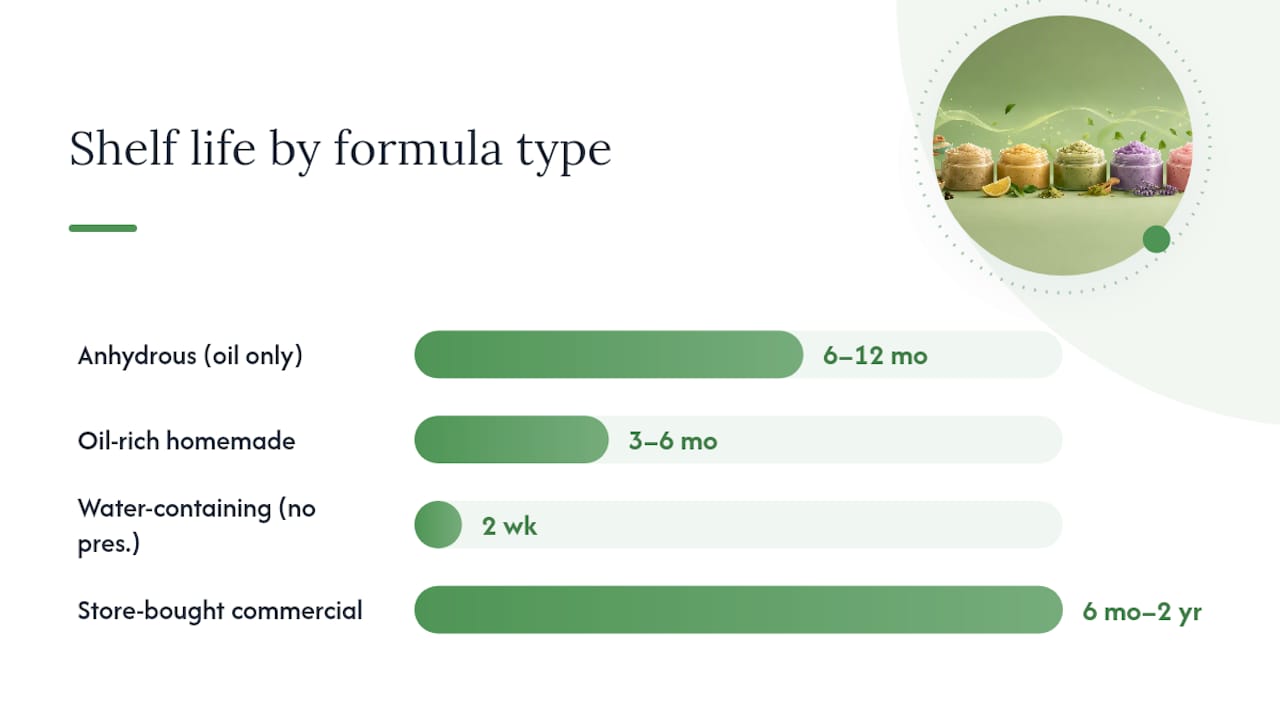
Not all scrubs age the same way. The single biggest factor is whether the formula contains free water. Here’s a practical breakdown:
| Formula Type | Typical Shelf Life | Key Risk |
|---|---|---|
| Anhydrous (sugar + oil only, no water) | 6–12 months | Oil oxidation/rancidity |
| Oil-rich homemade scrub | 3–6 months | Rancidity from unstable oils |
| Water-containing or emulsion scrub | 2 weeks without preservative | Rapid microbial growth |
| Store-bought commercial scrub | 6 months to 2 years | Varies by preservative system |
Why the differences?
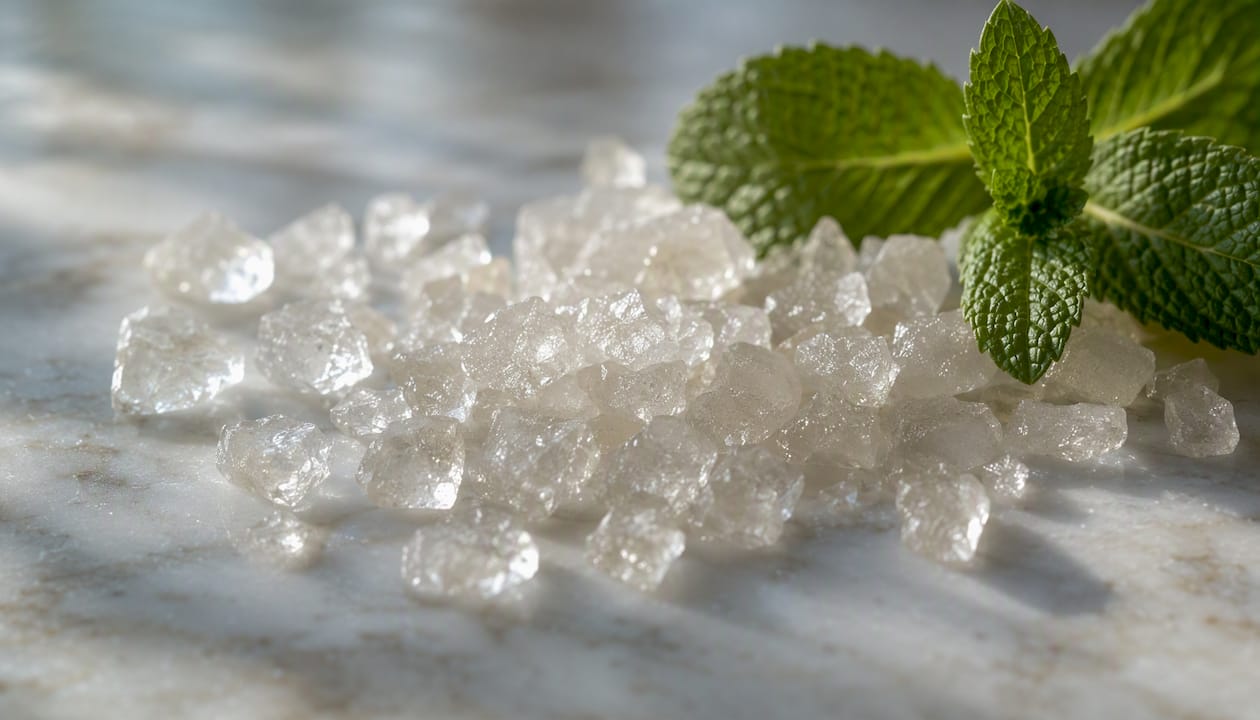
Sugar is naturally stable when kept sealed and dry, remaining effective for 2 or more years on its own. In a truly anhydrous scrub at high sugar concentration, it can even limit microbial activity. The moment water enters the picture, that protection disappears entirely.
Oil-based scrubs face a different threat: oxidation. Oils like sweet almond, sunflower, and grapeseed are relatively unstable and can turn rancid within months, especially without antioxidants like Vitamin E. Coconut oil and jojoba hold up longer.
Commercial store-bought scrubs carry a Period After Opening (PAO) symbol, the small open-jar icon with a number like “12M,” which tells you how many months the product remains safe after you first open it. Most brands set this at 6–12 months.
Quick scanning summary:
- Expect 6–12 months from a well-made, water-free homemade scrub stored properly
- Expect 6–12 months from an opened commercial scrub, per PAO guidance
- Expect weeks, not months, from any water-containing homemade formula without a preservative
What shortens your sugar scrub’s shelf life faster than you’d expect
Several everyday habits quietly accelerate spoilage. Knowing them helps you get the most out of every jar.
- Water contamination is the fastest spoiler. Wet fingers dipping into a jar introduce moisture that turns a preservative-free scrub into a microbial breeding ground within days.
- Bathroom heat and steam speed up both microbial growth and oil oxidation. A shower shelf is one of the worst places to store a natural scrub.
- Unstable oils like sweet almond, rosehip, and hemp seed oxidize quickly. Scrubs made with these oils have a shorter window than those made with coconut or jojoba.
- Fresh botanicals and fruit (lemon zest, strawberry pulp, fresh herbs) introduce both water and organic matter, dramatically cutting shelf life to days or a couple of weeks.
- Large batch sizes mean more air exposure every time you open the jar. A single large container opened daily degrades faster than two smaller ones.
- No antioxidant protection in oil-heavy formulas leaves the oils vulnerable to rancidity from the first use.
Pro Tip: Use a clean, dry spatula every single time you scoop from the jar. It takes two seconds and can add weeks or months to your scrub’s usable life by keeping water and bacteria out.
How to tell if your sugar scrub has gone bad
Your senses are your best testing kit. Here’s what to check before each use:
- 🔍 Smell: A fresh scrub smells like its oils and fragrance. A rancid or spoiled one smells sour, musty, or like old cooking oil. Trust your nose.
- 🔍 Appearance: Any fuzzy growth, dark spots, or unexpected color shifts mean discard immediately.
- 🔍 Texture: A foamy or slimy consistency, or visible water pooling at the bottom of the jar, signals bacterial activity.
- 🔍 Skin reaction: Persistent redness, itching, or irritation after use that wasn’t there before is a warning sign.
Using a contaminated scrub carries real risks. Bacteria like Staphylococcus aureus and yeast can thrive in water-contaminated jars, and applying them to skin with small abrasions (which scrubbing creates) raises the risk of infection. Oxidized oils can trigger contact dermatitis and allergic reactions in sensitive skin.
A useful framing: commercial scrubs with proper preservatives last 6 months to 2 years, but that window assumes the product was stored correctly and not contaminated. A preservative doesn’t make a jar immortal; it buys time under good conditions.
When in doubt, throw it out. A $10 jar of scrub is not worth a skin infection.
Storage best practices that actually extend shelf life
Good storage isn’t complicated, but it does require a few deliberate habits.
- ✅ Use airtight, opaque containers. Amber glass jars block light and seal out air, two of the main drivers of oxidation and contamination.
- ✅ Keep below 75°F. Heat accelerates both rancidity and microbial growth. A cool bathroom cabinet or bedroom shelf beats a shower ledge every time.
- ✅ Avoid bathroom steam. Store your scrub outside the shower area. Condensation is a silent contamination risk.
- ✅ Make small batches. A 4-oz jar you finish in three weeks beats a 16-oz jar that sits open for four months.
- ✅ Label every jar. Write the batch date and a conservative “use by” date on the lid. You’ll thank yourself in six months.
- ✅ Use a spatula, not your fingers. Fingers carry water and bacteria. A small cosmetic spatula keeps the jar clean.
Refrigeration can extend the life of oil-rich scrubs by slowing oxidation, but it’s not necessary for well-made anhydrous formulas. Freezing works for larger batches: portion into small jars, freeze what you won’t use immediately, and thaw one at a time. Avoid repeated freeze-thaw cycles, which can break down texture.
A clean, dry container at the start is the single most effective step for maximizing shelf life. If your scrub separates (oil floats to the top), stir it gently with a clean spatula before use — this is normal for anhydrous formulas and doesn’t mean it’s spoiled.*
When do you actually need a preservative in a sugar scrub?
The rule is straightforward: any formula that contains free water needs a broad-spectrum preservative. This includes scrubs made with aloe vera gel, hydrosols (rose water, lavender water), milk, or any water-phase ingredient. Without one, water-containing cosmetics become a microbial risk quickly, sometimes within days at room temperature.
A true anhydrous scrub (sugar + oil only) doesn’t require a preservative for microbial safety, though an antioxidant like Vitamin E (tocopherol) helps slow oil rancidity. Vitamin E is not a preservative; it won’t protect against bacteria or mold, only against oxidation.
Practical preservative options for home makers:
- Phenoxyethanol blends (such as Optiphen or Optiphen Plus) are widely used in natural cosmetics, effective at low usage rates, and compatible with most formulas.
- Liquid Germall Plus (INCI: Diazolidinyl Urea, Iodopropynyl Butylcarbamate) offers broad-spectrum coverage and is commonly recommended for water-containing leave-on and rinse-off products.
- Leucidal Liquid and similar ferment-based preservatives are popular in natural formulations, though they work best within a specific pH range.
Safety-first notes:
- Always follow the manufacturer’s recommended usage rate (typically 0.5%–1% for most blends). More is not better and can cause irritation.
- Do not substitute household antimicrobials like tea tree oil or vitamin C as preservatives. They are not broad-spectrum and will not reliably protect a water-containing formula.
- For scrubs intended for commercial sale or longer shelf life, consult a cosmetic chemist who can conduct challenge testing to verify your preservative system actually works.
Water-containing scrubs without a preservative can develop microbial contamination faster than most people expect. If you’re making a scrub with any water-phase ingredient at home, add a tested preservative or plan to refrigerate and use within 1–2 weeks.
Gifting sugar scrubs safely: labeling and disposal
A homemade scrub makes a thoughtful gift. A spoiled one doesn’t. A few simple steps protect the recipient and keep your gift genuinely useful.
Label every gifted jar with:
- Batch date (when you made it)
- Conservative “use by” date: 3 months for preservative-free waterless scrubs; 6–12 months for preserved commercial options
- Storage instructions: “Store in a cool, dry place. Use a dry spatula. Keep out of the shower.”
- Ingredient list (helpful for allergy awareness)
Packing tips to reduce contamination risk:
- Include a small cosmetic spatula with the gift so the recipient never needs to use their fingers.
- Seal the lid with a tamper-evident sticker so the recipient knows it hasn’t been opened.
- If shipping in warm weather, note that heat and light accelerate rancidity — pack with an insulated liner if the scrub contains unstable oils. This applies to body butter shipping in heat as well.
- Add a note: “If it smells off or looks unusual when you open it, please discard.”
Safe disposal when it’s time to toss:
- Scoop solid scrub into paper towels or newspaper and dispose in the trash. Avoid pouring oils down the drain; they can solidify in pipes.
- Rinse glass jars with hot soapy water before recycling. Remove lids and check your local recycling guidelines for glass vs. plastic.
- Metal lids are often recyclable separately; plastic lids typically go in the trash unless your municipality accepts them.
Labeling with a conservative “use by” window is one of the simplest ways to protect the people you give scrubs to, especially if they’re not familiar with natural product care.
Jeffi’s take on natural scrub safety
At Jeffi, we believe natural skin care should be genuinely safe, not just labeled that way. The guidance in this article reflects a conservative, safety-first approach that we apply to our own formulations: clear PAO labeling, tested preservative systems where needed, and honest shelf-life windows that prioritize your skin’s health over a longer-looking expiration date.
If you have questions about any of our products, storage recommendations, or ingredients, we’re always happy to help.
Jeffi’s natural scrubs: properly labeled and ready to use
Skipping the DIY guesswork doesn’t mean giving up on natural ingredients. Jeffi’s whipped body butters and sugar scrubs are formulated with non-GMO, all-natural ingredients and come with clear PAO labeling so you always know exactly how long your product stays at its best.

Every jar from Jeffi is made with the same conservative safety standards this article describes: no unnecessary additives, honest shelf-life guidance, and packaging designed to protect the formula from the moment it leaves our hands to the moment it reaches yours. If you’ve been managing homemade batches and want the confidence of a properly preserved, labeled product, Jeffi’s natural body care line is a straightforward next step.
Browse Jeffi’s full natural skin care range and find a scrub or body butter that fits your routine.
Sources
The guidance in this article draws on the following references for shelf-life ranges, preservative requirements, and storage safety:
- How to Make a Sugar Scrub | Treehugger
- Does Body Scrub Expire: How Long Is It Safe to Use? | Sungold Soaps
- Sugar (Cosmetic Scrub) — Ingredient Encyclopedia | DIY Cosmetica
- Nowjournal
- Does Body Butter Go Bad If Unopened? - delishdiscoveries