

Wash the bite with soap and water, then apply a cold compress for several minutes. Follow with an OTC anti-itch cream or a non-drowsy antihistamine if the itch is stubborn. From there, the real work is resisting the scratch itself, since scratching only reactivates the itch signal and raises the odds of broken skin or infection. Watch the area over the next day or two for any spreading redness or warmth.
TL;DR:
- Applying cold compresses for about 10 minutes reduces swelling and distracts nerves from itching, but direct ice on skin can cause frostbite.
- Non-prescription treatments like 1% hydrocortisone, calamine lotion, menthol creams, or oral antihistamines effectively calm itch and inflammation.
- Resisting the urge to scratch for at least five minutes can break the itch-scratch cycle, with cold or pressure sensations often overriding the itch signal.
- Most bites will improve within three to seven days, but spreading redness, increasing pain, or systemic symptoms require prompt medical evaluation.
- Preventive measures such as EPA-registered repellents, protective clothing, and eliminating standing water are crucial to avoid bites altogether.
Table of Contents
- What Should You Do First When a Bite Starts Itching?
- Which OTC Treatments Actually Calm the Itch?
- What Home Remedies Actually Help?
- Why Does Scratching Make Bug Bites Itch More?
- When Does a Bug Bite Need Medical Attention?
- How Can You Prevent Future Bites?
- Why Gentle Aftercare Matters as Much as Fast Relief
- How Jeffi’s Products Fit Into Bite Aftercare
- Sources
What Should You Do First When a Bite Starts Itching?
The first few minutes after you notice a bite set the tone for how much it bothers you later. Skipping straight to scratching feels satisfying for about three seconds, then makes everything worse.
Here’s the order that actually works:
- Clean it. Wash the bite and surrounding skin with soap and water. This isn’t just about comfort. Cleansing the area removes bacteria that fingernails (dirty ones especially) can drive into broken skin, and it’s the first line of defense clinicians recommend against complications.
- Cool it. Wrap ice or a cold pack in a thin cloth and hold it on the bite for about 10 minutes. Never put ice directly on skin. It can cause frostbite in minutes, especially on kids. The CDC recommends this cold-compress approach specifically because cold reduces swelling and distracts the nerves that are firing “itch” signals.
- Press instead of scratch. A firm, steady pinch or press on the bite (not a scratch, just pressure) can quiet the itch almost as fast as scratching does, without damaging the skin.
- Cover and distract. A small adhesive bandage keeps fingers off the bite. For kids, keeping nails trimmed short and offering a quick distraction (a game, a snack, a five-minute timer) works better than repeated warnings to “stop touching it.”
Pro Tip: Set a short mental timer the moment you feel the urge to scratch. Most itch surges peak and fade within a few minutes, so if you can outlast it once, the next urge is usually weaker.
Which OTC Treatments Actually Calm the Itch?
Not every product on the drugstore shelf does the same job, and picking the wrong one wastes time you don’t have when the itch is building.
- 1% hydrocortisone cream calms inflammation directly at the bite site and can be reapplied a few times a day per the label.
- Calamine lotion dries and cools the skin, which is especially useful for multiple bites at once.
- Menthol-containing creams create a cooling sensation that competes with the itch signal, similar to why a cold compress works.
- Non-drowsy oral antihistamines like cetirizine, loratadine, or fexofenadine block the histamine response from the inside, which helps when several bites are firing at once.
Mayo Clinic’s guidance on bite treatment backs all four as reasonable first-line options, and notes that antihistamines work even when someone has no known allergy history, since they’re blocking a normal histamine reaction, not an allergic one.
A few cautions matter here. Always check labels before giving anything to a child, and when in doubt, a pediatrician’s five-minute answer beats guessing. Skip tweezers or squeezing on any bite. It’s tempting to try to “pop” a swollen bite, but that just risks pushing irritants deeper and opening the skin to infection. And avoid experimental chemical mixes on skin that’s already broken.
What Home Remedies Actually Help?
Not every kitchen-cabinet remedy holds up, but a handful genuinely reduce itch when you use them correctly.
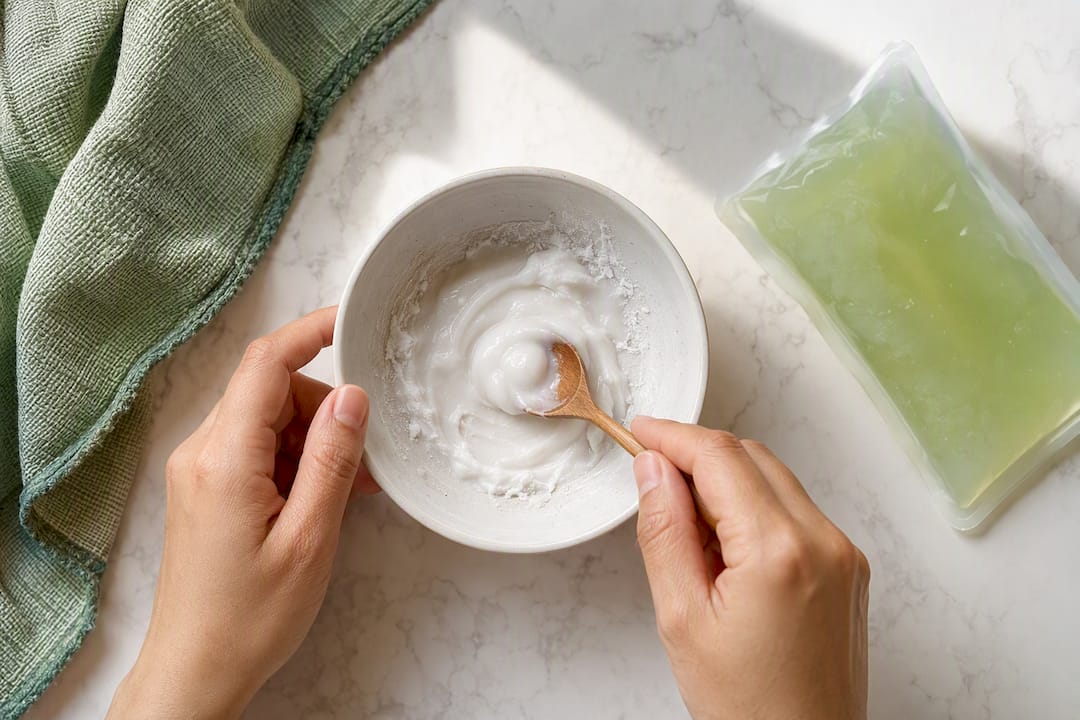
- Baking soda paste: Mix baking soda with just enough water to form a paste, spread it over the bite, and leave it for several minutes before rinsing. This is one of the home remedies the CDC specifically lists as commonly effective.
- Colloidal oatmeal: For multiple bites or a larger irritated patch, an oatmeal bath or oatmeal paste soothes skin over a wider area than a spot treatment can.
- Cold compress: Best for the first hour or two, when swelling is still building and the goal is to calm inflammation.
- Controlled heat (a heat pen or a warm spoon held briefly against the skin): Some people find brief, controlled heat breaks the itch faster than cold, likely because it temporarily disrupts the local histamine response, though this should be done cautiously to avoid burns.
One myth worth retiring: toothpaste. It’s a common tip passed around, but there’s no solid mechanism behind it, and the menthol or whitening agents in some formulas can irritate skin further rather than calm it.
Pro Tip: Keep a small jar of baking soda paste ingredients and a gel ice pack in the same spot in your kitchen or first-aid kit. Half the battle with bites is having relief within arm’s reach before the scratching urge wins.
Why Does Scratching Make Bug Bites Itch More?
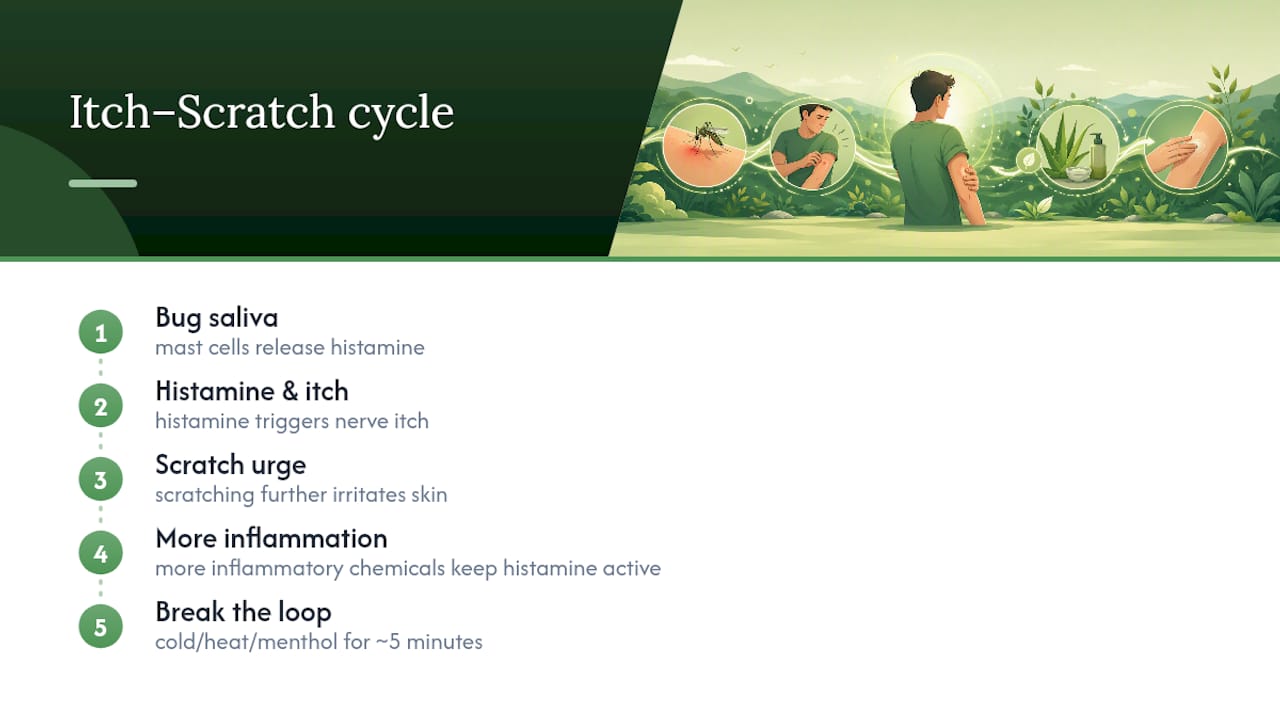
A bug bite itches because your immune system treats the insect’s saliva like an intruder. Mast cells in your skin release histamine, and histamine is what triggers that maddening itch signal to your nerves.
Scratching feels like it helps, but it does the opposite. It irritates the skin further, which prompts even more inflammatory chemicals to flood the area, and that keeps histamine active longer than it would have stayed on its own. It’s a loop: itch, scratch, more inflammation, more itch.
The good news is that the loop is breakable. Research on itch mechanisms shows that resisting the urge for roughly five minutes, or swapping in a different sensation like cold, heat, or menthol, is often enough to override the itch signal entirely. Your nervous system can only prioritize one strong sensation at a time, and cold or pressure usually wins.
When Does a Bug Bite Need Medical Attention?
Most bites are a nuisance, not a danger. But a few warning signs mean it’s time to stop treating it at home.
- Spreading redness, warmth, or pus around the bite, especially if it’s expanding rather than shrinking after a day or two.
- Increasing pain instead of gradual improvement.
- Fever, body aches, or a widespread rash that shows up after the bite. These point to a possible systemic reaction rather than a simple local one.
- Difficulty breathing or swelling of the face or throat, which needs emergency care immediately, not a wait-and-see approach.
For context on timing: most bites peak in itchiness within the first day or two, then fade steadily over 3 to 7 days. If a bite is still getting worse, not better, after that window, it’s worth a clinician’s evaluation rather than another home remedy.
How Can You Prevent Future Bites?
The fewer bites you get, the less scratching you’ll ever have to resist. Prevention is genuinely the easiest part of this whole equation.
- Choose an EPA-registered repellent suited to the activity: DEET or picaridin for extended outdoor exposure, IR3535 for lighter use, or oil of lemon eucalyptus for adults who prefer a plant-based option. The EPA’s repellent guide walks through matching the active ingredient to the situation and skin type.
- Cover up. Long sleeves and pants cut down exposed skin dramatically, and permethrin-treated clothing or gear adds another layer of protection for camping, fishing, or long hikes. Some fabrics resist mosquito bites better than others depending on weave and thickness.
- Clear standing water around the house. It’s the single biggest mosquito breeding ground in most backyards.
- Use window and door screens, and plan outdoor time around dawn and dusk when mosquito activity peaks, if your schedule allows it.
Why Gentle Aftercare Matters as Much as Fast Relief
Fast relief matters, but so does what you put on skin that’s already inflamed. Harsh fragrances, alcohol-based sprays, or synthetic additives can add a second layer of irritation right on top of a histamine reaction that’s already flaring.
That’s the gap Jeffi’s approach is built to close. Its DEET-free repellent balms and non-GMO certified soothing lotions are formulated to support the cleaning-and-cooling steps above without introducing ingredients that tend to aggravate sensitive skin. For anyone whose skin reacts to standard bite treatments as much as it reacts to the bite itself, that distinction is worth paying attention to.
— Jeffi
How Jeffi’s Products Fit Into Bite Aftercare
Once you’ve washed the bite and cooled it down, what you put on next matters. This step can be simplified with a product lineup built specifically for sensitive, irritated skin.

For active itch, relief balms can be applied right after the cold-compress step, once the skin has calmed slightly. For drier, post-bite skin that needs ongoing moisture, a whipped body butter restores softness without the heavy synthetic fragrances that can sting already-sensitive skin. And since prevention beats treatment every time, Keeping a DEET-free repellent balm in your bag can help with bite prevention.
As always, check the label before applying anything to broken skin, and patch-test new products if your skin runs sensitive. Browse the full lineup at the Jeffi product catalog to build an aftercare routine that matches how your skin actually responds, not just how the bite looks.
This article is general information, not a substitute for advice from a qualified doctor. Consult a qualified healthcare professional about your own circumstances before acting on anything here.