

Effective mosquito bite prevention is defined as a layered system combining EPA-registered repellents, protective clothing, and skin-friendly aftercare routines. This skin care mosquito prevention checklist covers every step you need, from choosing the right active ingredients to repairing your skin barrier after a long day outside. Whether you’re a hiker, a backyard parent, or someone with sensitive skin, the right approach keeps bites away without wrecking your complexion. No single method is enough. A multi-layered approach that combines behavior, clothing, and environmental controls is the key to real, lasting protection.
1. Skin care mosquito prevention checklist: start with the right repellent
The most effective repellents carry EPA-registered active ingredients. DEET, picaridin, IR3535, oil of lemon eucalyptus (OLE), and PMD are all proven to work when applied correctly to exposed skin and clothing. Each ingredient works differently, but all five have passed EPA safety and efficacy standards.
Lower concentrations reduce irritation risk without sacrificing protection for shorter outings. A 10% DEET formula protects for roughly two hours, while a 30% formula extends that window significantly. For children and people with sensitive skin, picaridin and IR3535 are widely recommended because they feel lighter on skin and cause fewer reactions.
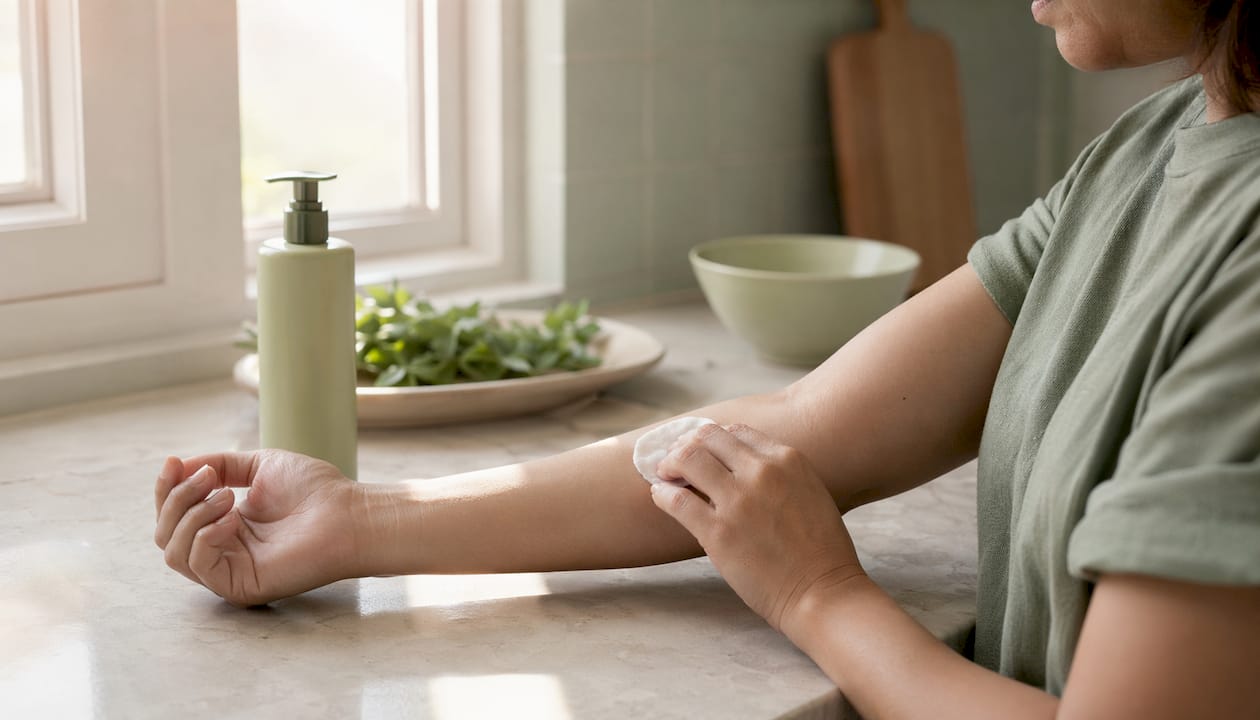
Pro Tip: Patch test any new repellent on a small area of your inner arm before applying it to your face or neck. Wait 30 minutes and check for redness or itching before going all in.
Fragrance-free and alcohol-free formulations minimize skin drying and reduce the chance of allergic reactions. Heavy perfumes in repellents can also attract mosquitoes, which defeats the purpose entirely. Choosing a fragrance-free formula is a win for both your skin and your protection level.
2. How to apply repellent and sunscreen in the right order
Application order matters more than most people realize. Apply sunscreen first, wait a few minutes for it to absorb, then apply insect repellent only to exposed skin. Reversing this order reduces sunscreen effectiveness and can push repellent chemicals deeper into the skin.
Never apply repellent under clothing. Trapping repellent against skin under fabric increases absorption and raises the risk of irritation. Spray or rub repellent only on the skin that is actually exposed to the air and to mosquitoes.
- Apply a broad-spectrum sunscreen to all exposed skin.
- Wait 3–5 minutes for the sunscreen to settle.
- Apply repellent to exposed skin only, avoiding eyes, mouth, and open cuts.
- Wash hands after applying repellent, especially before eating.
- Reapply repellent according to label instructions, especially after sweating or swimming.
Pro Tip: Sweating and friction from outdoor activity reduce repellent duration faster than most labels suggest. Reapply earlier than the label’s maximum window if you’ve been active or in water.
After outdoor time, wash repellent off with mild soap and water. Follow with a gentle moisturizer to restore any hydration lost from repellent exposure. Skipping this step is one of the most common reasons people experience dry, irritated skin after outdoor activities.
3. What clothing choices reduce your bite risk
Loose-fitting, light-colored long sleeves and pants are the most reliable physical barrier against mosquito bites. Tight clothing allows mosquitoes to bite through the fabric. Light colors are less attractive to mosquitoes than dark shades like navy or black.
Permethrin-treated clothing adds a chemical barrier on top of the physical one. Permethrin is an insecticide applied to fabric, not skin, and it remains effective through multiple washes. Outdoor retailers sell pre-treated shirts, pants, and socks, or you can treat your own clothing with permethrin spray kits.
For infants, mosquito netting over strollers and carriers provides a safe, chemical-free layer of protection. This is especially useful in areas with high mosquito activity or during evening hours when mosquito populations peak. Netting keeps repellents off infant skin entirely, which is the safest approach for the youngest children.
4. Environmental controls that cut mosquito populations at the source
Eliminating standing water is the single most effective environmental step you can take. Empty and refresh water in bird baths, plant trays, and containers at least once every seven days to destroy mosquito breeding sites before larvae mature.
- ✅ Empty bird baths, plant saucers, and buckets weekly
- ✅ Clean and flush gutters regularly to prevent water pooling
- ✅ Cover corrugated drain pipes with pantyhose secured by a rubber band to block breeding inside the pipe
- ✅ Fix leaky outdoor faucets and hoses that create puddles
- ✅ Use fans on patios and decks to disrupt mosquito flight patterns
- ✅ Repair or replace torn window and door screens to block indoor entry
Fans work because mosquitoes are weak fliers. A standard box fan aimed across a seating area creates enough airflow to keep most mosquitoes from landing. This is a simple, chemical-free addition to any outdoor gathering.
5. How to protect sensitive and delicate skin from repellents
Sensitive skin requires a more careful approach to mosquito bite prevention, but it does not require less protection. Fragrance-free, alcohol-free repellents reduce irritation risk significantly. Lotion and cream formats give you more control over where and how much product you apply compared to aerosol sprays.
- Choose lotion or cream repellents over aerosol sprays for sensitive skin
- Avoid heavy perfumes in any skin care product used outdoors, as they attract mosquitoes
- Patch test repellents before full application, especially on children or people with eczema
- Use clothing as the primary defense to reduce the total amount of repellent needed on skin
- Strengthen your skin barrier with gentle cleansing and moisturizing after repellents are removed
Understanding skin health fundamentals helps you make smarter choices about which repellent formats and concentrations work best for your skin type. A compromised skin barrier absorbs chemicals more readily, which is why aftercare matters as much as the repellent itself.
Pro Tip: If you’re prone to reactions, try a picaridin-based lotion at a lower concentration first. Picaridin is odorless, non-greasy, and gentler on sensitive skin than DEET at equivalent protection levels.
6. Why unproven repellents waste your time and money
Ultrasonic devices and unregistered natural repellents have not been shown to effectively reduce mosquito bites. This matters because people who rely on these products often skip proven methods, leaving themselves unprotected. The appeal of a plug-in device or an herbal spray is understandable, but the evidence simply does not support them.
EPA-registered active ingredients are the reliable standard. OLE and PMD are the only plant-derived ingredients on the EPA-registered list, and they work because they have been tested and proven. Other plant oils like citronella, lavender, or peppermint may smell pleasant but provide minimal and short-lived protection.
The takeaway is simple. If a repellent product does not list DEET, picaridin, IR3535, OLE, or PMD as its active ingredient, it is not a reliable choice for serious mosquito protection. Spend your money on what works.
7. Skin aftercare: repairing your skin barrier after outdoor exposure
Repellents, sunscreen, heat, and sweat all stress your skin barrier over the course of a day outside. Repairing that barrier after outdoor exposure is the final and often skipped step in any effective mosquito prevention routine. Gentle cleansing removes product residue without stripping natural oils.
Follow cleansing with a nourishing moisturizer or whipped body butter to restore hydration and reduce any inflammation caused by repellent contact. Avoid over-washing or using harsh soaps after outdoor exposure. Aggressive cleansing removes the skin’s natural protective oils and makes irritation worse, not better.
For children, a fragrance-free, gentle lotion applied after bath time removes repellent residue and soothes skin at the same time. This step also gives parents a chance to check for any bites or skin reactions that need attention. Making aftercare a habit turns mosquito prevention into a complete, skin-friendly routine rather than a one-step spray-and-go approach.
Key Takeaways
Effective mosquito bite prevention requires EPA-registered repellents, correct application order, protective clothing, environmental controls, and consistent skin aftercare to protect both your body and your skin barrier.
| Point | Details |
|---|---|
| Use EPA-registered repellents | DEET, picaridin, IR3535, OLE, and PMD are the only proven active ingredients for reliable protection. |
| Apply sunscreen before repellent | Sunscreen goes on first, then repellent on exposed skin only, never under clothing. |
| Eliminate standing water weekly | Empty bird baths, plant trays, and containers every seven days to destroy breeding sites. |
| Choose fragrance-free formulas | Fragrance-free, alcohol-free repellents reduce irritation and avoid attracting mosquitoes. |
| Repair skin after outdoor exposure | Cleanse gently and moisturize after removing repellent to restore your skin barrier. |
What I’ve learned from years of outdoor skin care
Most people treat mosquito prevention as a single-step problem. They grab a spray, apply it once, and consider themselves protected. That approach fails in two directions at once: it leaves skin unprotected as repellent wears off, and it skips the aftercare that keeps skin healthy enough to tolerate repellent use long-term.
The order of application is the detail I see people get wrong most often. Sunscreen first, repellent second. Not the other way around, and not mixed together. Getting this sequence right makes both products work better and reduces the skin stress that comes from layering them incorrectly.
Environmental controls are the most underrated part of the whole equation. Draining a bird bath takes 30 seconds. Covering a corrugated drain pipe with pantyhose costs almost nothing. These steps reduce the mosquito population around your home, which means less repellent on your skin overall. Less repellent means less irritation, less aftercare, and a more comfortable summer.
Sensitive skin is not a reason to skip protection. It is a reason to be more thoughtful about which products you choose and how you care for your skin before and after use. Clothing as a primary barrier, lower-concentration formulas, and consistent moisturizing after outdoor time make the whole system work without sacrificing comfort.
— Jeffi
Jeffi’s natural skin care and bite prevention products
Spending time outside should feel good, not leave your skin dry, irritated, or covered in bites. Jeffi makes natural mosquito repellent and skin care products that are Non-GMO Project verified and formulated without harsh chemicals, so you get real protection without compromising your skin.

After outdoor time, Jeffi’s whipped body butters restore moisture and calm skin that has been exposed to repellents, sun, and heat. For a complete routine, Jeffi’s product bundles pair bite protection with nourishing aftercare in one convenient set. Every product is made with your skin barrier in mind, so prevention and skin health work together instead of against each other.
FAQ
What are the safest mosquito repellent ingredients for sensitive skin?
Picaridin and IR3535 are the gentlest EPA-registered options for sensitive skin. Both are effective, odorless, and less likely to cause irritation than DEET at comparable concentrations.
Do natural mosquito repellents actually work?
Only OLE and PMD, both plant-derived, are EPA-registered and proven effective. Other plant oils like citronella provide minimal protection and are not reliable for serious mosquito exposure.
How often should you reapply mosquito repellent outdoors?
Reapply according to the product label, and reapply sooner if you have been sweating heavily or swimming. Sweating and friction reduce repellent duration faster than dry conditions.
Is it safe to use mosquito repellent on children?
EPA-registered repellents including picaridin and DEET are approved for use on children over two months old. Apply to exposed skin only, avoid hands and faces, and wash off with soap and water after returning indoors.
What should you put on skin after using mosquito repellent?
Wash repellent off with mild soap and water, then apply a fragrance-free moisturizer or gentle body butter to restore hydration and support your skin barrier.