

Wash the bite with soap and water right now, press a cold pack against it for 10–20 minutes, and resist scratching. That’s the core of effective sandfly bite relief in the first few minutes. From there, a simple OTC anti-itch product handles most of what’s left.
Here’s your quick-start checklist:
- ✅ Clean it — gentle soap and water, pat dry
- ✅ Cool it — cold compress or ice wrapped in cloth, 10–20 minutes
- ✅ Don’t scratch — scratching breaks skin and invites infection
- ✅ Apply relief — topical 1% hydrocortisone cream or calamine lotion
- ✅ Consider an oral antihistamine — cetirizine (Zyrtec) or fexofenadine (Allegra) if itching is intense
- ✅ Skip harsh treatments — no rubbing alcohol, no hot water, no squeezing
Pro Tip: A cold compress applied within the first 15 minutes is one of the fastest ways to reduce the initial inflammatory flare. Wrap ice in a thin cloth rather than applying it directly to skin, and repeat every few hours for the first day.
Per Columbia University’s guidance, avoid topical antibiotics unless you see clear signs of infection. Applying them preemptively can cause skin irritation without adding any benefit.
Key Takeaways
Sandfly bite relief starts with washing, cooling, and protecting the skin from scratching, and most bites resolve fully within 1–2 weeks with consistent OTC care.
| Point | Details |
|---|---|
| Immediate first aid | Wash with soap and water, apply a cold compress for 10–20 minutes, and avoid scratching. |
| Best OTC options | Topical 1% hydrocortisone or calamine lotion for the bite; cetirizine or fexofenadine for intense itch. |
| Red flags for care | Spreading redness, pus, fever above 100.4°F, or a non-healing ulcer means see a clinician. |
| Prevention priority | EPA-registered repellents (DEET or picaridin), permethrin-treated clothing, and fine-mesh screens reduce bite risk most reliably. |
| Jeffi products | Jeffi’s Non-GMO verified, DEET-free bite relief lotions and repellent balms offer natural skin support for prevention and post-bite comfort. |
Table of Contents
- What do sandfly bites look like, and how do you tell them apart?
- Immediate first aid steps to reduce itching and swelling
- Over-the-counter products and home remedies that actually work
- When should you see a doctor about a sandfly bite?
- How to prevent sandfly bites going forward
- Possible complications and risks to watch for
- Managing sandfly bites in children, pregnant people, and those with compromised immunity
- A note on realistic expectations from Jeffi
- Jeffi’s natural bite relief and repellent products
- Sources
What do sandfly bites look like, and how do you tell them apart?
Sandfly bites tend to produce a stronger inflammatory reaction than mosquito bites. You’ll typically notice small, intensely itchy red bumps clustered on exposed skin, especially the lower legs, ankles, and feet. They often appear in groups because sandflies feed in clusters. In some people, the bites develop into fluid-filled blisters within 24–48 hours.
The timeline usually runs like this: redness and itching within minutes to hours, possible blistering by day 1–2, and gradual resolution over 1–2 weeks. Bites that persist beyond two weeks or develop into open sores are worth a clinician’s attention.
Key signs of a sandfly bite:
- Small, red, intensely itchy bumps, often in clusters
- Located on lower legs, ankles, and any exposed skin near ground level
- Possible blistering or fluid-filled bumps within 48 hours
- Symptoms often worse than a typical mosquito bite
| Bite Type | Appearance | Location | Onset | Blistering? | Intensity |
|---|---|---|---|---|---|
| Sandfly | Small red clusters, may blister | Lower legs, ankles | Minutes to hours | Common | Very intense |
| Mosquito | Single raised welt, central puncture | Any exposed skin | Minutes | Rare | Moderate |
| Flea | Small red dots, often in lines or clusters | Ankles, waist, armpits | Minutes | Rare | Moderate |
| Gnat | Tiny red bumps, sometimes with a central dot | Face, neck, arms | Minutes to hours | Uncommon | Moderate to intense |
| Horsefly | Large, painful, raised welt | Any exposed skin | Immediate | Uncommon | Severe, painful |
| Black fly | Red, swollen, sometimes with a bruise-like center | Head, neck, arms | Immediate | Uncommon | Severe, painful |
Horsefly and black fly bites are notably more painful at the moment of the bite because these insects cut the skin rather than piercing it. Gnat bite relief follows a similar approach to sandfly care, though gnat bites are usually smaller and less prone to blistering. If you’re unsure what bit you, the cluster pattern on lower legs after time outdoors near sand, water, or vegetation is a strong indicator of sandflies.
Immediate first aid steps to reduce itching and swelling
The single best immediate action set is: wash, cool, and protect the skin from further trauma. According to WA Health, symptomatic care with cold packs and antihistamines is the recommended approach for biting midge and sandfly bites, and it works best when started quickly.
-
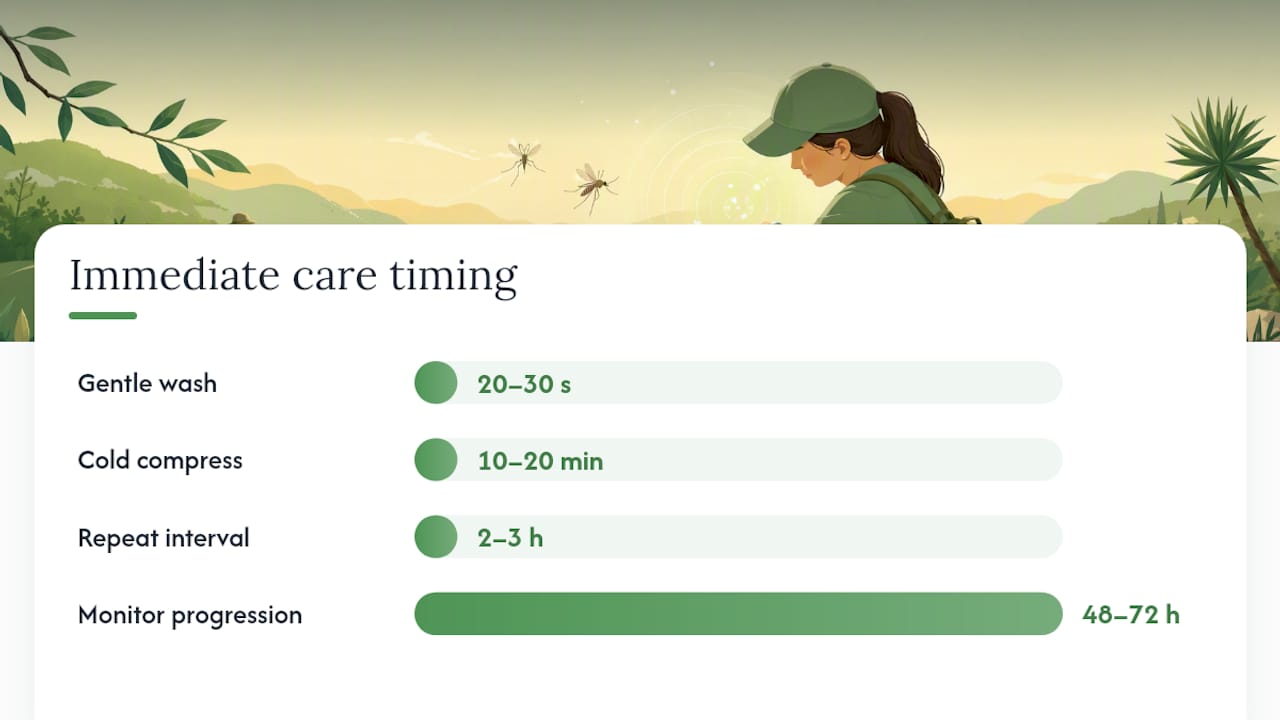
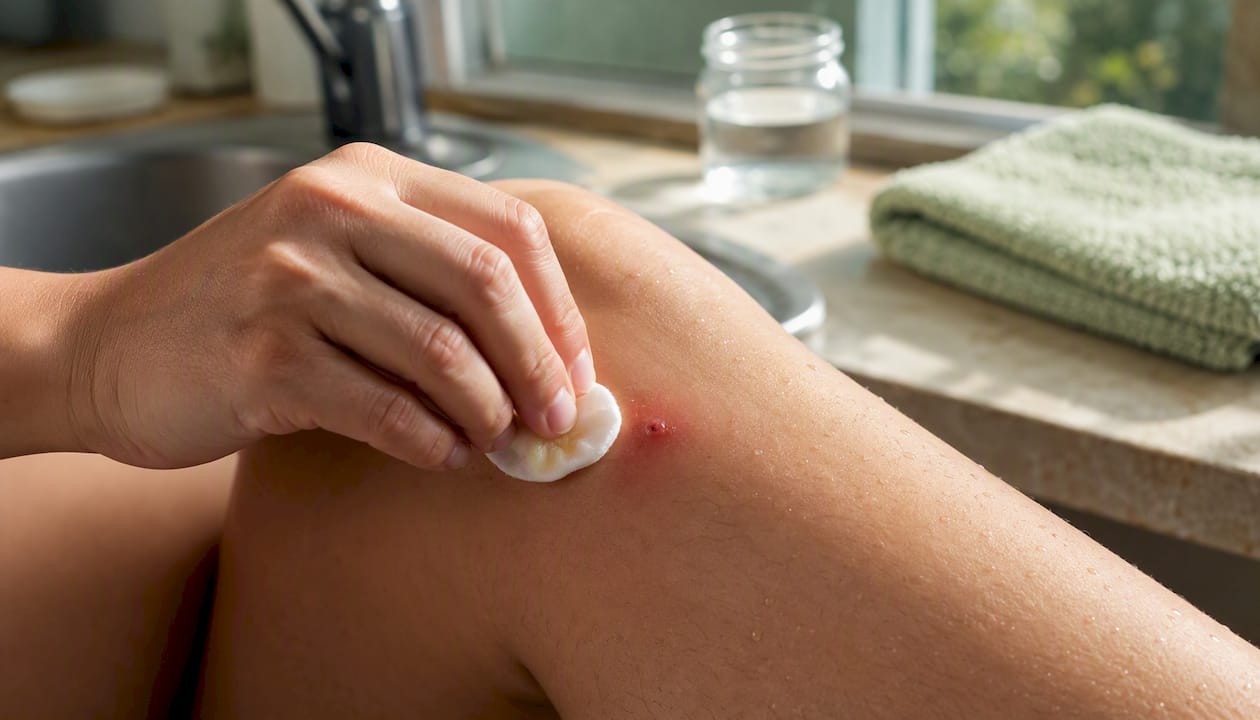
Wash gently with soap and water. Use mild soap and lukewarm water. Scrub lightly for 20–30 seconds, then pat dry with a clean cloth. This removes surface bacteria and reduces infection risk.
-
Apply a cold compress. Wrap ice or a cold pack in a thin cloth and press it against the bite for 10–20 minutes. Repeat every 2–3 hours for the first day. Cold narrows blood vessels and reduces the initial inflammatory swelling.
-
Elevate if swollen. If bites on your leg or foot are causing significant swelling, keep the limb raised above heart level when resting.
-
Keep nails short and clean. Scratching is the main route to secondary infection. Trim nails and, for children, consider lightweight cotton gloves at night.
-
Apply a topical anti-itch product. The Cleveland Clinic recommends 1% hydrocortisone cream or calamine lotion for mild bites. Apply a thin layer to the affected area, not more than twice daily.
-
Consider an oral antihistamine. For intense itching, a second-generation antihistamine like cetirizine or fexofenadine works well and is less likely to cause drowsiness than first-generation options like diphenhydramine (Benadryl).
What to avoid:
- Do not apply rubbing alcohol or hydrogen peroxide directly to the bite
- Do not use heat (hot water, heating pads) — heat worsens inflammation
- Do not mix a topical antihistamine cream with an oral antihistamine without clinician guidance, as the combined effect can be unpredictable
Monitoring plan for 48–72 hours: Check the bite daily. Normal progression is gradual fading of redness and reduced itching. If redness is spreading, the area feels warm to the touch, or you see pus, move to the “when to see a doctor” steps below.
Over-the-counter products and home remedies that actually work
It reduces inflammation directly at the bite site and is widely available without a prescription. The NHS confirms that hydrocortisone cream, antihistamines, and cold compresses are the standard self-care approach for insect bites.
OTC options worth knowing:
- Topical 1% hydrocortisone — apply a thin layer up to twice daily; do not use on broken skin or for more than 7 days without clinician guidance
- Calamine lotion — cooling and mildly anti-itch; safe for most ages and gentle enough for sensitive skin
- Oral cetirizine (Zyrtec) or fexofenadine (Allegra) — second-generation antihistamines that reduce systemic itch response without heavy sedation
- Oral diphenhydramine (Benadryl) — effective but causes drowsiness; avoid if you need to drive or operate machinery
One important note: do not use a topical antihistamine cream (like Benadryl cream) at the same time as an oral antihistamine. The combination can push your total antihistamine dose higher than intended, and topical antihistamines also carry a risk of contact dermatitis with repeated use.
Safe home remedies supported by clinical guidance:
- 🌿 Cool oatmeal bath — colloidal oatmeal soothes inflamed skin; soak for 15–20 minutes in lukewarm water
- 🌿 Baking soda paste — mix a small amount with water to form a paste, apply to bites, leave for 10 minutes, rinse off
- 🌿 Aloe vera gel — pure aloe (not a scented lotion) provides a cooling, anti-inflammatory effect
- 🌿 Calamine lotion — a classic for good reason; dries the area slightly and reduces itch
Per Ubie Health’s clinician-reviewed guidance, these home remedies are genuinely helpful when used correctly. Avoid applying Vicks VapoRub, essential oils, or toothpaste to bites. These are popular home suggestions, but no medical guidance supports them, and some can cause additional skin irritation. Hot showers are also a common impulse — the heat briefly overrides itch signals, but it worsens inflammation and prolongs healing.
When should you see a doctor about a sandfly bite?
Go to an emergency department immediately if you experience difficulty breathing, throat tightening, widespread hives, or severe facial swelling after a bite. These are signs of anaphylaxis, a rare but serious allergic reaction.
See a clinician within 24–72 hours if you notice:
- Redness spreading beyond the bite area (especially with a defined red border)
- Increasing warmth, pain, or swelling after the first 48 hours
- Pus or discharge from the bite
- A bite that opens into a sore or ulcer and does not begin healing within a week
- Fever above 100.4°F alongside bite symptoms
- Recent travel to Central or South America, the Middle East, or other leishmaniasis-endemic regions
A clinician treating a secondary infection will typically start with topical or oral antibiotics. For severe inflammation that isn’t responding to OTC hydrocortisone, a short course of oral corticosteroids may be prescribed — this is an escalation step, not something to self-manage. If you’ve traveled to an area where leishmaniasis is present and have a non-healing ulcer, your clinician may order specific testing.
Practical triage guide:
- Pharmacy: mild itching, no spreading redness, no fever — OTC products are appropriate
- Urgent care: spreading redness, increasing pain, possible early infection, no systemic symptoms
- Emergency department: breathing difficulty, throat swelling, widespread rash, high fever, signs of anaphylaxis
How to prevent sandfly bites going forward
The most reliable prevention combines an EPA-registered repellent with physical barriers like long, light-colored clothing and permethrin-treated gear. Repellents alone are effective, but Columbia University’s guidance notes that clothing choices and environmental controls often reduce bites more reliably than repellents used alone.
Core prevention steps:
- ✅ Apply an EPA-registered repellent containing DEET, picaridin, or IR3535 to all exposed skin
- ✅ Wear long sleeves and pants, especially at dawn and dusk when sandflies are most active
- ✅ Treat clothing and gear with permethrin (do not apply permethrin directly to skin)
- ✅ Use fine-mesh screens on windows and doors — sandflies are small enough to pass through standard mosquito netting
- ✅ Run a fan near seating areas; sandflies are weak fliers and avoid moving air
- ✅ Avoid damp, shaded, or mangrove-adjacent areas during peak activity hours
Repellent concentration and approximate protection duration:
Higher DEET concentrations mainly extend the time between reapplications rather than providing stronger protection. Picaridin is an excellent alternative for families who prefer a lighter-feeling product.
For natural repellent options that skip DEET entirely, check out Jeffi’s guide to chemical-free mosquito repellents for a practical breakdown of what works.
Possible complications and risks to watch for
Serious complications from sandfly bites are uncommon, but two are worth knowing: secondary bacterial infection and, in specific geographic contexts, leishmaniasis.
Secondary bacterial infection is the more common concern. It happens when scratching breaks the skin and introduces bacteria. Signs include spreading redness, warmth, swelling, pus, and sometimes fever. Mild cases respond well to antiseptic cleaning and topical antibiotics; more significant infections may need oral antibiotics prescribed by a clinician.
Leishmaniasis is caused by a parasite transmitted by specific sandfly species, not the biting midges common on U.S. beaches. In the United States, CNA Lifestyle’s clinician-reviewed reporting notes that clinicians consider geographic and travel history when a bite doesn’t follow a normal healing course or becomes an ulcer. Routine coastal bites in non-endemic areas very rarely represent leishmaniasis. If you’ve traveled to parts of Central or South America, the Middle East, or southern Europe and develop a non-healing skin ulcer weeks after a bite, mention that travel history to your clinician.
Monitoring timeline:
- Days 1–3: redness, itching, possible blistering — normal
- Days 4–7: gradual improvement expected; persistent or worsening symptoms need attention
- Beyond 2 weeks: a bite that hasn’t begun healing, or that has become an ulcer, warrants a clinician visit
Managing sandfly bites in children, pregnant people, and those with compromised immunity
The core approach changes in three ways for sensitive populations: avoid certain medications, use milder topical products, and seek clinician input earlier than you might for a healthy adult.
For children:
- Use age-appropriate repellents; the American Academy of Pediatrics advises against DEET on infants under 2 months
- KidsHealth recommends milder topical care and age-appropriate antihistamine dosing — always follow the package’s weight-based dosing chart
- Avoid topical hydrocortisone on large areas of a child’s skin without pediatric guidance
- Call your pediatrician if a child develops fever, widespread rash, or a bite that looks infected
For pregnant and breastfeeding people:
- The CDC considers DEET safe during pregnancy when used as directed, but many people prefer picaridin as an alternative
- Oral antihistamines: cetirizine and loratadine are generally considered lower-risk options during pregnancy, but always confirm with your OB or midwife before taking any medication
- Topical 1% hydrocortisone on small areas for short periods is generally considered acceptable, but avoid prolonged use without clinician guidance
For immunocompromised people:
- The threshold for seeing a clinician should be lower — don’t wait for obvious signs of infection to develop
- Healing may take longer than the typical 1–2 week timeline, and atypical presentations (unusual ulcers, slow-healing wounds) need earlier evaluation
- Avoid aggressive home treatments that could further compromise skin integrity
A note on realistic expectations from Jeffi
Most sandfly bites, even the intensely itchy ones, resolve fully within 1–2 weeks with consistent, simple care. The risk of permanent scarring is low when you avoid scratching and keep the skin clean. Topical soothing products — whether calamine, aloe, or a well-formulated natural lotion — genuinely help with comfort during that healing window. They won’t speed up the immune response, but they reduce the urge to scratch, which is where most of the real damage happens.
Natural, skin-friendly options have a real place in bite care, especially for people with sensitive skin or families who prefer to avoid harsh chemicals. Prevention is where the biggest gains are, and a DEET-free repellent used consistently before outdoor exposure can make a meaningful difference in how often you’re dealing with bites in the first place.
Jeffi’s natural bite relief and repellent products
When the first-aid steps are done and your skin needs some comfort, Jeffi’s all-natural bug bite relief and DEET-free repellent products are built for exactly this moment. Every product is Non-GMO Project verified and formulated without harsh chemicals, making them a practical fit for sensitive skin, outdoor families, and anyone who wants effective care without the ingredient list anxiety.

Jeffi’s bug bite relief lotions and ointments are designed to soothe post-bite irritation while supporting the skin’s natural recovery. The whipped body butters work especially well once the acute itch phase has passed, keeping skin moisturized and less prone to the dryness that can make healed bites feel rough or tight. For prevention, Jeffi’s DEET-free repellent balms and roll-ons give you a clean, skin-friendly barrier before you head outdoors. Use the medical steps in this article as your primary care guide, and reach for Jeffi when your skin needs gentle, natural support alongside it. Browse the full range at Jeffi and find the right fit for your next outdoor adventure.
Sources
These are the primary sources used throughout this article. Each one is freely accessible and worth bookmarking if you want to read deeper or verify specific guidance.
- Sand Flea Bites — Cleveland Clinic
- How to stop bug bites from itching — ColumbiaDoctors
- Sandfly vs mosquito bites: How to tell the difference, treat the itch and know when to see a doctor — CNA Lifestyle
- Biting midge (sand flies) — WA Health
- Itchy bumps? Why sand fleas bite & medically approved next steps | Ubie Doctor’s Note
- Insect bites and stings — NHS
This article is general information, not a substitute for advice from a qualified doctor. Consult a qualified healthcare professional about your own circumstances before acting on anything here.