

If bug spray is on your skin, wash it off now with soap and water. If it’s on fabric, blot the spot, pretreat it, and hold off on the dryer until the mark is gone. On counters, tile, or wood, blot first, then wipe with a mild detergent solution.
- Skin: Wash with soap and warm water right away.
- Clothing: Blot (never rub), pretreat, launder in the hottest water the fabric allows.
- Hard surfaces: Blot excess, then wipe with mild dish soap and water.
- Before anything else: Check the fabric. Synthetic material that already feels gummy or stiff has likely been damaged by DEET, and no amount of cleaning will fix that.
The biggest mistake people make is tossing a sprayed item straight into the dryer. Heat can set a stain permanently and, on synthetics, finish off damage that’s already begun.
Key Takeaways
Removing bug spray comes down to speed and matching the method to the surface: wash skin immediately, blot and pretreat fabric before laundering, and always spot-test cleaners on hard surfaces and upholstery first.
| Point | Details |
|---|---|
| Act fast on skin | Wash with soap and water as soon as you’re done needing the repellent’s protection. |
| Blot, don’t rub | Blotting keeps oily residue from spreading deeper into fabric or upholstery fibers. |
| Diagnose before scrubbing | Gummy or sticky synthetic fibers mean permanent damage, not a stain to keep treating. |
| Skip the dryer until clean | Heat can set a stain permanently or finish off damage already caused by DEET. |
| Consider DEET-free options | Jeffi’s balms and roll-ons cut staining and irritation risk for skin and gear alike. |
Table of Contents
- Is Bug Spray Harmful After It Dries, and When Should You Wash It Off?
- Step-by-Step: Removing Bug Spray from Skin Safely
- Fresh vs. Set-In Bug Spray Stains: How to Treat Each
- Cleaning Bug Spray Off Upholstery, Carpet, and Outdoor Gear
- Cleaning Bug Spray Off Counters, Tile, Wood, and Decks
- When Is Bug Spray Damage Permanent?
- How to Prevent Bug Spray Stains Before They Happen
- Why Some Bug Sprays Resist Cleaning: A Quick Chemistry Note
- What I’ve Learned About Bug Spray Cleanup
- A Gentler Way to Avoid the Cleanup Altogether
- Frequently Asked Questions
- Sources
Is Bug Spray Harmful After It Dries, and When Should You Wash It Off?
Yes, you should wash it off, and sooner than most people think. Repellent isn’t meant to stay on your skin indefinitely. Once you’re back inside for the night or the bugs are no longer a concern, Harvard Health recommends washing it off with soap and water, especially before bed.
Most conventional repellents are formulated to work for several hours. After that window, they’re just sitting on your skin doing nothing useful.
A few precautions worth following:
- Avoid getting spray near your eyes or mouth, and never apply it over broken or irritated skin.
- Ventilate the room if you’re wiping repellent off walls or surfaces indoors.
- Follow the product label exactly. Health guidance from The Hospital of Central Connecticut advises applying repellent only to exposed skin or clothing as directed, never in enclosed spaces or directly onto cuts.
If someone experiences a rash, swelling, or breathing irritation after exposure, that’s a signal to call a doctor rather than wait it out.
Step-by-Step: Removing Bug Spray from Skin Safely
Skin is the most urgent surface to treat, and it’s also the easiest to get right if you move quickly.
- Rinse the area with plain water first to flush off the surface layer.
- Wash with mild soap and warm water, working it in gently rather than scrubbing.
- Remove any clothing that got sprayed at the same time, since fabric can keep transferring residue back onto skin.
- Pat dry instead of rubbing, especially if the skin feels tight or irritated.
Skip the temptation to reach for rubbing alcohol or a solvent directly on your skin. Those work well on fabric, but on skin they can strip natural oils and worsen irritation rather than help it. If dryness or minor redness shows up afterward, a light layer of petroleum jelly or Aquaphor usually calms it down. For anything beyond mild irritation, proper skin-irritation prevention habits go a long way, and a persistent reaction is worth a call to a clinician.
Sensitive skin doesn’t need a different repellent routine so much as a smarter application habit.
Pro Tip: For faces, spray repellent into your hands first, then apply it with your fingers. It gives you control and keeps overspray away from eyes and mouth. With kids, an adult should always do the application, and washing off before nap time or bed is worth doing without waiting for a reminder.
Fresh vs. Set-In Bug Spray Stains: How to Treat Each
Not every mark on a shirt is the same problem. Some are just oily residue sitting on top of the fibers. Others are the fabric itself reacting to DEET, which behaves like a mild solvent on certain synthetics.
Quick diagnostic check: Feel the spot. If it’s just greasy or slightly stiff, it’s likely surface residue. If it feels gummy, tacky, or the fibers seem to be sticking together, you may be looking at damage rather than a stain.
For fresh marks:
- Blot immediately, don’t rub, to avoid spreading the oil deeper into the weave.
- Pretreat with a grease-fighting stain remover or isopropyl alcohol.
- Let it sit for 15 to 30 minutes. The American Cleaning Institute notes that dwell time helps the treatment actually penetrate the fibers instead of sitting on top.
- Launder in the hottest water safe for that fabric.
For set-in stains, go further:
- Place an absorbent towel behind the fabric and blot isopropyl alcohol through from the front, moving the dissolved residue into the towel instead of spreading it further, a technique cleaning chemists recommend for DEET-based marks.
- Soak in an oxygen-based cleaner like OxiClean or an enzyme treatment like Zout.
- Repeat the pretreat step, then launder as hot as the label allows.
- Air-dry and inspect before running the dryer.
Pro Tip: Always spot-test any solvent on a hidden seam first. If the fabric turns tacky or the color shifts, stop immediately; you’re looking at permanent damage, not a stain that needs a stronger cleaner.
Cleaning Bug Spray Off Upholstery, Carpet, and Outdoor Gear
Soft surfaces need a gentler hand than clothing does, mostly because over-wetting the padding underneath creates a second problem.
- Blot up the excess with a clean towel right away, pressing rather than rubbing.
- Mix a small amount of mild dish soap with water, or use an enzyme-based spotter, and apply it sparingly.
- Work from the outside of the stain inward so you’re not spreading it wider.
- Rinse with a damp cloth and plain water, then blot dry.
For lingering odor, baking soda left on the spot overnight and vacuumed off the next day works better than most sprays, and good ventilation helps just as much. Deep-set residue in carpet or heavily padded furniture often responds best to steam extraction, and stubborn cases are worth handing to a professional cleaner rather than repeating the same spot-treatment for a week straight.
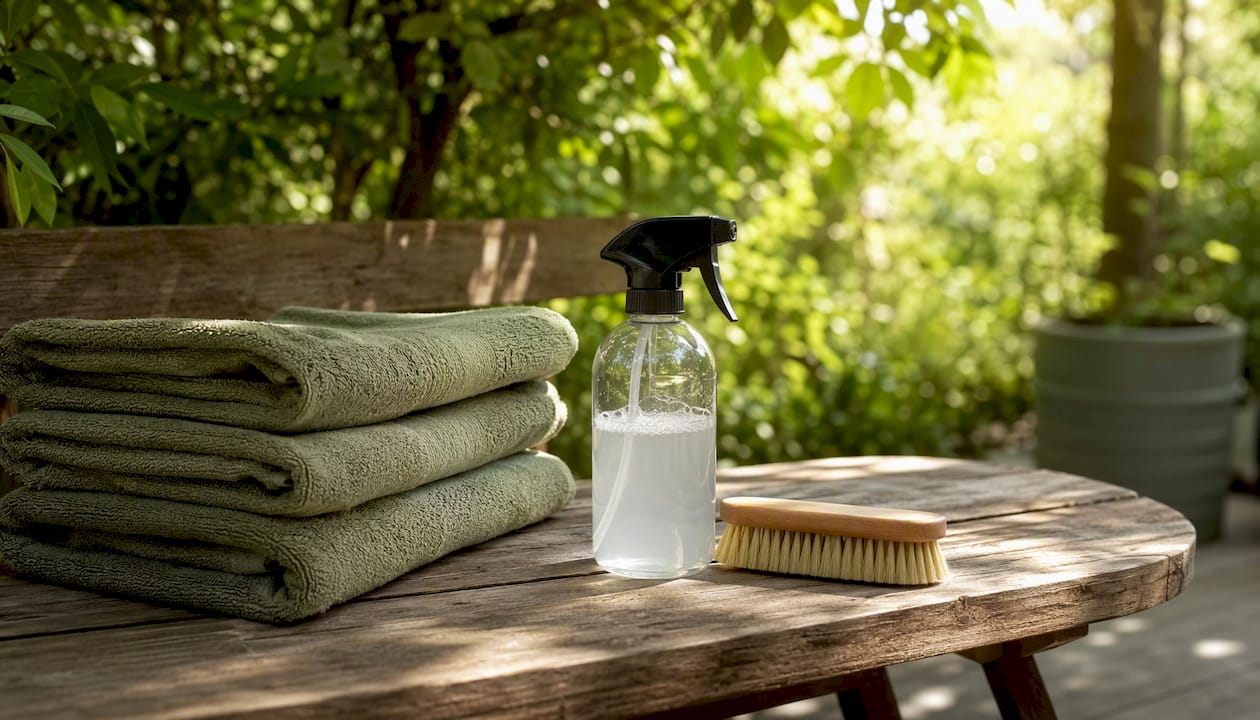
Pro Tip: Keep a stack of white towels, a soft-bristle brush, and a spray bottle of soapy water on hand for outdoor gear. White towels won’t transfer dye onto the item you’re cleaning, which matters more than people expect.
Cleaning Bug Spray Off Counters, Tile, Wood, and Decks
Hard surfaces are more forgiving than fabric, but finishes can still take a hit if you go in too aggressive too fast.
- Start with a damp microfiber cloth and a mild dish soap solution.
- If residue is still sticky, try rubbing alcohol or a citrus-based degreaser like 303 Bug Remover, testing on a hidden spot first.
- Gently scrub with a nylon brush or plastic pad, never anything abrasive on finished wood or natural stone.
- Rinse and dry thoroughly, keeping standing water off wood or laminate.
Overspray on a deck or countertop tends to leave a hazy film rather than a clear stain, which is why it’s easy to miss until it’s tracked onto shoes or hands.
A Magic Eraser can knock out stubborn film on sealed surfaces, but test it in a corner first since it’s mildly abrasive. If a slippery residue keeps coming back after cleaning, repeat the gentle method again before reaching for something stronger.
When Is Bug Spray Damage Permanent?
Some marks just won’t come out, and knowing that early saves you from ruining a fabric with repeated scrubbing.
- Gummy or tacky texture that doesn’t loosen after cleaning attempts usually means the fibers have absorbed and reacted with the repellent.
- Melted-looking plastic on gear, sunglasses, or equipment cases is a sign the item’s finish is gone for good.
- Softened or stretched synthetic fibers that stay that way after washing indicate the polymer structure itself has broken down.
If synthetic fabric feels sticky to itself when folded, that’s not a stain anymore. It’s chemical damage, and no cleaner reverses it.
If you spot any of these signs, stop cleaning. Isolate the item, skip the dryer entirely, and check with the gear’s manufacturer before attempting a repair. For furniture or clothing you care about, a professional upholstery or textile repair service is a better bet than another round of scrubbing.
How to Prevent Bug Spray Stains Before They Happen
The easiest stain to deal with is the one that never lands on fabric or furniture in the first place.
- Spray repellent onto skin, let it dry for a minute, then get dressed rather than spraying over clothes you’re already wearing.
- Apply outdoors whenever possible, and never spray directly at your face.
- For treating fabric specifically, picaridin and permethrin-based clothing treatments are built for that job and carry less staining risk than a general skin spray.
- Store cans upright, and drape a towel over gear before spraying nearby to catch overspray.
Pro Tip: A roll-on or balm format gives you far more control than an aerosol. Less drifting mist means less landing on your shirt, your gear, or your patio furniture in the first place.
Why Some Bug Sprays Resist Cleaning: A Quick Chemistry Note
DEET and some of the carrier oils in repellents don’t just sit on top of fabric. They behave chemically like a mild solvent, which is exactly why they can soften or dissolve certain synthetic polymers on contact. Cleaning experts frame bug spray removal as a chemistry problem first: figure out whether you’re dealing with oily residue or actual polymer damage before you touch a cleaner.
That’s also why isopropyl alcohol works so well on fresh stains. It dissolves the same oily compounds that DEET is suspended in, while enzyme and oxygen cleaners like OxiClean break down the carrier oils that alcohol alone might leave behind.
DEET’s solvent-like behavior is the same property that repels bugs. It’s also the reason it can be tough on certain plastics and synthetic fibers.
What I’ve Learned About Bug Spray Cleanup
Most of the frustration with bug spray stains comes down to one thing: people wait too long to act, then reach for the strongest chemical they own instead of the right one. A gummy synthetic shirt sleeve isn’t asking for more scrubbing, it’s telling you the damage is already done. That’s part of why Jeffi built its repellents to skip DEET entirely, favoring formulas that are gentler on skin and far less likely to leave gear ruined after one camping trip.
A Gentler Way to Avoid the Cleanup Altogether
There are other routes to bug protection, from permethrin-treated clothing to standard DEET sprays, but if the stains and skin irritation are the real problem you’re trying to solve, a DEET-free option removes both risks at once. Jeffi makes its mosquito repellent balms and roll-ons without DEET, which means less risk to tent fabric, hiking gear, and swimsuits, and a gentler experience for sensitive skin.

The lineup includes balms, roll-ons, and lotion pumps designed to apply with control instead of overspray, plus bug bite relief and skin-care items like whipped body butters for soothing skin afterward. If your evenings outside keep ending with a ruined shirt or an itchy arm, browse the natural repellent and skin-care collection and pick a format that fits how your family actually spends time outdoors.
Frequently Asked Questions
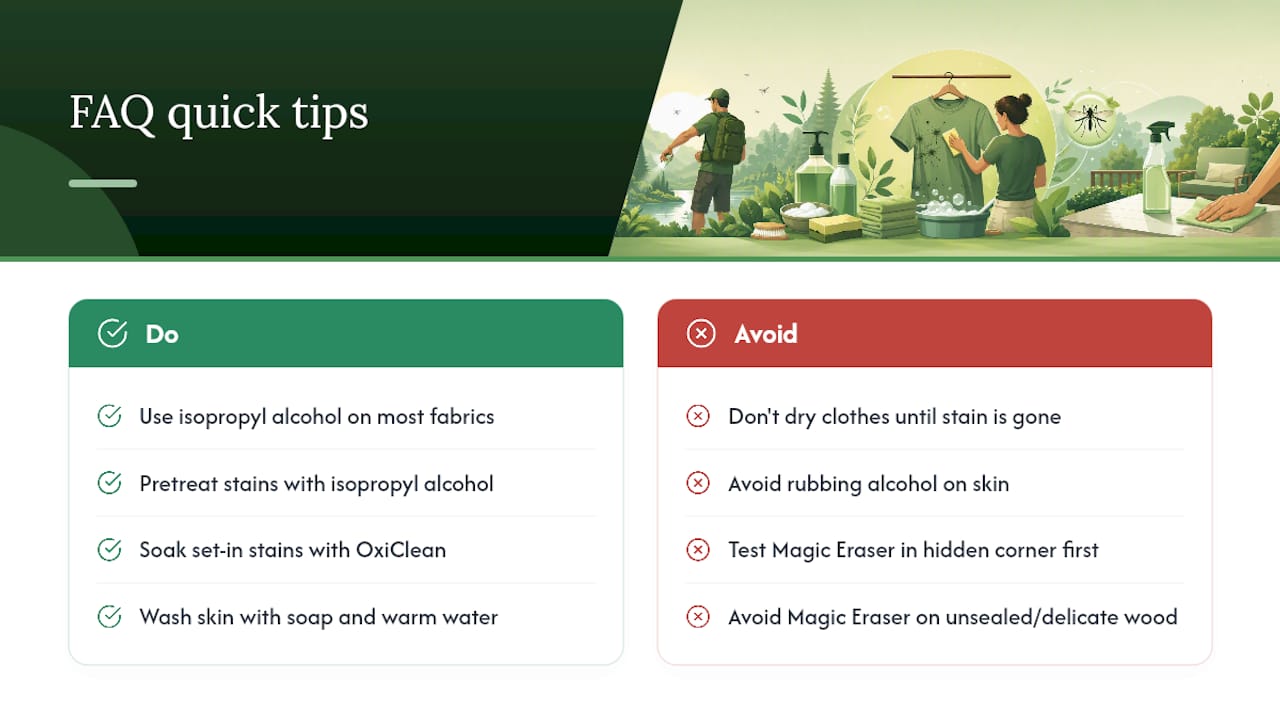
Does isopropyl alcohol remove bug spray from all fabrics? It works well on most natural and many synthetic fibers if the fabric isn’t already damaged. If the material already feels gummy, alcohol won’t restore it since the damage is chemical, not just a surface stain.
Can you use OxiClean on a bug spray stain? Yes, an oxygen-based soak like OxiClean is effective on set-in stains, especially after an isopropyl alcohol pretreat has broken down the initial oily residue.
Is it safe to put bug-sprayed clothes in the dryer? Not until the stain is completely gone. Heat can set the mark permanently and accelerate any damage DEET has already caused to synthetic fibers.
What removes bug spray residue from skin fastest? Plain soap and warm water. Skip solvents like rubbing alcohol on skin, since they can dry out or irritate it rather than help.
Will a Magic Eraser damage my countertop or wood finish? It can, since the eraser is mildly abrasive. Always test a hidden corner first, and avoid it on unsealed or delicate wood finishes altogether.
This article is general information, not a substitute for advice from a qualified doctor. Consult a qualified healthcare professional about your own circumstances before acting on anything here.
Sources
- Be vigilant about bug spray - Harvard Health
- Ask ACI: Bug Spray and Sunscreen on Clothes | The American Cleaning Institute (ACI)
- Insect Repellents | The Hospital of Central Connecticut | CT
- Removing Bug Spray Stains: The Chemistry of DEET and Plasticizers