

The fastest way to reduce mosquito attraction in your yard is to remove standing water, trim dense vegetation, shift watering to early morning, run a fan on your patio, and apply an all-natural DEET-free repellent before you head outside. These five habits, backed by NC State Extension and University of Florida IFAS guidance, address both where mosquitoes breed and where they rest.
Do these today:
- ✅ Tip and toss any container holding water (buckets, saucers, toys, tarps)
- ✅ Refresh birdbaths and pet bowls; stagnant water is a breeding site within days
- ✅ Clear clogged gutters so rainwater drains freely
- ✅ Set a box fan on your patio at high speed — mosquitoes are weak fliers
- ✅ Apply a DEET-free balm or roll-on, like those from Jeffi (Non-GMO Project verified), before going out
Table of Contents
- What yard habits actually reduce mosquito attraction?
- What should you avoid in your yard?
- Why working with your neighbors multiplies your results
- How long until you see fewer mosquitoes?
- Your seasonal yard maintenance checklist
- Key Takeaways
- Why Jeffi believes natural protection and good yard habits go hand in hand
- Jeffi’s DEET-free products complement every yard habit you build
- Useful sources and further reading
What yard habits actually reduce mosquito attraction?
The single most powerful step is source reduction: eliminating the standing water where mosquitoes lay eggs. A bottle cap of water is enough for dozens of eggs. Walk your yard and check plant saucers, old tires, tarps, boat covers, and low spots that pool after rain. Empty them, flip them, or drill drainage holes.
Water features need attention too. Actively circulating fountains and aerated ponds are usually not breeding sites because larvae need stagnant water rich in organic matter to survive. Birdbaths and pet bowls are a different story. Flush birdbaths every three to four days in summer, and refresh pet water daily. For rain barrels or wildlife ponds you can’t drain, add a Bti (Bacillus thuringiensis israelensis) dunk. Bti is highly targeted — it kills mosquito larvae without harming bees, butterflies, fish, or frogs.
Pro Tip: The dunk bucket method concentrates egg-laying into one controlled container treated with Bti, so females lay eggs that never reach adulthood. Place a dark bucket of water with a Bti dunk in a shaded corner — it draws mosquitoes away from you and stops them in the larval stage.
Dense vegetation is the other half of the problem. Landscaping choices create mosquito microenvironments — shaded, humid pockets under thick shrubs and in tall grass where mosquitoes rest during the day. Mow regularly, trim shrubs so air moves through them, and clear leaf litter and stacked wood or debris. Pay special attention to the undersides of dense plantings and low shaded corners; those are prime resting spots.
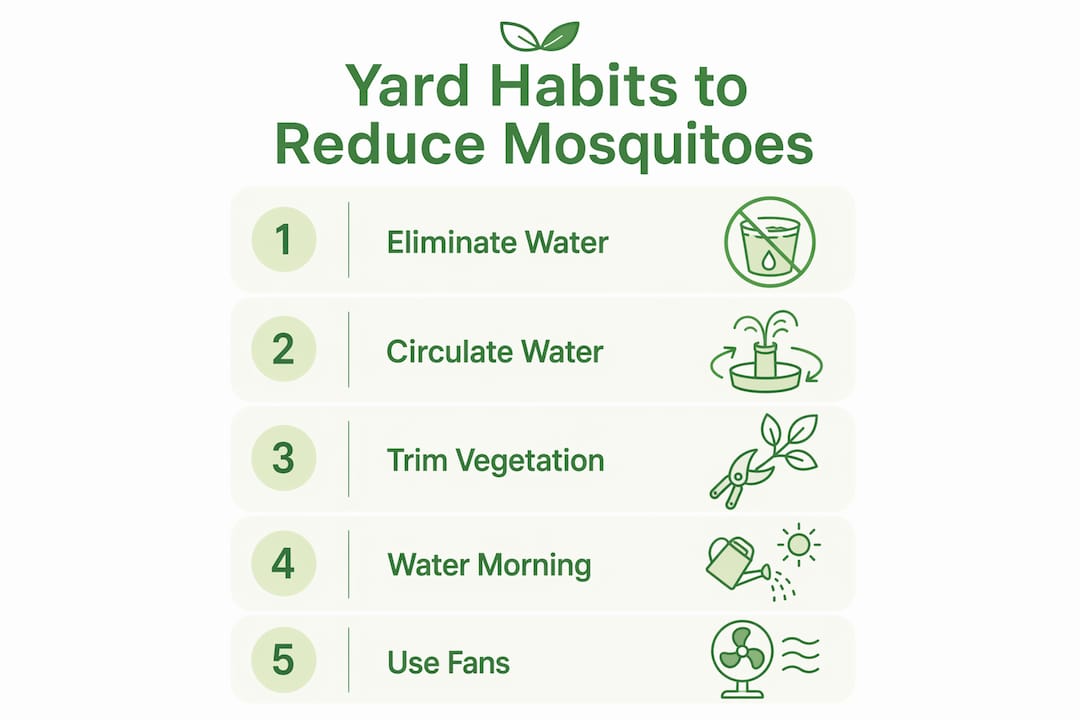
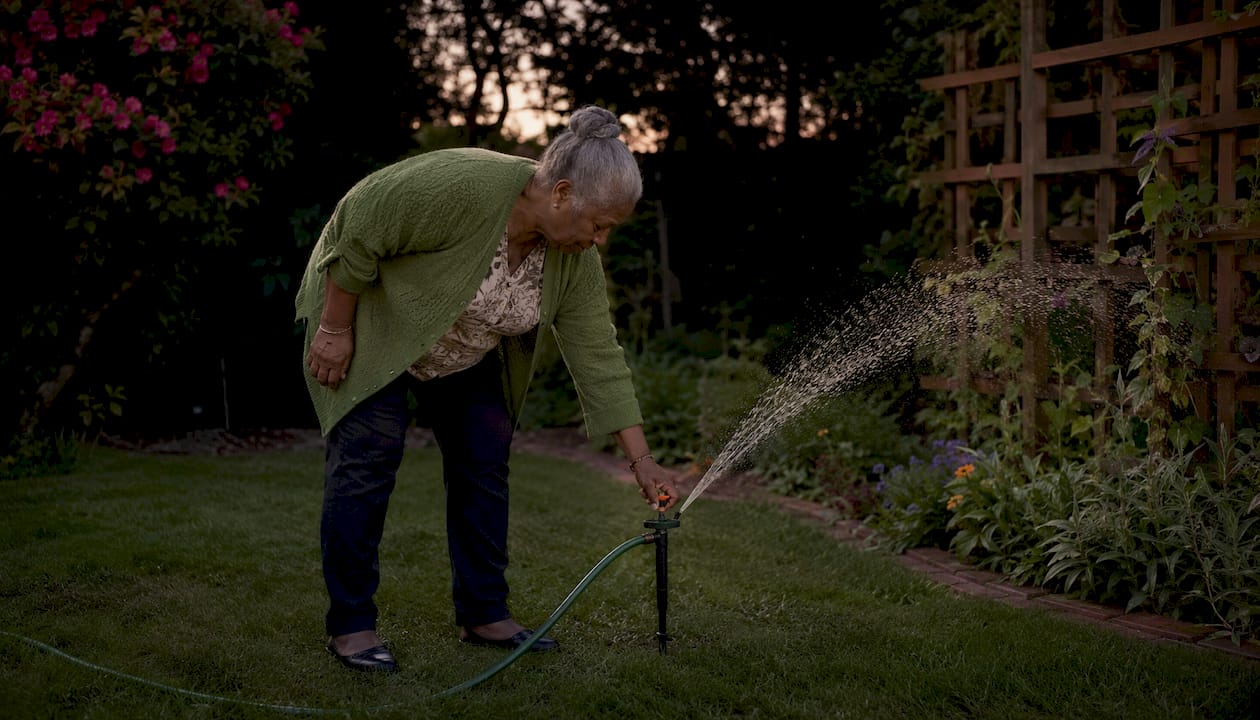
Irrigation timing matters more than most people realize. Watering in the evening leaves grass and soil wet overnight, creating exactly the cool, damp conditions mosquitoes prefer. Irrigating around sunrise lets leaf blades dry out during the day and reduces surface moisture that supports resting adults. Reduce overhead sprinkler run time and avoid overwatering — soggy soil is a microhabitat, not just a lawn problem.
On the patio, run a fan on high. Mosquitoes are weak fliers and a steady breeze disrupts their ability to locate you. Switch incandescent bulbs to yellow bug lights, which attract fewer insects. Arrange seating in open areas rather than tucked against dense hedges.
What should you avoid in your yard?
Some popular fixes waste your time or actively make things worse.
- Bug zappers kill large numbers of beneficial insects — moths, beetles, and other pollinators — while doing very little to reduce mosquito populations. NC State Extension warns that zappers are a poor choice for mosquito management.
- Routine yard-wide sprays and misting systems provide temporary suppression at best. Foggers and thermal fogging can reduce adults for hours to days but do not address breeding sites and harm pollinators.
- Repellent plants (citronella, lavender, marigolds) add some value near seating areas and may deter a few insects, but they are not a landscape-level solution on their own. Think of them as a pleasant bonus, not a strategy.
- Citronella candles work only in very close proximity and only when there’s no breeze. Useful for a small table setting; not useful for a whole yard.
- Topical repellents on plants or soil. Skin-labeled repellent formulations should never be sprayed onto vegetation, soil, or water. They are not registered for that use and can harm non-target organisms.
Why working with your neighbors multiplies your results
Here’s something most yard-care guides skip: your yard alone can’t solve the problem. Mosquitoes can travel moderate distances between properties, which means a neighbor’s neglected birdbath or clogged gutter keeps repopulating your space no matter how diligent you are. Coordinated source reduction across multiple properties is what actually moves the needle.
Practical steps to get neighbors involved:
- Organize a one-day “tip and toss” yard sweep — invite neighbors to walk their properties together and eliminate water-holding containers on the same day.
- Share a simple flyer covering the top five breeding sites (gutters, saucers, tarps, buckets, tires) and how to screen rain barrels.
- Coordinate gutter and street-drain cleaning before peak mosquito season (late spring).
- Introduce neighbors to Bti dunks for any non-drainable water they maintain.
- Contact your local vector control district if there are large standing-water sources nearby — abandoned pools, drainage ditches, or wetland edges — that require professional treatment.
How long until you see fewer mosquitoes?
Mosquitoes can complete their lifecycle from egg to adult quickly in warm weather. That means removing breeding sites produces results faster than most people expect — but adult populations don’t disappear overnight.
| Action | Typical cost | Frequency | Time to noticeable change |
|---|---|---|---|
| Tip and toss containers | Free | Weekly | Immediate to 1–3 weeks |
| Refresh birdbaths/pet bowls | Free | Every 3–4 days | 1–3 weeks |
| Clear gutters | Free or — (pro) | Each spring and fall | Days to 1 week |
| Add Bti dunks | $10 per pack | Monthly (active season) | 1–3 weeks |
| Trim shrubs and mow | Free or lawn-service cost | Weekly in summer | 1–3 weeks |
| Neighborhood cleanup | Free | One-time + seasonal | 2–4 weeks |
Adult numbers typically fall over 1–3 weeks once breeding sites are consistently removed. Use a DEET-free topical repellent during that window — personal protection fills the gap while habitat changes take effect.
Your seasonal yard maintenance checklist
Keep mosquito pressure low all year with this simple rhythm.
** Spring (March–May)**
- Inspect and clear gutters before the first heavy rains
- Walk the yard and remove any containers that collected winter debris
- Check tarps, boat covers, and low-lying areas for pooled water
- Add Bti dunks to any non-draining water features
☀️ Summer (June–August)
- Tip and toss containers every week without exception
- Refresh birdbaths every 3–4 days; pet bowls daily
- Mow and trim weekly; clear leaf litter after storms
- Water at sunrise, not in the evening
- Run patio fans during outdoor gatherings
- Reapply DEET-free repellent as directed on the label
** Fall (September–November)**
- Clear fallen leaves promptly — wet leaf piles hold water and create resting habitat
- Remove dead plant material from garden beds
- Drain and store containers that won’t be used until spring
- Do a final gutter cleaning after leaves have dropped
Monthly reminder: Check plant saucers, empty dunk buckets, and inspect gutters. A 10-minute walk-through once a month prevents most problems before they start.
Key Takeaways
Removing standing water and trimming dense vegetation are the highest-impact yard habits for reducing mosquito attraction, and pairing them with a DEET-free topical repellent protects you while habitat changes take effect.
| Point | Details |
|---|---|
| Source reduction first | Eliminating standing water is the single most effective homeowner action for reducing mosquito populations. |
| Refresh water features often | Flush birdbaths every 3–4 days; add Bti dunks to any water you can’t drain. |
| Trim and mow regularly | Dense shrubs and tall grass create shaded, humid resting spots that increase mosquito comfort. |
| Neighborhood effort multiplies results | Mosquitoes travel hundreds of yards to miles, so coordinated cleanup across properties yields the biggest impact. |
| Jeffi fills the personal-protection gap | Use Jeffi’s DEET-free balms, roll-ons, and lotions while yard changes take effect over 1–3 weeks. |
Why Jeffi believes natural protection and good yard habits go hand in hand
At Jeffi, we started with a simple belief: you shouldn’t have to choose between enjoying your yard and protecting your skin with harsh chemicals. Our product line — DEET-free mosquito repellent balms, roll-ons, and lotions, plus bug bite relief ointments, Non-GMO Project verified hand and body lotions, whipped body butters, and sugar scrubs — was built for people who want effective protection without synthetic ingredients they can’t pronounce.
We see yard habits and topical protection as two sides of the same approach. Habitat changes reduce the mosquito population over time; a clean, natural repellent protects you right now, today, while those changes take hold. That combination is what extension researchers at NC State and the University of Florida have consistently pointed toward: reduce breeding sources, protect yourself personally, and work with your community.
Jeffi’s DEET-free products complement every yard habit you build
Yard changes take 1–3 weeks to reduce adult mosquito numbers. That’s exactly when you need personal protection you can trust. Jeffi’s all-natural repellent products — DEET-free balms, roll-ons, and lotions — give you a safe, skin-friendly barrier while your habitat work takes effect. Every product is Non-GMO Project verified, free of synthetic chemicals, and formulated for sensitive skin.

For families with kids or pets, follow the product label and current CDC/EPA guidance on application frequency and age-appropriate use. Reapply as directed, especially after sweating or swimming. After bites happen, Jeffi’s bite-relief ointments and whipped body butters soothe irritated skin naturally. New to Jeffi? The product bundles pair repellent and after-bite relief so you’re covered from the first mosquito of the season to the last. Visit jeffi.us to find the right products for your outdoor routine.
Useful sources and further reading
These extension and public-health resources back the guidance throughout this article:
- NC State Extension — Mosquito Management: A Great Neighborhood Project: The source for neighborhood collaboration strategy, bug zapper limitations, and source-reduction best practices. Read it here.
- University of Florida IFAS — Mosquitoes and Their Control (IN1045): Detailed homeowner guidance on source reduction, Bti use, birdbath flushing, and integrated pest management. Read it here.
- Texas A&M AgriLife Extension — DIY Backyard Mosquito Control: Covers larval biology, water-feature management, and the limitations of foggers and temporary suppression methods.
- CDC — Mosquito Control at Home: Official public-health guidance on removing standing water, using larvicides, and protecting your household. Visit cdc.gov/mosquitoes for current recommendations.
- EPA — Insect Repellent Use and Safety: For guidance on EPA-registered repellent ingredients and safe use with children, visit the EPA’s repellent finder at epa.gov.
- Local vector control districts: For large-scale standing-water problems (abandoned pools, drainage ditches), contact your county or municipal vector control program.
- Jeffi — Natural Mosquito Repellent and Skin Care Products: For DEET-free topical repellents and bite-relief skincare, visit jeffi.us.
This article is general information, not professional medical or pest-control advice. Confirm current guidelines with your local extension office, vector control district, or a licensed professional for your specific situation.