

Cold-pressed bergamot, lemon, lime, grapefruit, and bitter orange top the list of photosensitive essential oils, along with a handful of less common oils like angelica root. The top-line rule: don’t apply expressed (cold-pressed) citrus oils to skin that’s headed for sunlight. If you want a daytime-safe option, reach for FCF (furanocoumarin-free) or steam-distilled versions instead.
- Skip leave-on application of phototoxic oils before sun exposure.
- Stay under published maximum dermal percentages for any leave-on product.
- Wait 12 to 24 hours before sun exposure if you’ve used a phototoxic oil above trace amounts.
Pro Tip: If a label says “cold-pressed” or “expressed,” treat that oil as phototoxic until proven otherwise. It’s the single fastest gut-check you’ll ever need.
Key Takeaways
Photosensitive essential oils cause skin damage through furanocoumarins reacting with UVA light, and extraction method (expressed versus steam-distilled) determines nearly all of that risk.
| Point | Details |
|---|---|
| Know the high-risk oils | Expressed bergamot, lemon, lime, grapefruit, and bitter orange top the phototoxic list. |
| Check the extraction method | Cold-pressed or expressed means treat it as phototoxic; steam-distilled or FCF is generally safer. |
| Respect dermal limits and timing | Stay under published percentages and wait at least 12 to 24 hours before sun exposure. |
| Match product type to risk | Wash-off products carry far less risk than leave-on lotions, oils, or serums. |
| Choose finished daytime products | Jeffi formulates lotions and body butters with FCF and steam-distilled citrus for safer daily use. |
Table of Contents
- What Does Photosensitivity Mean for Essential Oils?
- Which Essential Oils Commonly Cause Photosensitivity?
- How Do You Know If an Oil Is Phototoxic?
- How Should You Dilute and Time Phototoxic Oils for Safety?
- What Should You Do If You Get a Phototoxic Reaction?
- Why Does Sunlight Trigger a Reaction With These Oils?
- Frequently Asked Questions
- Sources
What Does Photosensitivity Mean for Essential Oils?
Phototoxicity happens when a chemical in the oil absorbs UV light and damages skin cells directly. That’s different from a photoallergy, which involves your immune system reacting to sun-activated compounds over repeated exposure. Phototoxic reactions can happen the very first time, with no prior sensitization needed.
The compounds responsible are furanocoumarins (FCs), a family that includes bergapten, psoralen, and oxypeucedanin. They’re naturally present in the peel oils of many citrus fruits and a few other plants.
A reaction usually shows up within hours of UV exposure, and it can look alarming:
- Intense redness that resembles a sunburn but is sharply localized to where the oil touched skin.
- Blistering in more severe cases.
- Streaky or splotchy hyperpigmentation that can linger for weeks or months after the initial reaction fades.
Which Essential Oils Commonly Cause Photosensitivity?
Extraction method drives most of the risk here, and a short list of oils accounts for nearly every reported case.
High risk (expressed/cold-pressed citrus):
- Bergamot, expressed
- Lemon, expressed
- Lime, expressed
- Grapefruit, expressed
- Bitter orange (Seville orange)
Medium to variable risk (non-citrus offenders):
- Angelica root
- Rue
- Cumin
- Tagetes
- Fig leaf absolute
These non-citrus oils surprise a lot of people. Aromatherapy safety references flag angelica root and rue as carrying meaningful phototoxic risk even though neither smells or sells like a “citrus” product.
Generally non-phototoxic citrus alternatives:
- Steam-distilled or FCF bergamot
- Sweet orange
- Tangerine and mandarin
- Blood orange
- Yuzu
These still need normal dilution guidelines for basic skin comfort, even though sun exposure isn’t the concern. The dividing line almost always comes down to how the oil was pulled from the plant. Cold expression carries heavy, nonvolatile furanocoumarins straight into the finished oil, while steam distillation typically leaves those same molecules behind.
How Do You Know If an Oil Is Phototoxic?
Check the extraction method first. That’s the single most reliable clue you’ll find on any label. “Cold-pressed” or “expressed” means treat the oil as phototoxic. “Steam-distilled” or “FCF” (furanocoumarin-free, sometimes called bergapten-free) means it’s generally fine for daytime skin use.
Run through this checklist before you buy or apply anything:
- Look for the words “expressed,” “cold-pressed,” “steam-distilled,” “FCF,” or “bergapten-free” on the label.
- If none of that is listed, ask the supplier for a certificate of analysis (COA).
- For leave-on products, check whether the formulator followed IFRA dermal guidance—guidance-for-the-use-of-ifra-standardsa7006c445f36499bbb0eb141e8c0d4be.pdf?sfvrsn=7fb244c8_2) for furanocoumarin content.
- Note whether the product is a wash-off (soap, shower gel) or a leave-on (body oil, lotion, serum).
Pro Tip: Wash-off products carry far less risk than leave-on ones because contact time with skin is too brief for furanocoumarins to penetrate to a photoreactive depth. A bergamot-scented soap and a bergamot body oil are not the same risk category.
How Should You Dilute and Time Phototoxic Oils for Safety?
The short answer: avoid phototoxic oils on sun-exposed skin altogether. If you do use one, respect published dermal maximums and wait the recommended hours before UV exposure.
Industry-cited dermal maximums for leave-on products include:
- Bergamot, expressed: around 0.4%
- Lemon, expressed: around 2%
- Lime, expressed: around 0.7%
- Grapefruit, expressed: around 4%
- Bitter orange: around 1.25%
Doing the math matters more than memorizing percentages. Round down when in doubt.
Timing guidance holds at a minimum 12-hour wait before sun exposure after topical use of a phototoxic oil, with 24 hours or more often recommended for cold-pressed bergamot specifically. That window applies to tanning beds too. Artificial UV sources trigger the same reaction as sunlight.
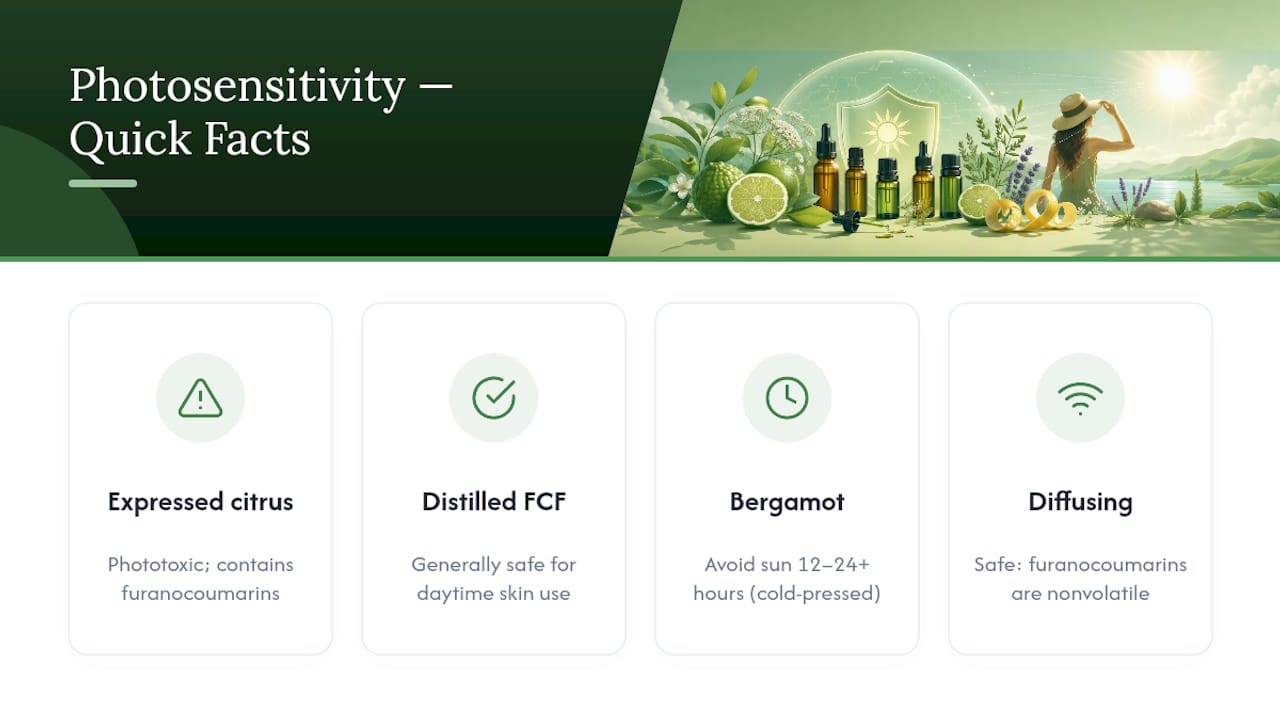
- Diffusing a phototoxic oil into the air poses no skin risk, since furanocoumarins are nonvolatile and don’t travel through vapor.
- Combining several phototoxic oils in one blend raises cumulative risk, so lower each oil’s percentage when you stack them.
- For anything meant for daytime skin, reach for FCF or steam-distilled citrus instead of expressed oils.
What Should You Do If You Get a Phototoxic Reaction?
Watch for intense redness, blistering, or streaky, almost “splashed” hyperpigmentation, usually appearing within a few hours to a day after sun exposure following oil application.
- Get out of the sun immediately and stay covered.
- Wash the area gently. Full-fat milk or a mild oil-based cleanser can help lift nonpolar oil residue that soap and water alone might miss.
- Apply a cool, damp compress to calm the skin.
- Avoid any further sun exposure to that area until it fully heals.
- Monitor for changes over the following days.
Seek medical care if you see large blisters, a spreading lesion, signs of infection, severe pain, or hyperpigmentation that doesn’t fade after several weeks. Call a clinician or poison control right away if you notice any systemic symptoms like fever or widespread rash.
Why Does Sunlight Trigger a Reaction With These Oils?
Furanocoumarins like bergapten, psoralen, and oxypeucedanin absorb UVA radiation in the 320 to 400 nanometer range, and that absorption creates reactive intermediates that damage skin cell DNA directly. It’s not an immune response like a typical allergy. It’s closer to a chemical burn that needs both the compound and the light to happen at the same time.
The extraction method is often the whole story: cold-pressed citrus oils carry furanocoumarins straight from the peel into the bottle, while steam-distilled versions of the same fruit typically leave those molecules behind. Read the label before you read the ingredient name.
A few points anchor the evidence here:
- IFRA sets dermal limits specifically to account for furanocoumarin content in finished, leave-on products.
- Analytical testing confirms cold-pressed oils carry meaningfully more FCs than their steam-distilled counterparts.
- Clinical case reports of phytophotodermatitis consistently trace back to UVA exposure following topical contact with FC-rich plant oils.
One common misconception worth clearing up: limonene isn’t the culprit, even though it’s the dominant compound by volume in most citrus oils. The risk sits entirely with the furanocoumarin fraction.
A rule of thumb we build our formulas around
We think about this every time we source citrus oils for a Jeffi product meant for daytime skin. If an oil is expressed rather than distilled, it doesn’t go into anything leave-on. That’s why we lean on FCF and steam-distilled citrus for skin care you’ll wear outside. Our rule of thumb: if you’ll be outdoors within 12 hours, skip expressed citrus on any skin the sun can reach.
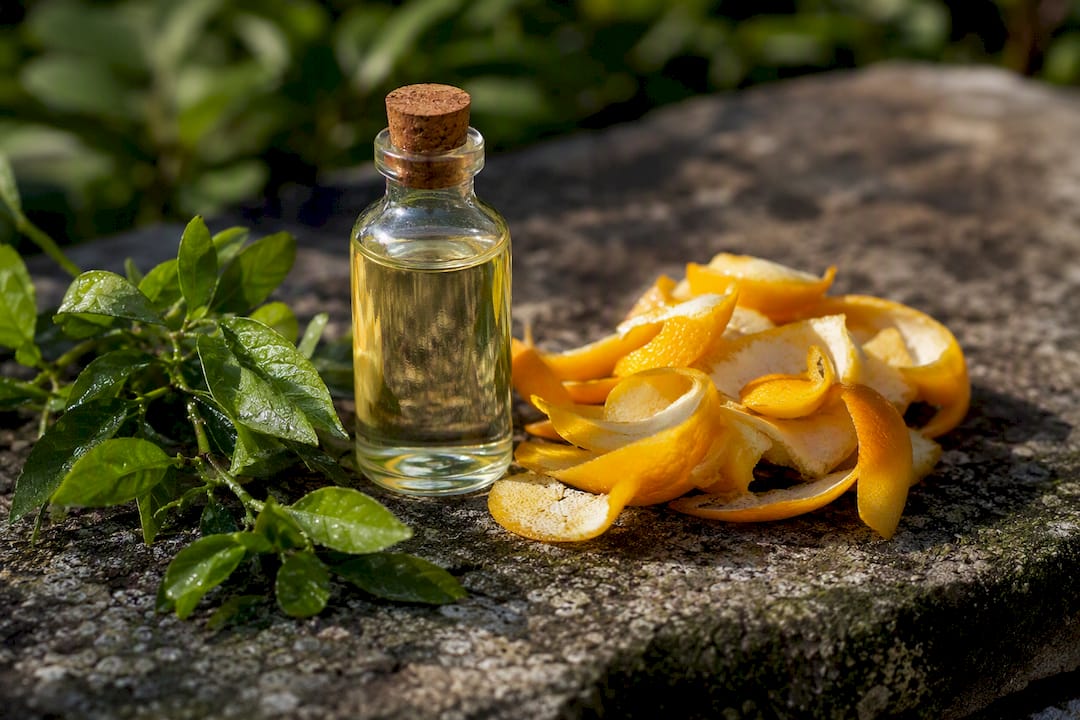
A safer shortcut than DIY blending
Formulating your own citrus-based lotion means calculating furanocoumarin load, tracking dermal percentages, and hoping your math holds up in July sun. A finished product built with FCF or steam-distilled ingredients skips that guesswork entirely, since the formulation and testing are already done. That’s the thinking behind Jeffi’s hand and body lotion, formulated for daily use without the phototoxic citrus concerns that come with expressed oil blends. If you want a body butter or scrub built the same way, browse the whipped body butters collection or start at Jeffi to see the full non-GMO Project Verified lineup and pick what fits your routine.
Frequently Asked Questions
Are all citrus essential oils photosensitive? No. Expressed (cold-pressed) citrus peel oils carry the phototoxic risk. Steam-distilled versions and FCF variants of the same fruit are generally safe for daytime skin use.
How long should I avoid the sun after using bergamot oil? A minimum of 12 hours, with 24 hours or longer commonly recommended for cold-pressed bergamot specifically.
Can I diffuse phototoxic essential oils safely? Yes. Furanocoumarins are nonvolatile, so diffusing an oil into the air doesn’t create the skin contact needed for a phototoxic reaction.
Is lavender or tea tree oil photosensitive? No, neither is considered phototoxic. The risk is concentrated in expressed citrus oils and a small group of non-citrus plants like angelica root and rue.
What’s the difference between photosensitivity and a regular allergic reaction to essential oils? Photosensitivity requires UV light to trigger cell damage and can happen on first use. A regular allergy is an immune response that typically develops after repeated exposure and doesn’t need sunlight.
This article is general information, not a substitute for advice from a qualified doctor. Consult a qualified healthcare professional about your own circumstances before acting on anything here.
Sources
- Phototoxicity: essential oils, sun and safety - Tisserand Institute
- Essential Oil Safety: What is Photosensitivity? | American College of Healthcare Sciences
- Phototoxic Essential Oils: Dermal Limits & Safe Use Guide
- Ncbi
- Ncbi