

If you’re heading into a heavy sweat session, your best natural bug barrier is an anhydrous (waterless) balm packed with evidence-backed botanicals like oil of lemon eucalyptus, applied generously and reapplied often. Pair it with permethrin-treated clothing or physical coverage, and set a mental timer to reapply. That combination beats any single product working alone.
Here’s your quick-start checklist before you head out the door:
- Apply a thick layer of anhydrous balm to all exposed skin, 10 to 15 minutes before you start moving.
- Layer up with permethrin-treated socks, sleeves, or pants if you’re heading into brush, tall grass, or dawn/dusk conditions.
- Pack a small reapply kit, a tin or wipes, so you’re not caught unprotected an hour into your run.
No natural product on the market is truly sweat-proof, and you shouldn’t expect one to be. The realistic goal is sweat-resistant protection that holds up for moderate stretches of time, not an all-day force field.
Pro Tip: Keep your reapply kit somewhere you’ll actually see it, a running belt pocket or hydration vest strap, not buried at the bottom of your pack where it never gets used.
Key Takeaways
Natural, sweat-resistant bug protection works best when an anhydrous balm with a standardized botanical active is combined with timed reapplication and physical barriers like treated clothing.
| Point | Details |
|---|---|
| Choose the right format | Anhydrous balms and thick sticks resist sweat far better than water-based sprays or mists. |
| Understand the science | Sweat releases lactic acid and raises heat/CO2 output, both of which attract biting insects. |
| Reapply on a schedule | Plan to reapply regularly during heavy exertion, not by the standard label timing alone. |
| Layer with gear | Permethrin-treated clothing and physical coverage close the gaps topical product can’t reach. |
| Know your limits | Save EPA-registered actives like DEET for disease-endemic travel or heavy vector exposure. |
| Consider Jeffi’s balm | Jeffi’s anhydrous, Non-GMO Project verified balm is formulated specifically for sweat-heavy activity. |
Table of Contents
- Why Heavy Sweating Undermines Insect Repellents
- Which Repellent Formats Hold Up Best When You Sweat?
- Which Natural Ingredients Actually Work?
- How to Apply and Reapply During a Run or Race
- A Simple DIY Anhydrous Balm You Can Make at Home
- Clothing and Gear That Cut Bite Risk
- When Should You Choose an EPA-Registered Repellent Instead?
- Jeffi’s Balm Is Built for Days You Actually Sweat
- Frequently Asked Questions
- Sources
Why Heavy Sweating Undermines Insect Repellents
Sweating doesn’t just wash repellent off your skin. It actively makes you more attractive to biting insects. Lactic acid, a byproduct of muscle exertion, is one of the chemical signals mosquitoes use to find a host, and UC Riverside entomology research confirms it plays a direct role in drawing them toward active people. Combine that with the extra heat and carbon dioxide your body throws off during exercise, and you’ve built a homing beacon.
Two separate problems compound from there. First, your body is emitting new attractant chemicals in real time, so the insect’s targeting signal gets stronger the longer and harder you work out. Second, sweat and moisture accelerate evaporation of the volatile oils in most repellent formulas, especially thin, water-based sprays that were never built to survive heavy perspiration.
Active exercise raises your bite risk not because insects are more active, but because your body is broadcasting a louder signal for them to find.
The EPA’s guidance on insect repellents is blunt about this: reapplication timing depends on formulation and exposure conditions, and label instructions exist precisely because sweat, water, and friction all shorten a product’s working window. If you’re an athlete, plan on reapplying more frequently than the average label assumes.
Which Repellent Formats Hold Up Best When You Sweat?
For sweat resistance, the practical ranking looks like this: anhydrous balms and thick sticks perform best, oil-based roll-ons come next, solvent-based sprays trail behind, and thin water-based mists fall last. The reasoning comes down to how each format handles moisture and evaporation.
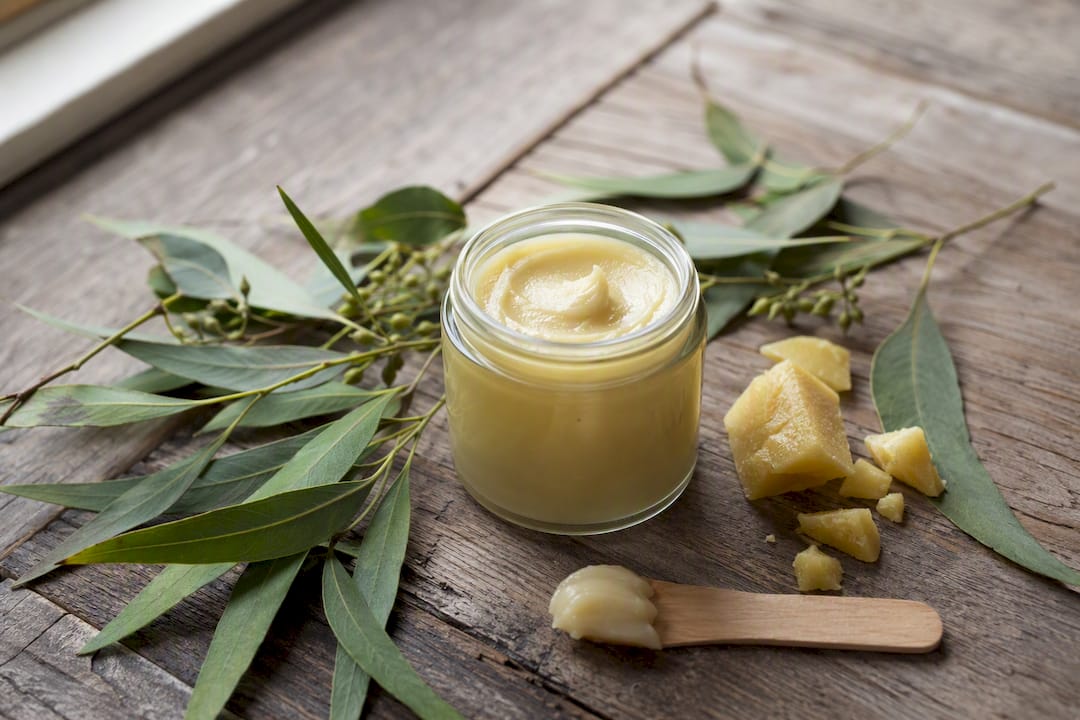
Anhydrous balms use occlusive carriers, think coconut oil, cocoa butter, or beeswax, to physically slow the evaporation of active botanical oils. That moisture-locking barrier is exactly what lets a balm outlast a spray during a hard trail run. Roll-ons offer similar chemistry in a thinner layer, so they hold up well but need slightly more frequent topping off. Sprays, especially water-based ones, sit on the surface and rinse away with the first real sweat.
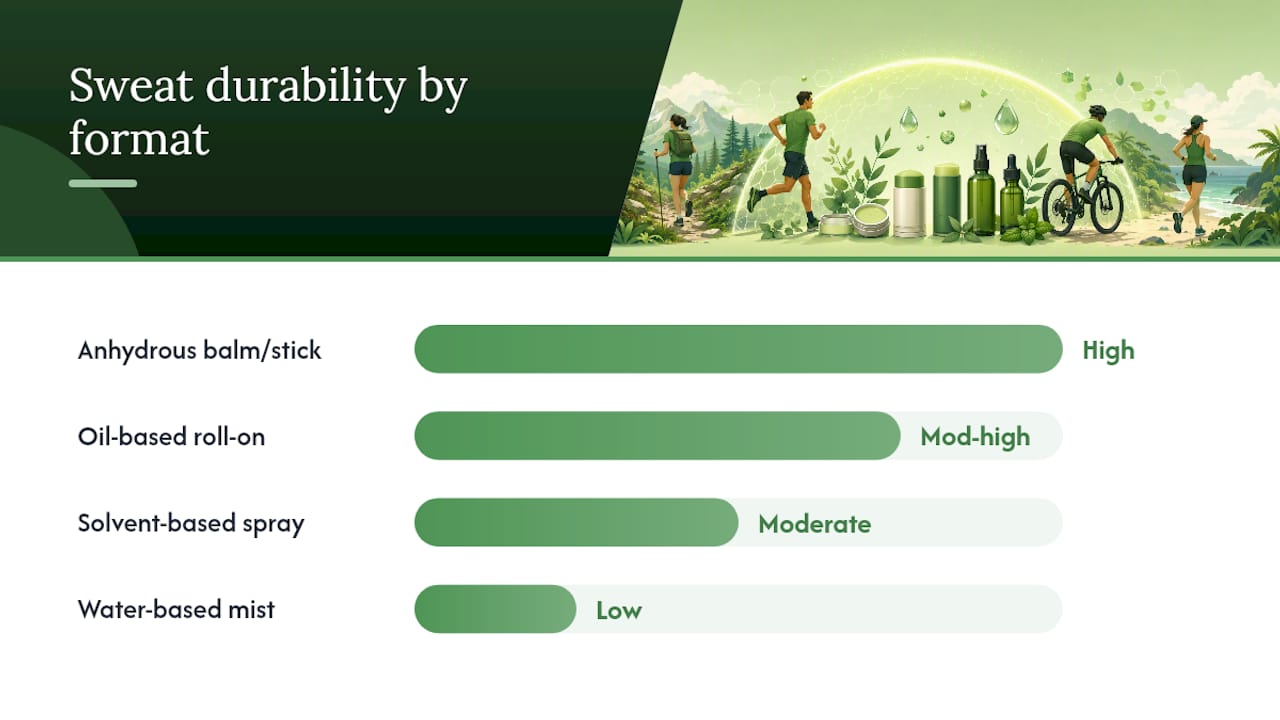
| Format | Durability under sweat | Reapply frequency | Skin comfort | Ideal activity |
|---|---|---|---|---|
| Anhydrous balm/stick | High | Every 60-90 min | Moisturizing, slightly greasy | Trail running, hiking, cycling |
| Oil-based roll-on | Moderate-high | Every 60 to 120 minutes | Light, fast-absorbing | Road running, paddling |
| Solvent-based spray | Moderate | Every 60 to 120 minutes | Can feel drying | Casual walks, low exertion |
| Water-based mist | Low | About every 20 minutes | Very light | Brief, low-sweat outings |
A few practical trade-offs worth weighing:
- Balms take an extra few seconds to apply but rarely need a second coat mid activity.
- Roll-ons are easy to stash in a vest pocket but can migrate if you’re sweating through your hairline.
- Sprays are fastest to apply over large areas but the least durable option once you’re working hard.
Pro Tip: If you’re heading into tick country or a midge swarm, don’t rely on topical product alone. Pair your balm with permethrin-treated clothing or a head net for the areas skin coverage can’t reach.
Which Natural Ingredients Actually Work?
Among natural actives, formulations built around oil of lemon eucalyptus and its active compound, PMD, carry the strongest evidence. Plain citronella or a citrus scent by itself isn’t reliably protective once you’re sweating hard, no matter how good it smells in the bottle.
Here’s how the common natural actives stack up:
- PMD (from oil of lemon eucalyptus): the most studied natural active, and CDC materials note that properly standardized formulations can approach the protection of low-dose synthetic options.
- Citronella and lemongrass: provide real but short-lived protection, often needing reapplication well before other actives.
- Peppermint and catnip oil: show supporting effects in some studies but results vary widely by formulation and concentration.
- Soybean and other carrier oils: extend how long an active ingredient stays on skin, but they aren’t repellents on their own.
A peer-reviewed study indexed on PubMed found that essential-oil-based repellents generally deliver shorter protection windows than synthetic actives, which is exactly why formulation matters so much for athletes who can’t reapply every 20 minutes mid race.
Scent alone doesn’t repel anything. It’s the standardized active ingredient and the carrier that holds it against your skin that actually confers protection.
Before you try anything new, patch test on your inner forearm and wait 24 hours. Avoid applying near the eyes or mucous membranes, and if you’re pregnant, nursing, or applying to a child, check with a doctor first since dosing guidance differs by age and product. University extension research backs up a simple rule: formulation, not fragrance, is what determines whether a natural repellent actually works.
How to Apply and Reapply During a Run or Race
Apply a thick layer of anhydrous balm to all exposed skin 10 to 15 minutes before you start moving, then reapply after heavy sweating or every 60 to 120 minutes depending on conditions and your product’s label instructions.
- Before you start: clean, dry skin holds product better than skin that’s already damp. Apply to ankles, wrists, neck, and hairline first, areas that see the most bites.
- During activity: carry a small tin, balm stick, or individually wrapped wipe for a quick reapply without stopping your watch for more than a few seconds. Long runs or multi-hour rides benefit from a mid-point top off.
- After activity: wash skin thoroughly to remove sweat, salt, and residual product, then follow with a gentle moisturizer to keep skin from drying out.
For races or group events, stash your reapply kit somewhere predictable, a hydration vest pocket or drop bag, so it’s ready the moment you need it. Balms can soften in hot cars or direct sun, so keep them in a shaded pocket rather than a dashboard or exposed pack pouch.
Pro Tip: If chafing is already a concern on long efforts, apply balm slightly before your usual anti-chafe product in high-friction zones, underarms, inner thighs, so the two don’t compete for the same skin real estate.
A Simple DIY Anhydrous Balm You Can Make at Home
A basic anhydrous balm, built from an occlusive carrier plus a concentrated botanical active, can outperform a water-based spray for sweat resistance. That said, test any homemade formula carefully and use extra caution for sensitive skin, young children, or anyone with a history of allergic reactions.
Basic ratio for a small batch:
- 2 tablespoons coconut oil or cocoa butter (occlusive base)
- 1 tablespoon beeswax (thickener and barrier)
- 10 to 15 drops standardized lemon eucalyptus extract, where legal and available
- A few drops of vitamin E oil (antioxidant, extends shelf life)
Method:
- Melt the coconut oil, cocoa butter, and beeswax together in a double boiler.
- Remove from heat and stir in the botanical active and vitamin E once slightly cooled.
- Pour into a small tin, let it solidify, and store in a cool, dry place.
- Patch test on your inner forearm for 24 hours before using it anywhere else.
A carrier that slows evaporation does more for sweat resistance than any single essential oil added to a thin lotion.
Skip strong sensitizers, never apply to broken skin, and check your local regulations on botanical actives before sourcing concentrated extracts.
Pro Tip: Keep a small stick or tin clipped to your running belt, and use clean fingers or a small spatula each time to avoid contaminating the whole batch.
Clothing and Gear That Cut Bite Risk
Topical repellent works best as one layer in a bigger system. Combining a natural balm with lightweight coverage and treated fabric closes gaps that skin-only protection can’t cover.
- Permethrin-treated socks and pants add a chemical barrier that doesn’t rely on sweat resistance at all, since it’s bonded to fabric, not skin.
- Lightweight long sleeves in light colors reduce both bite surface area and heat gain.
- Head nets earn their keep in midge-heavy regions where topical product alone won’t cut it.
- Timing runs to avoid dawn and dusk, peak activity windows for many mosquito species, cuts exposure before you even apply anything.
- Breathable, moisture-wicking fabrics help keep sweat moving away from treated skin instead of pooling and diluting your barrier.
For a deeper look at chemical-free hiking gear and field-tested clothing tactics, treated garments typically hold their effectiveness through multiple washes, though you should always check the specific product’s label for its rated lifespan.
Pro Tip: Treat clothing at least 24 hours before you plan to wear it, and let it dry fully in a well-ventilated space away from pets and food surfaces.
When Should You Choose an EPA-Registered Repellent Instead?
Natural, sweat-resistant balms are a solid fit for nuisance biting and most everyday outdoor settings, a weekend trail run, a backyard workout, an evening bike ride. But there are situations where an EPA-registered synthetic active is the more responsible choice.
Consider a registered product like DEET or picaridin when:
- You’re traveling to a region with meaningful disease risk from mosquitoes or ticks.
- You’ll face heavy vector pressure, dense mosquito swarms, high tick country, for extended periods.
- You expect prolonged overnight exposure without reliable reapplication access.
The right repellent depends on the actual risk you’re facing, not just personal preference for natural ingredients.
The CDC’s pre-travel guidance is clear that disease-endemic travel calls for EPA-registered actives first. Run through a quick mental checklist: how high is the disease risk, how long will exposure last, what’s the activity type, and does your skin tolerate synthetic actives well? That answer should guide your choice more than habit.
Why Jeffi Favors Anhydrous, Balm-Style Repellents for Athletes
We built our repellent line around one belief: sweat-resistant protection has to start with the right format, not just the right scent. That’s why we prioritize anhydrous balms with occlusive carriers and standardized botanical actives, formulas designed to stay put when you’re working hard, not just when you’re standing still. Every product carries Non-GMO Project verification and full ingredient transparency, because you deserve to know exactly what’s going on your skin. Combine your balm with the reapplication routine and gear strategy covered above, and you’ve got a system, not just a product.
Jeffi’s Balm Is Built for Days You Actually Sweat
If everything above describes your typical workout, heavy sweat, long duration, exposed skin, the Jeffi Natural Mosquito Repellent Balm was formulated with exactly that scenario in mind. It’s anhydrous by design, built on occlusive carriers that resist washing off mid-run, and formulated with standardized botanical actives rather than a light citrus scent that fades in twenty minutes.

A few reasons it fits into the routine this guide just walked through: the balm format means no drips or reapplication guesswork mid-trail, the ingredient list stays transparent and Non-GMO Project verified, and the skin-conditioning base means it won’t leave you dry after repeated reapplication on a long hike. If bites do slip through despite your best efforts, Jeffi’s Bug Bite Relief Lotion is worth keeping in the same kit for fast, natural relief.
As always, patch test before your first big outing, avoid the eye area, and follow label directions closely. For maximum protection on high-risk days, pair your balm with permethrin-treated clothing or a physical barrier like a head net. Browse the full lineup, including travel-ready bundles, and build your own reapply kit before your next long run or trail day.
Frequently Asked Questions
Are natural insect repellents sweat-proof? No natural repellent is fully sweat-proof. The realistic goal is sweat-resistant protection that holds for roughly 60 to 90 minutes of hard effort before it needs reapplication.
Why do mosquitoes seem to find me more when I’m exercising? Sweating releases lactic acid, a chemical mosquitoes use to locate hosts, and combines with your increased body heat and carbon dioxide output to make you a stronger target during exercise.
What’s the best natural ingredient for high-sweat activity? Formulations built around oil of lemon eucalyptus and its active compound PMD carry the strongest evidence among natural actives, particularly when housed in an anhydrous, occlusive carrier.
Should I use DEET instead of a natural repellent for a long trail run? For nuisance biting during typical outdoor activity, a well-formulated natural balm is often sufficient. Save EPA-registered actives like DEET for travel to disease-endemic areas or heavy tick and mosquito exposure.
How often should I reapply repellent while running or hiking? Plan to reapply regularly during heavy exertion, and sooner if you notice heavy sweating, rain, or swimming has removed the product from your skin.
This article is general information, not a substitute for advice from a qualified doctor. Consult a qualified healthcare professional about your own circumstances before acting on anything here.
Sources
Before trusting any repellent claim, a few sources are worth bookmarking for reliable, up-to-date guidance:
- Scent of a human: what draws mosquitoes to people’s skin? | UC Riverside Entomology (news)
- Deet | Insect Repellents | US EPA
- PubMed indexed study on essential oil repellents (source page)
Treat product marketing claims skeptically, and cross check them against label instructions and the sources above before assuming any repellent, natural or synthetic, will perform exactly as advertised for your specific activity level.