

A mosquito balm is a solid, targeted repellent option for casual outdoor use, short outings, and anyone who prefers a DEET-free, plant-based approach. Jeffi’s all-natural mosquito repellent balm is the go-to choice if you want clean ingredients, a travel-friendly format, and skin-safe protection you can feel good about.
Quick verdict:
- ✅ Choose a balm for backyard evenings, short hikes, patio time, and sensitive skin
- ✅ Great for kids’ wrists and ankles, travel bags, and layering over sunscreen
- ✅ Jeffi’s balm is DEET-free, Non-GMO Project verified, and made with all-natural ingredients
- ⚠️ Choose a spray for high-exposure settings, long days outdoors, or travel to disease-endemic regions where the CDC recommends EPA-registered repellents with DEET, picaridin, or PMD
Key Takeaways
A mosquito balm is the right choice for short outdoor outings and sensitive skin, with PMD as the most clinically supported plant-based active ingredient to look for on the label.
| Point | Details |
|---|---|
| Best use case for balms | Short outings, patios, and targeted application on kids’ ankles and wrists |
| Top ingredient to look for | PMD (oil of lemon eucalyptus) has the strongest clinical backing among plant-based actives |
| Reapplication rule | Reapply every 1–2 hours, or immediately after swimming or heavy sweating |
| Safety checklist | Sunscreen first, balm second; patch-test sensitive skin; avoid on infants under 2 months |
| When to use a spray instead | Travel to disease-endemic regions calls for an EPA-registered spray with DEET or picaridin |
| Jeffi’s balm | DEET-free, Non-GMO Project verified, and available in travel-friendly stick and tin formats |
Table of Contents
- What is a mosquito balm and when should you use one?
- How do mosquito balms repel mosquitoes, and which ingredients matter?
- How to apply a mosquito balm for real protection
- Safety, age limits, and skin-sensitivity advice
- Why Jeffi’s mosquito repellent balm stands out
- How to make a DIY mosquito balm at home
- Balm vs. spray: which format should you choose?
- Jeffi’s perspective on natural repellents
- Ready to try Jeffi’s natural mosquito repellent balm?
- Sources
What is a mosquito balm and when should you use one?
A mosquito repellent balm is a solid or semi-solid product, typically in a stick or tin, that combines plant-based active ingredients with an emollient base like beeswax or shea butter. Unlike a spray, you apply it directly to specific skin areas. That targeted delivery is both its strength and its limit.
When a balm makes sense:
- Short outdoor errands, patio dinners, or backyard gatherings
- Applying to kids’ ankles, wrists, and behind the ears without the spray-drift concern
- Travel: a balm fits in a pocket or carry-on without liquid restrictions
- Sensitive skin that reacts to alcohol-based sprays
- Layering over sunscreen without the mess of a second spray
Where a balm falls short:
- Full-body coverage over large skin areas takes more product and time
- Protection windows are often shorter than spray formulas, so reapplication matters
- High-exposure environments (dense woods, dusk/dawn in tick zones) may call for a stronger registered formula
A practical tip from the “three Ds” framework: drain standing water around your space, dress in protective clothing, and then defend with a repellent. A balm fits neatly into that third step for low-to-moderate exposure settings.
How do mosquito balms repel mosquitoes, and which ingredients matter?
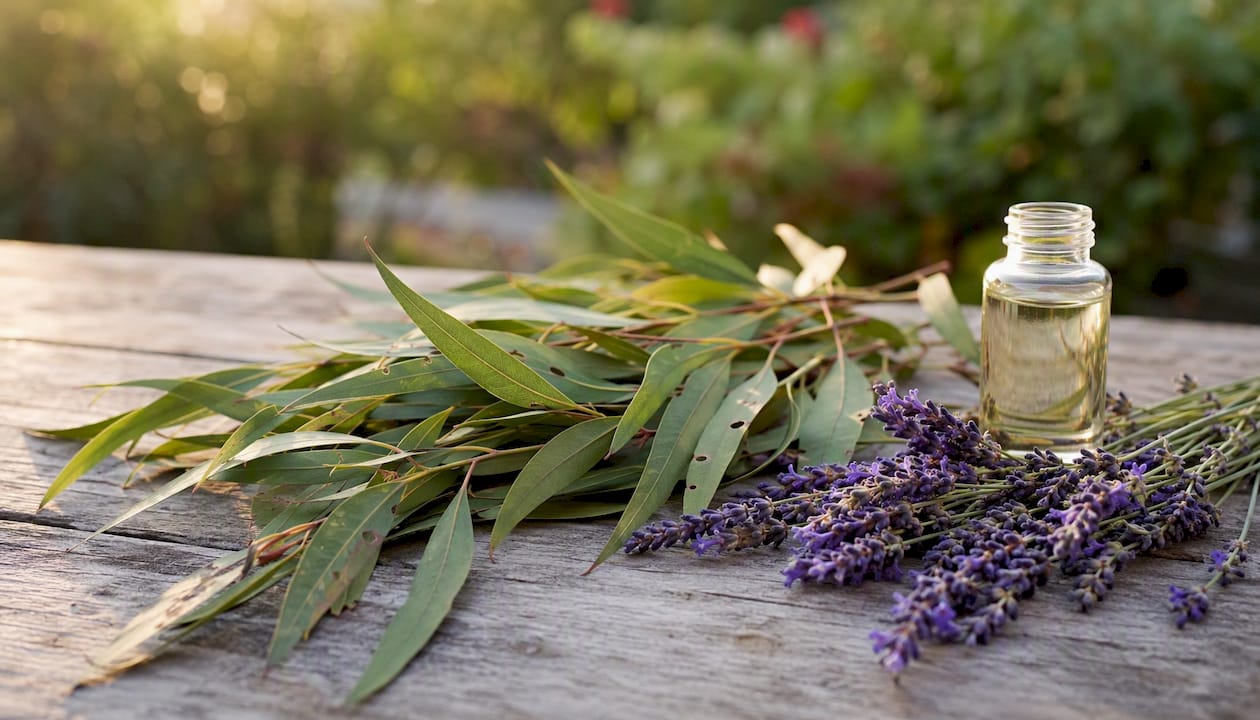
Repellent balms work primarily by releasing volatile compounds that interfere with a mosquito’s ability to locate you by scent. The active ingredients sit on your skin’s surface and create an olfactory barrier. The challenge with plant-based formulas is that essential oils evaporate quickly, which shortens protection time.
Common active ingredients and what the evidence says:
- 🌿 Oil of lemon eucalyptus (OLE) / PMD — the strongest plant-derived option. Research published in PMC confirms PMD offers multi-hour protection and has CDC recognition for certain uses, and it is the most clinically supported botanical active.
- 🌿 Citronella — widely used and familiar, but highly volatile. Protection typically lasts minutes to an hour or two without a fixative.
- 🌿 Patchouli — promising. A controlled lab study found a patchouli-infused lotion matched DEET protection for several hours in cage-test conditions, though the sample was small and further field studies are needed.
- 🌿 Geraniol — derived from geranium and rose oils; moderate repellent activity with variable duration.
- 🌿 Catnip / nepetalactones — early-stage but exciting. Molecular modeling research in MDPI shows nepetalactones bind mosquito odorant-binding proteins with strong affinity, though field validation is still pending.
- 🌿 Soybean-derived actives — used in some commercial natural formulas with moderate protection windows.
🌿 Key formulation insight: Botanical balms that include a fixative like vanillin, or use microencapsulation technology, slow essential-oil evaporation and meaningfully extend protection time compared to plain essential-oil blends.
A Healthline overview of natural repellents notes that efficacy varies widely across plant-based options and that some can cause skin irritation, so formulation quality matters as much as ingredient choice.
How to apply a mosquito balm for real protection
Getting the most from a repellent balm comes down to where and how you apply it, not just how much you use.
- Start with clean, dry skin. Sweat and dirt reduce how well the balm adheres.
- Apply sunscreen first. Let it absorb fully, then apply the balm on top so the repellent stays at the skin’s surface where it works. Cleveland Clinic confirms sunscreen goes on before repellent, not after.
- Cover all exposed skin. Focus on ankles, feet, wrists, behind the ears, and the back of the neck — the spots mosquitoes target most.
- Avoid eyes, nose, and mouth. For face application, apply to your hands first and then pat gently onto cheeks and forehead.
- Reapply as needed. Many essential-oil balms last roughly 1–2 hours. PMD-containing formulas can last longer. Reapply after heavy sweating, swimming, or vigorous activity.
- Do not apply under clothing. Repellent works on exposed skin, not fabric.
Pro Tip: For a backyard gathering, hit your ankles, behind your knees, and your collar line first. Mosquitoes tend to fly low and bite upward, so the lower legs are the highest-priority zone.
For children, use less product and apply it yourself rather than letting them handle the balm. Always follow the product label for age-specific guidance.
Safety, age limits, and skin-sensitivity advice
Natural does not automatically mean risk-free. A few precautions keep balm use safe for everyone in the family.
- Infants under 2 months: avoid all repellents. For older infants and toddlers, follow the product label and choose formulas specifically designed for children.
- Pregnancy: the CDC advises following label instructions for EPA-registered repellents; avoid high-concentration essential oils not evaluated for pregnancy safety.
- Sensitive skin: patch-test any new balm on a small area of inner arm and wait 24 hours before full application. Watch for redness, itching, or swelling.
- Broken or irritated skin: skip repellent application on cuts, sunburn, or rashes.
- Sunscreen layering: sunscreen first, balm second — never mix them together or apply in reverse order.
- After coming indoors: wash treated skin with soap and water.
⚠️ When to choose an EPA-registered spray instead: if you’re traveling to a region with active mosquito-borne disease risk (Zika, dengue, malaria), the CDC recommends EPA-registered repellents with DEET, picaridin, IR3535, or PMD. A plant-based balm alone is not the right tool for high-risk travel.
Why Jeffi’s mosquito repellent balm stands out
Jeffi makes DEET-free, all-natural mosquito repellent balms and roll-ons built around plant-based actives and clean formulation standards. Every product is Non-GMO Project verified, which means the ingredient sourcing has been independently reviewed — a meaningful signal if you’re choosing a balm for your family.
What Jeffi offers:
- ✅ DEET-free and plant-based formula
- ✅ Non-GMO Project verified certification
- ✅ Travel-friendly sizes (stick and tin formats)
- ✅ Designed for sensitive skin and everyday outdoor use
- ✅ All-natural ingredients with no synthetic chemical actives
The balm format means you apply exactly where you need it, with no overspray or inhalation concern. For a backyard BBQ or a morning walk, that precision is genuinely useful.
Pro Tip: Tuck a Jeffi balm tin in your bag before heading out. Reapply to ankles and wrists every couple of hours, or right after you towel off from a swim. The compact size means it’s always within reach.
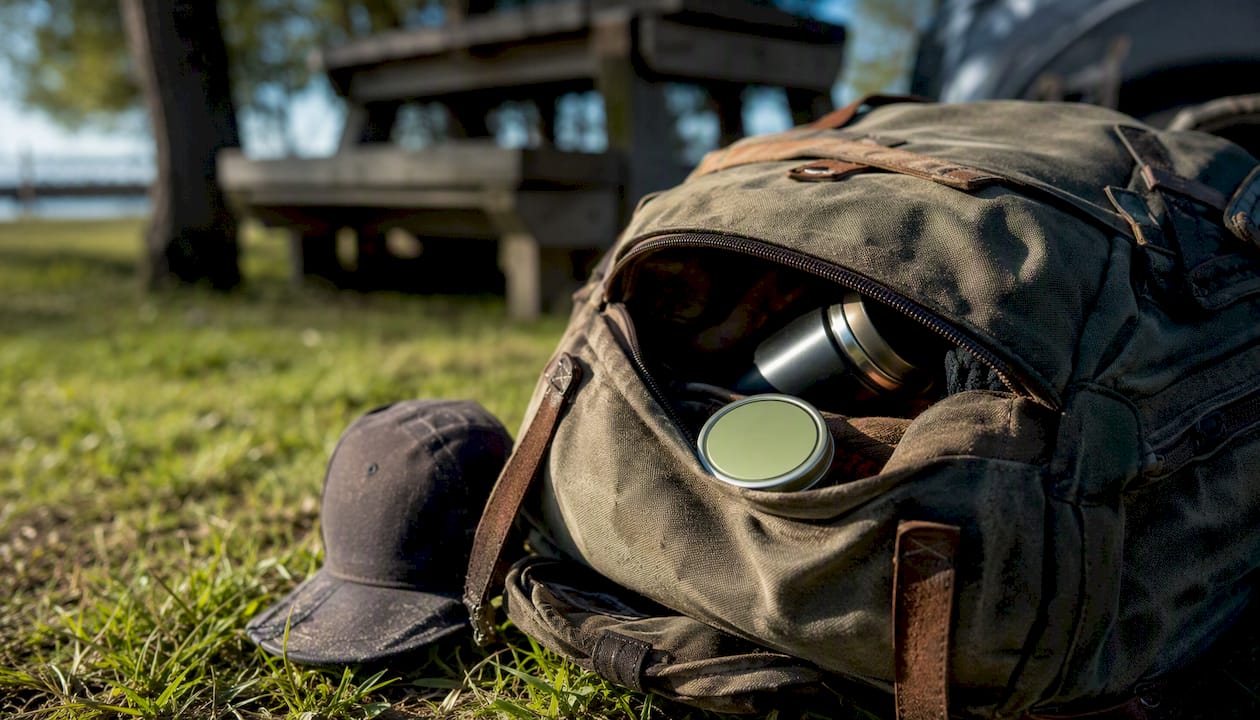
For more on Jeffi’s full ingredient list and certifications, the mosquito repellent FAQ page answers the most common buyer questions in plain language.
How to make a DIY mosquito balm at home
A homemade insect balm can work for low-exposure situations, but formulation matters more than most DIY guides admit.
Basic recipe:
- Melt 1 tablespoon of beeswax with 3 tablespoons of a carrier oil (soybean or fractionated coconut oil) in a double boiler.
- Remove from heat and let cool slightly (to around 140°F / 60°C).
- Add essential oils at a safe dilution: citronella and patchouli at 1–2% total concentration (roughly 10–20 drops per 100ml of base). Do not exceed 2% for use on children.
- Add a small amount of vanillin (a fixative) to slow evaporation and extend protection time.
- Pour into a small tin or lip-balm tube and let set completely before use.
Safety rules for DIY balms:
- Do not substitute raw lemon eucalyptus essential oil for PMD. They are not the same compound. PMD is a refined extract with clinical backing; raw OLE essential oil is not.
- Keep essential-oil concentrations low for children and avoid entirely on infants.
- Patch-test before full use.
- Store in a cool, dark place; heat degrades essential oils quickly.
The PMC plant-based repellents review is clear that commercially prepared PMD formulas have more consistent efficacy than unsupervised homemade essential-oil blends. A DIY balm is a reasonable option for casual use, not a substitute for a tested product in higher-exposure settings.
Balm vs. spray: which format should you choose?
| Feature | Mosquito Balm | Repellent Spray |
|---|---|---|
| Portability | High — fits in a pocket or bag | Moderate — liquid restrictions for air travel |
| Application control | Targeted, precise | Broad coverage, faster for full body |
| Inhalation risk | Low | Higher — especially aerosol sprays |
| Typical protection window | 1–2 hours (essential oils); longer with PMD | 1–2 hours depending on active |
| EPA-registered actives available | Yes (PMD in some formulas) | Yes (DEET, picaridin, IR3535, PMD) |
| Best for | Short outings, sensitive skin, kids’ targeted areas | Long outdoor days, high-exposure, disease-risk travel |
Practical decision guide:
- Backyard BBQ or patio evening: balm works well. Apply to ankles, wrists, and neck.
- Day hike in tick country: consider a spray with a longer protection window, or reapply balm frequently.
- Travel to a disease-endemic region: the CDC recommends an EPA-registered spray with DEET, picaridin, or PMD. A balm alone is not sufficient.
- Kids at play in the yard: a balm lets you apply precisely to exposed areas without spray drift near faces.
Jeffi’s perspective on natural repellents
At Jeffi, we believe you shouldn’t have to choose between effective protection and clean ingredients. The science on plant-based repellents is still growing, and we stay honest about what that means: PMD has the strongest clinical backing among botanical actives, and formulation quality determines whether a natural balm actually works or just smells nice. That’s why Jeffi’s products are Non-GMO Project verified and built around ingredients with real evidence behind them, not just a pleasant scent. Natural repellents are a genuine option for everyday outdoor life. They’re not a replacement for EPA-registered products in high-risk settings, and we’ll always tell you that plainly.
Ready to try Jeffi’s natural mosquito repellent balm?
Jeffi’s plant-based mosquito repellent balm gives you clean, DEET-free protection in a format that’s easy to carry and easy to use. No synthetic chemicals, no aerosol, and no compromise on ingredient standards.

Browse Jeffi’s full repellent and skin-care line to find the right balm, roll-on, or bundle for your outdoor routine. If you want to stock up or try multiple formats, the Jeffi bundles page is a good place to start. Orders ship directly to your door, and every product comes with a clear ingredient label so you know exactly what you’re putting on your skin. Visit Jeffi’s site today and pick the protection that fits your life.
Sources
- Preventing mosquito bites | Mosquitoes | CDC
- How to best protect against mosquito bites - Cleveland Clinic
- Plant-based insect repellents: a review of their efficacy, development and testing - PMC
- Targeting mosquito odorant-binding proteins with catnip-derived nepetalactones - MDPI
- Kinds of natural mosquito repellant - Healthline