

Protect yourself from mosquito bites before you touch a single trowel with three quick steps: apply a natural balm or roll-on with PMD (oil of lemon eucalyptus) or a Jeffi natural repellent balm to exposed skin, tuck a small DIY or ready-made spray in your pocket for spot reapplication, and finish your session with skin-soothing aftercare. The CDC endorses oil of lemon eucalyptus as a legitimate plant-based alternative to DEET, which is why it anchors this whole routine.
- Apply balm or roll-on to wrists, ankles, and neck first.
- Carry a spot-spray for hands after weeding or watering.
- Clean and soothe any bites once you’re back inside.
Always patch-test a new product on your inner arm and keep anything topical away from your eyes and broken skin.
Pro Tip: Keep a travel-size balm clipped to your garden apron so reapplication takes seconds, not a trip back inside.
Key Takeaways
A morning gardening mosquito protection routine works because it combines a PMD-based or Jeffi natural balm applied first, a spot-spray backup for reapplication, and post-garden aftercare to manage any bites.
| Point | Details |
|---|---|
| Lead with PMD or a Jeffi balm | Apply to wrists, ankles, and neck before you touch a single plant. |
| Formulation beats raw oil | Fixatives and nanoemulsions extend protection far past a raw essential oil’s short window. |
| Time your DIY sprays | A 10% spray covers 1 to 2 hours; a 30% blend needs a patch-test first. |
| Aftercare closes the loop | Wash, soothe, and moisturize any bite before it becomes a bigger problem. |
| Jeffi fits the whole routine | Its Non-GMO Project verified balm and bite relief lotion cover both prevention and aftercare. |
Table of Contents
- Which Natural Mosquito Deterrents Actually Work?
- Your 5 to 7 Minute Pre-Garden Routine
- Two DIY Sprays You Can Mix in Minutes
- How Do You Soothe Skin After a Morning in the Garden?
- Are Plant-Based Repellents Safe for Everyone?
- What Should You Look for in a Repellent?
- Try Jeffi’s Natural Repellent Balm for Your Morning Routine
- Frequently Asked Questions
- Sources
Which Natural Mosquito Deterrents Actually Work?
PMD, the refined form of oil of lemon eucalyptus, is the only plant-based active the CDC recommends for use in disease-endemic areas because it has multi-hour clinical backing. Other essential oils repel mosquitoes too, but most evaporate fast, meaning the protection window often shrinks to well under an hour unless the product is formulated to slow that process.
That volatility is the real limiting factor for raw essential oils. Formulators get around it with fixatives like vanillin, microencapsulation, or nanoemulsions, and the results are measurable: nanoencapsulated citronella held its repellency on fabric for up to 30 days in one lab study, far outlasting an unformulated oil.
Lab tests on citronella, thyme, geraniol, peppermint, and clove show repellency lasting roughly 60 to 180 minutes, but results shift by species, concentration, and how the oil is carried on the skin.
Here’s what that means for your morning routine:
- PMD/OLE: the most reliable single active, backed by CDC guidance.
- Citronella and lemongrass: pleasant and familiar, but short-lived without a fixative.
- Geraniol-rich oils (lavender, geranium, peppermint): moderate repellency, moderate irritation risk on sensitive skin.
- Neem: inconsistent field results and not approved as a topical repellent, so skip it for direct skin use.
A well-formulated cream changes the math. One study on a citronella, clove, and lemongrass blend recorded a complete protection time of up to 228 minutes with low cytotoxicity in cell testing, proof that formulation, not just the raw ingredient list, determines how long you stay bite-free.
Your 5 to 7 Minute Pre-Garden Routine
Getting this right doesn’t take long. Here’s the order that works, step by step, before you open the garden gate.
- Patch-test if it’s new (30 seconds). Dab a small amount on your inner forearm if you’re trying a balm or spray for the first time. Skip this step only for products you already use regularly.
- Apply balm or roll-on to exposed skin (60 to 90 seconds). Cover wrists, ankles, the back of the neck, and behind the knees. These spots have thinner skin and tend to draw more bites.
- Choose light, close-fitting sleeves and socks (30 seconds). Fabric is a physical barrier that no topical repellent replaces, especially at the ankles.
- Spot-spray hands and forearms (30 seconds). If you’re using a spray rather than a balm here, this is the moment. Hands get wet and dirty fast in a garden, so a light spray beats a greasy balm for this zone.
- Stow a travel balm or roll-on in your apron or pocket (10 seconds). You’ll want it later once sweat or soil starts washing off your first application.
- Garden.
- Rinse and check skin when you’re done (2 to 3 minutes). A quick rinse removes dirt, pollen, and sweat, and it’s your chance to spot any new bites early.
Placement matters as much as the product. Mosquitoes gravitate toward warm, thin-skinned, less-covered areas, which is why wrists, ankles, and the neck deserve deliberate attention rather than a quick swipe.
- Reapply balm to hands after washing them mid-session.
- Reapply anywhere clothing has rubbed the balm off.
- Reapply sooner if you’re sweating heavily in warm weather.
Pro Tip: If you wear sunscreen, apply it first and let it absorb for a few minutes before layering on your repellent balm. Repellent goes on last, closest to your skin’s surface, where mosquitoes actually meet it.
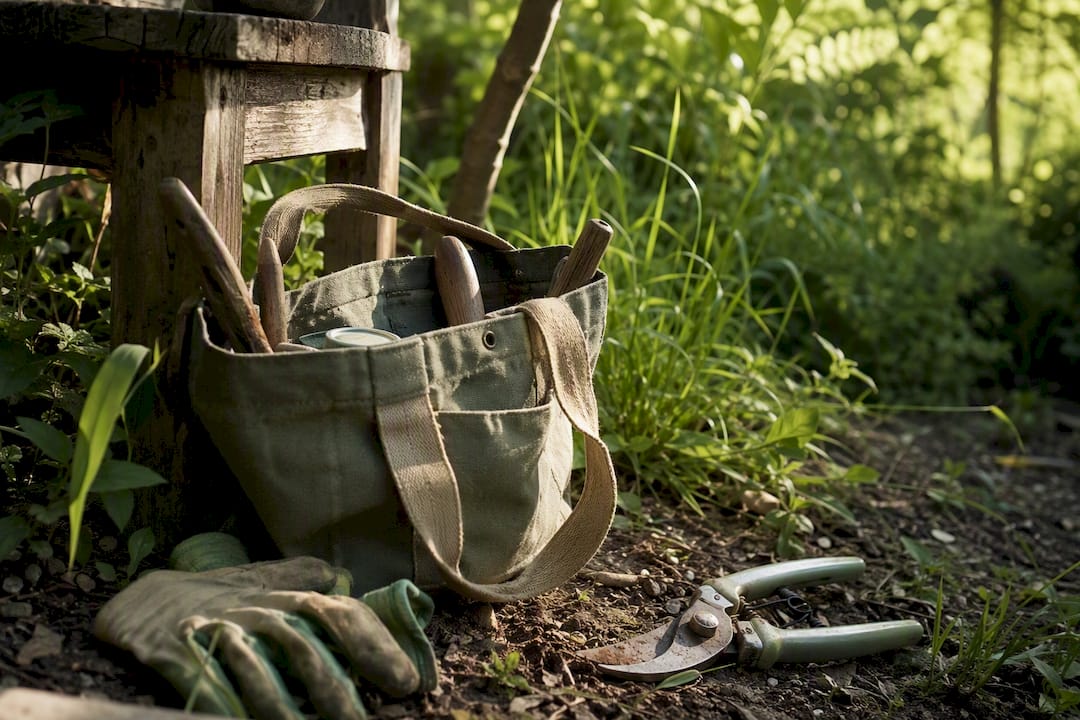
Pro Tip: A balm stashed in a shaded tool bag stays more stable than one baking in direct sun on a windowsill, which matters for both texture and shelf life.
Two DIY Sprays You Can Mix in Minutes
A 10% essential-oil spray gives you roughly 1 to 2 hours of protection, ideal for a short morning weeding session.
- 10% daytime spray. Combine 4 ounces of witch hazel (gentler on skin than straight alcohol), 4 ounces of water, and 1 ounce of your chosen essential oil (citronella, lemongrass, or geraniol-rich blends work well). Shake before every use and reapply every 1 to 2 hours.
- 30% stronger blend. Cut the water significantly and raise the oil ratio to around 30% of the total mix. Patch-test this one without exception, and think twice before using it on children or anyone with reactive skin.
- Always shake before applying since oil and water separate.
- Store bottles away from heat and direct sun.
- Reapply sooner after sweating, swimming, or heavy clothing friction.
- Avoid the face, eyes, and any broken or irritated skin.
Pro Tip: Label your DIY bottles with the mix date and concentration. Essential oil blends lose potency over a few weeks, and a labeled bottle keeps you from guessing.
How Do You Soothe Skin After a Morning in the Garden?
Clean the bitten area, apply a cooling or anti-itch product, and follow up with a light moisturizer to keep skin from drying out in the sun. That three-part sequence handles both the itch and the skin barrier in one pass.
- Wash the area with mild soap and water to remove dirt and reduce infection risk.
- Apply a topical soother like aloe or a bite-relief lotion formulated for irritated skin.
- Use a cool compress if the itch is intense or the bite has swelled.
- Resist scratching, since broken skin heals slower and invites infection.
- Watch for spreading redness, warmth, or pus, which signal infection and warrant medical attention.
- Watch for hives, swelling away from the bite, or trouble breathing, which point to an allergic reaction and need immediate care.
- Patch-test any new aftercare product the same way you’d test a repellent.
For more general steps on managing irritated or reactive skin, this six-step guide to soothing irritation covers the basics well beyond bites alone.
Are Plant-Based Repellents Safe for Everyone?
Plant-based topicals are generally safe, but they have real limits. PMD carries CDC backing for general use, while many essential oils can irritate skin and aren’t automatically appropriate for young children or during pregnancy without a doctor’s input first.
- Oil of lemon eucalyptus products typically carry a minimum age recommendation, so check the label and skip it for the youngest gardeners in the family.
- Pregnant readers should run any new essential oil past a doctor before regular use, given the limited safety data on some blends.
- Protection windows for most essential oils shrink fast in heat, wind, or heavy sweating, so plan for more frequent reapplication on hot mornings.
Species-dependent lab results tell the real story: one spray produced a median complete protection time of about 225 minutes against Culex mosquitoes but only 120 minutes against Aedes and Anopheles, which means “protection time” always depends on what’s actually biting you.
If bites keep coming despite consistent reapplication, that’s your cue to switch products or combine your topical routine with physical barriers like long sleeves.
What Should You Look for in a Repellent?
A morning-friendly repellent checks a specific set of boxes: PMD or another proven active as the main ingredient, a clearly stated concentration, some water resistance for sweaty mornings, skin-sensitivity labeling, a scent you don’t mind wearing for an hour, a size that fits a pocket or apron, and third-party certification like Non-GMO Project verification.
- Active ingredient: PMD/OLE for the strongest evidence base.
- Concentration: higher isn’t always better if it raises irritation risk.
- Water resistance: matters if you’re watering plants or working up a sweat.
- Sensitivity labeling: look for fragrance-free or low-irritant options if your skin reacts easily.
- Packaging: travel-size formats actually get reapplied; a jar sitting on a shelf doesn’t.
- Certification: Non-GMO Project verification is one concrete signal of ingredient transparency.
Reading the ingredient list before buying takes thirty seconds and saves you a skin reaction later.
Why a Balm-First Routine Wins for Gardeners
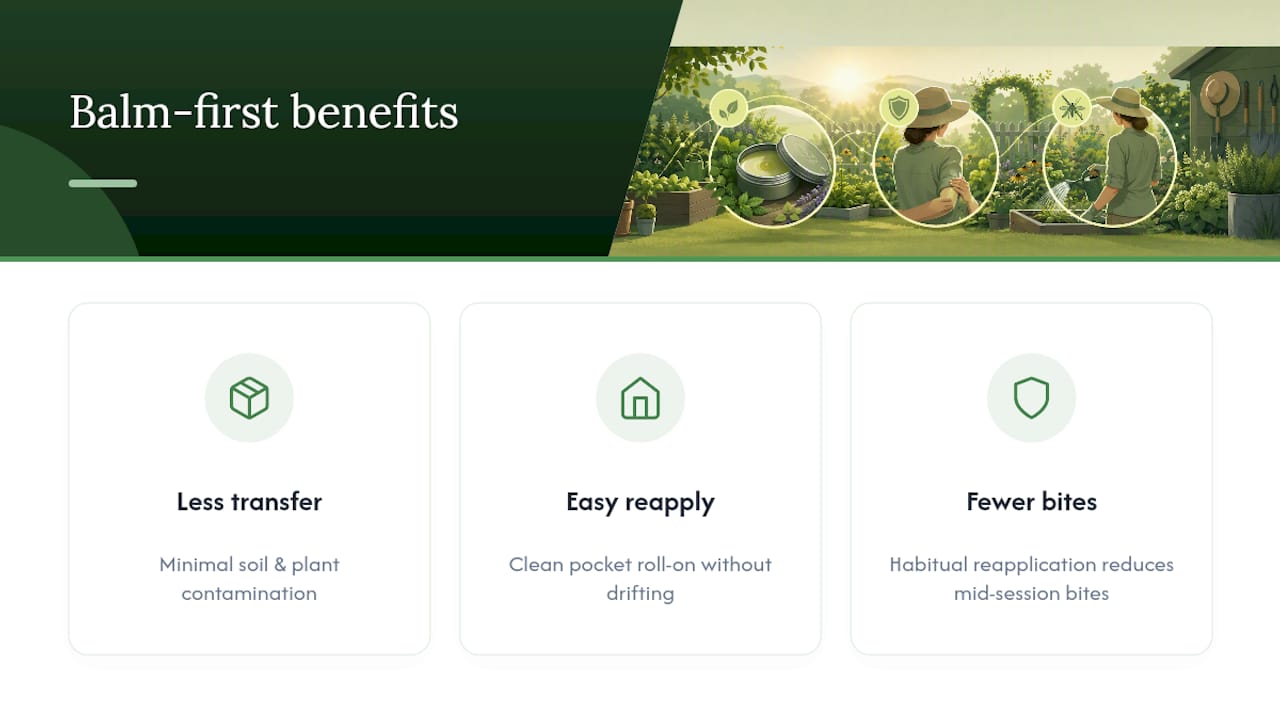
A balm or roll-on beats a spray for garden work because it transfers less onto soil and plants and reapplies cleanly from a pocket without drifting onto leaves you’re trying to touch. Gardeners who switch to balm-first routines often notice fewer mid-session bites, simply because reapplication becomes a habit rather than a chore. Author background and grower testimonials to come.
Try Jeffi’s Natural Repellent Balm for Your Morning Routine
If you’ve been reaching for a spray that evaporates before you’ve finished your first flower bed, a balm changes the equation. Jeffi’s natural mosquito repellent balm is built for exactly the routine described above: skin-safe, DEET-free, and formulated to stay put on wrists and ankles instead of drifting onto your tomatoes.

Apply it before you pull on your gardening gloves, then reapply to your hands once you’ve rinsed off soil or watered your beds. Store your balm in a shaded spot rather than a hot windowsill, since heat can soften the texture over time. Jeffi products carry Non-GMO Project verification, giving you one more concrete signal of what’s actually in the jar. Pair the balm with the Jeffi bite relief lotion for aftercare, or check out the travel bundle if you want both in one kit. Head to the Jeffi product page to pick your morning routine essentials before your next trip to the garden.
Frequently Asked Questions
How early should I apply repellent before gardening? Apply your balm or spray right before you head outside. Most topical actives, including PMD, start working within minutes, so there’s no need to apply it far in advance.
Can I use a natural repellent every day during gardening season? Yes, daily use is common for PMD-based balms and well-formulated products like Jeffi’s, as long as you’ve patch-tested first and aren’t experiencing irritation.
What’s the best time of day for mosquito protection while gardening? Early morning and dusk are peak mosquito activity periods, so a solid morning gardening mosquito protection routine matters more during those windows than at midday.
Do essential oils alone protect me all morning? Rarely, unless they’re specially formulated. Most raw essential oils lose effectiveness within an hour or two, which is why reapplication and formulation both matter.
Is oil of lemon eucalyptus safe for kids? It carries an age recommendation on most labels, generally not for very young children, so check the packaging and consult a pediatrician if you’re unsure.
This article is general information, not a substitute for advice from a qualified doctor. Consult a qualified healthcare professional about your own circumstances before acting on anything here.
Sources
- Plant-based insect repellents: a review of their efficacy, development and testing - PMC
- Topical mosquito repellency of a Litsea cubeba essential oil spray against Aedes aegypti, Anopheles dirus, and Culex quinquefasciatus | Scientific Reports