

Applying natural mosquito repellent to your child’s skin is one of the most effective, chemical-free ways to protect against insect bites during outdoor play. Natural insect repellent for kids relies on plant-derived ingredients like citronella, lavender, and Oil of Lemon Eucalyptus to create a scent barrier that mosquitoes avoid. Done correctly, this approach protects sensitive skin without the concerns that come with synthetic chemicals. Done incorrectly, even natural ingredients can irritate or cause reactions. This guide gives you the exact steps to apply natural repellent on children’s skin safely, from choosing the right ingredients to knowing when to reapply.
Which natural ingredients are safe and effective for kids?
Not all natural ingredients work equally well, and some carry age restrictions parents need to know before buying anything.
Oil of Lemon Eucalyptus (OLE/PMD) is the strongest natural option available. It is a naturally derived, EPA-registered biopesticide extract, which sets it apart from basic essential oils. OLE provides moderate protection and can offer 1–2 hours of coverage per application. The catch: OLE is not recommended for children under 3 years old unless the product label specifically states otherwise.

Essential oils like citronella, lavender, cedarwood, lemongrass, and geranium are the most common ingredients in DIY mosquito repellent for children and store-bought natural sprays. These oils vary in safety and efficacy, and limited studies exist on their long-term effects on children’s skin. Parents should use them cautiously and always in diluted form.
Here is a quick breakdown of the most common natural ingredients:
- Citronella: Widely used, short protection window, generally safe when diluted
- Lavender: Mild repellent effect, calming scent, well-tolerated by most children
- Cedarwood: Repels several insect types, use sparingly on young children
- Lemongrass: Effective but can irritate sensitive skin if not properly diluted
- Geranium: Moderate repellent, pleasant scent, low irritation risk when diluted
- OLE/PMD: Strongest natural option, not for children under 3
One thing parents often miss: “natural” does not automatically mean safer. Essential oils lack the long-term safety data that synthetic repellents like DEET or Picaridin have accumulated over decades. That does not mean you should avoid them. It means you should use them with the same care you would give any active ingredient.
Pro Tip: Always check the product label for age restrictions before applying any natural repellent on a child under 3. OLE and some essential oil blends carry specific warnings for toddlers.
How to prepare and apply natural repellent on children’s skin
Preparation matters as much as the product itself. Skipping dilution or patch testing is where most parents run into trouble.
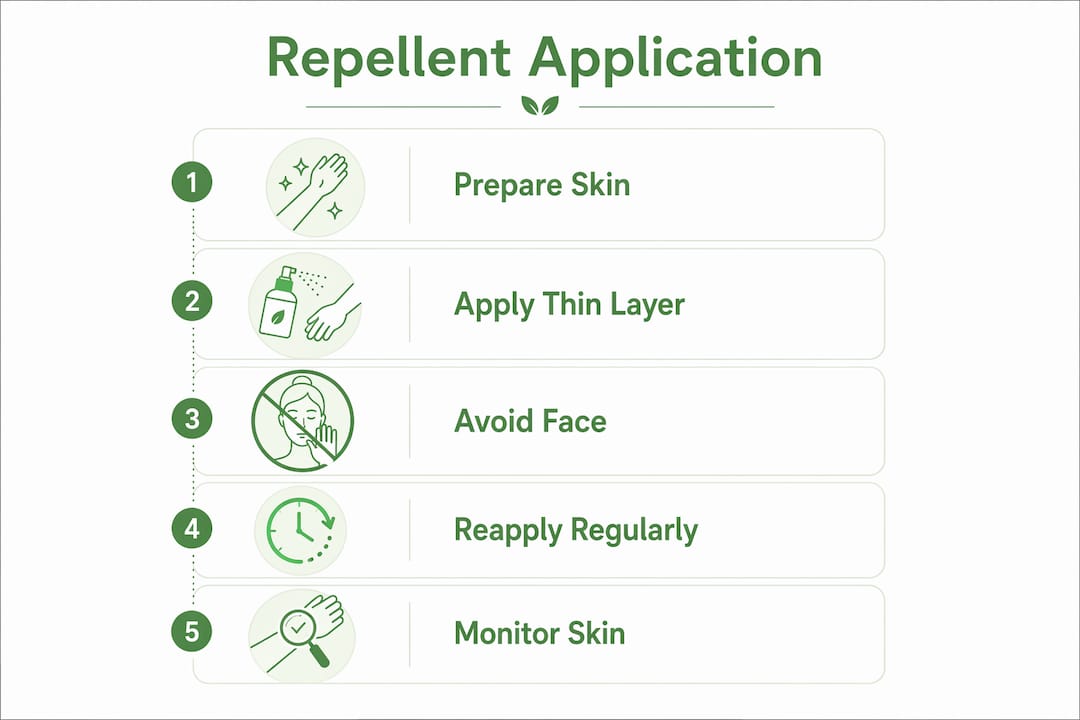
Step-by-step application guide
- Dilute properly. Proper dilution of essential oils with a carrier oil or alcohol-free base reduces irritation risk and increases safety for children’s sensitive skin. A standard safe dilution for children is 1% or lower, meaning roughly 1 drop of essential oil per teaspoon of carrier oil like coconut or jojoba.
- Do a patch test first. Conduct a patch test on a small area of your child’s skin, such as the inner wrist, at least 30 minutes before full application. Watch for redness, swelling, or itching. If any reaction appears, do not proceed.
- Apply only to exposed skin. The EPA recommends applying repellents sparingly to exposed skin only, not under clothing. Applying under clothing traps the product against skin and increases absorption.
- Handle the face carefully. Spray the product onto your own hands first, then gently apply to your child’s face. Never spray directly at a child’s face. Avoid the eyes, mouth, and nostrils entirely.
- Skip problem areas. Do not apply repellent on broken, irritated, sunburned skin, or open wounds. Damaged skin absorbs repellents more readily, which raises the risk of adverse effects.
- Consider clothing application for toddlers. For very young children, applying natural repellent to clothing and hats instead of directly on skin limits skin contact while still creating a protective zone.
| Application zone | Safe to apply? | Notes |
|---|---|---|
| Arms and legs (exposed) | ✅ Yes | Apply thin, even layer |
| Face | ✅ With care | Spray hands first, avoid eyes and mouth |
| Under clothing | ❌ No | Increases absorption and irritation risk |
| Broken or sunburned skin | ❌ No | Damaged skin absorbs more product |
| Hands of young children | ❌ No | Children put hands in mouth and eyes |
Pro Tip: For children under 2, applying repellent to the stroller canopy, clothing, or a hat creates a protective barrier without any direct skin contact.
How often should you reapply natural repellent on kids?
Reapplication is the most overlooked part of using natural insect repellent for kids. Parents often apply once and assume protection lasts for hours. It does not.
Essential oils-based repellents typically protect for only 20–90 minutes. OLE-based products extend that window to roughly 1–2 hours. Neither comes close to the multi-hour protection of synthetic options. That shorter window is the trade-off for a safer chemical profile, and it is worth accepting.
Natural repellents need more frequent reapplication because they lack the synthetic fixatives that help chemical repellents bind to skin longer. Biodegradable ingredients break down faster, especially in heat and humidity.
Here is when to reapply:
- ✅ Every 20–90 minutes during active outdoor play, depending on the product
- ✅ Immediately after swimming or water play
- ✅ After heavy sweating, which dilutes the product on skin
- ✅ When you notice your child getting bitten again
- ✅ Before moving from a low-mosquito area to a high-mosquito area (near water, wooded trails)
Setting a timer on your phone is a simple, practical way to stay on schedule during active outdoor play. When kids are running around and laughter fills the air, it is easy to lose track of time. A 45-minute reminder takes the guesswork out of it.
Parents should treat frequent reapplication as expected, not as a sign the product is failing. Plan outdoor activities with reapplication built into the schedule, the same way you plan for sunscreen.
Common mistakes that cause skin irritation in children
Most skin reactions from safe bug spray for children come from application errors, not the ingredients themselves. Knowing what to avoid protects your child’s skin as much as choosing the right product.
- ❌ Overapplying. More product does not mean more protection. Use thin, even layers. Thick application increases irritation risk without extending protection time.
- ❌ Applying under clothing. Clothing traps the product against skin and raises absorption. Always apply to exposed skin only.
- ❌ Spraying directly at the face. Direct spray risks eye and mouth contact. Always spray onto your hands first.
- ❌ Letting children handle the product. Children touch their faces constantly. Keep the bottle out of reach and apply it yourself every time.
- ❌ Skipping the patch test. First-time use without a patch test is the fastest route to a widespread skin reaction.
- ❌ Applying to damaged skin. Sunburned, cut, or irritated skin absorbs repellents faster and reacts more strongly.
“Natural repellents work best when applied correctly and consistently. A thin layer on clean, intact skin, reapplied on schedule, gives your child real protection without unnecessary skin exposure. The product is only as safe as the technique behind it.”
Watch for these warning signs after application: redness, hives, swelling, excessive itching, or watery eyes. If any of these appear, wash the area immediately with soap and water and stop using the product. For severe reactions, contact your child’s pediatrician.
Key Takeaways
Applying natural mosquito repellent correctly on children’s skin requires proper dilution, a patch test, targeted application to exposed skin only, and reapplication every 20–90 minutes to maintain protection.
| Point | Details |
|---|---|
| Choose age-appropriate ingredients | OLE/PMD is not for children under 3; always check the label before use. |
| Dilute and patch test first | Dilute essential oils in a carrier oil and test on a small skin area before full application. |
| Apply only to exposed skin | Skip broken skin, hands, and areas under clothing to reduce absorption and irritation. |
| Reapply every 20–90 minutes | Natural repellents break down fast; set a phone timer to stay on schedule. |
| Spray hands first for the face | Never spray directly at a child’s face; apply from your hands to avoid eye and mouth contact. |
What I’ve learned from years of using natural repellents with kids
Here is something most articles will not tell you: the biggest challenge with natural repellents is not the product. It is the parent’s expectations. We are conditioned to think one application equals hours of protection. With natural options, that mindset will get your child bitten every time.
At Jeffi, we have worked with natural, plant-derived ingredients long enough to know that frequent reapplication is not a flaw. It is the honest trade-off for keeping harsh chemicals off your child’s skin. Once parents accept that, the whole experience shifts. You stop feeling frustrated and start feeling prepared.
What I have also noticed is that combining physical barriers with repellents makes a real difference. Long sleeves, hats, and staying away from standing water at dusk reduce the burden on any repellent, natural or synthetic. A good natural repellent on exposed skin plus a light layer of clothing is more effective than repellent alone.
One more thing worth saying: children’s skin responses vary. Some kids tolerate citronella beautifully. Others react to lemongrass at any dilution. The patch test is not optional. It is the single most important step you can take before a full outdoor application. Treat it as non-negotiable, and you will avoid most of the skin issues parents worry about.
— Jeffi
Jeffi’s natural skin care line for outdoor-ready kids
Protecting your child’s skin outdoors does not stop at repellent. After a day of sun, sweat, and bug spray, their skin needs gentle care to recover and stay healthy.

Jeffi’s natural skin care products are Non-GMO Project verified and made with all-natural ingredients designed for sensitive skin. The whipped body butters are a parent favorite for post-outdoor skin recovery, delivering deep moisture without synthetic additives. For families who want convenient, ready-to-use options, the product bundles pair repellent-friendly skin care in one set. Every product Jeffi makes is built around one idea: your child’s skin deserves ingredients you can actually trust.
FAQ
What natural ingredients are safest for children’s skin?
Lavender and cedarwood are among the gentler options for children’s sensitive skin when properly diluted. Oil of Lemon Eucalyptus offers stronger protection but is not recommended for children under 3.
How do I apply natural repellent to my child’s face?
Spray the repellent onto your own hands first, then gently apply it to your child’s face. Always avoid the eyes, mouth, and nostrils.
How long does natural insect repellent last on kids?
Most essential oil-based repellents last 20–90 minutes. OLE-based products can extend protection to about 1–2 hours. Reapply after swimming or heavy sweating.
Can I use natural repellent on a baby under 2?
For children under 2, applying repellent to clothing, hats, or stroller canopies instead of directly on skin is the safer approach. Always consult your pediatrician before using any repellent on infants.
What should I do if my child has a skin reaction to natural repellent?
Wash the affected area immediately with soap and water and stop using the product. If redness, hives, or swelling persist or worsen, contact your child’s pediatrician right away.