

Yes, dressing your child in light, loose, full-coverage clothing significantly reduces mosquito bites by eliminating exposed skin and making them a less attractive target. The Cleveland Clinic puts it plainly: a mosquito’s first target is bare skin, and covering up is your first line of defense.
Quick action checklist:
- ✅ Put on long sleeves, long pants, and light colors first
- ✅ Tuck shirts into pants and pants into socks to seal gaps
- ✅ Add an age-appropriate, DEET-free repellent to any exposed skin when needed
Table of Contents
- How does clothing color, fabric, and fit affect mosquito bites?
- What should your child actually wear to stay bite-free?
- How do you safely combine clothing with repellents and other controls?
- When clothing isn’t enough and how to treat bites
- Natural topical options that pair well with protective clothing
- Key Takeaways
- Why Jeffi believes clothing-first is the right approach for kids
- Jeffi’s natural mosquito relief line for families
- Useful sources for parents
How does clothing color, fabric, and fit affect mosquito bites?
Three things drive how often mosquitoes find and bite your child: color, fabric coverage, and fit. Get all three right, and you remove most of what attracts them in the first place.
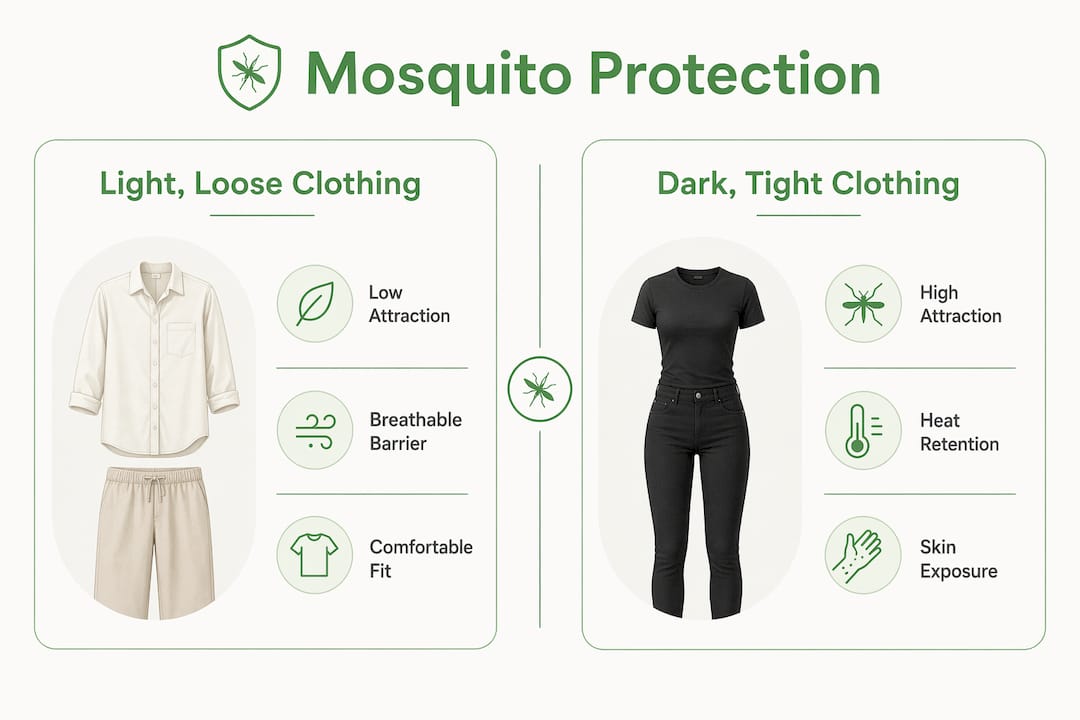
Color matters more than most parents realize. Mosquitoes are visually drawn to dark, high-contrast targets because dark colors absorb more heat and stand out against the horizon. Light-colored fabrics reduce the possibility of being bitten because mosquitoes are simply less attracted to pale tones. Think soft whites, light yellows, and pastel greens rather than navy, black, or deep red.
Fabric coverage acts as a physical barrier. A mosquito cannot bite what it cannot reach. Loose, breathable fabrics force mosquitoes to seek another host entirely. The CDC recommends loose-fitting garments specifically because tight clothing can allow mosquitoes to bite right through the fabric, defeating the barrier entirely.
| Feature | Light, loose clothing | Dark, tight clothing |
|---|---|---|
| Visual attraction | Low | High |
| Heat retention | Low | High |
| Physical barrier | Strong | Weak (bites through) |
| Comfort in heat | High | Low |
What should your child actually wear to stay bite-free?
Pediatricians recommend clothing as the first line of defense before topical repellents, especially for infants and toddlers with sensitive skin. The good news: the right outfit is comfortable, not complicated.
Recommended garments for kids:
- Long-sleeve shirts in breathable cotton or loose-knit blends
- Lightweight long pants (linen or cotton, not clingy synthetics)
- Socks and closed-toe shoes to protect feet and ankles
- Wide-brim hats to cover the neck and ears
- Stroller netting or hat netting for infants in buggies
Fabric guidance: Breathable cotton and mid-weight cotton blends give you the best of both worlds: a real physical barrier and enough airflow to keep kids comfortable. Avoid very thin, clingy synthetics for barrier purposes. They feel light but offer little protection, and mosquitoes can probe through them easily.
Seal the gaps. Tucking shirts into pants and pants into socks is one of the highest-impact, lowest-effort habits you can build. Ankles and wrists are the most common failure points where mosquitoes sneak in.
Pro Tip: On summer evenings when mosquito activity peaks, layer a lightweight long-sleeve shirt over a short-sleeve tee. Your child stays cool, and you add an extra layer of protection without any fuss.
How do you safely combine clothing with repellents and other controls?
Clothing handles the covered skin. For anything left exposed, add an age-appropriate repellent. That’s the layered approach pediatricians and the EPA both endorse.
EPA guidance: wear long sleeves, tuck clothing into socks, remove standing water, and avoid peak mosquito hours at dawn and dusk. Clothing and environmental controls work together. — US EPA
Safe repellent use for kids:
- Apply only to exposed skin, never under clothing. Utah health guidance specifically warns against applying repellent under clothing, as it reduces safety and can damage some fabrics.
- Avoid applying near infants’ hands, eyes, or mouth.
- For high-risk outdoor settings, consider permethrin-treated clothing, which is labeled and effective against mosquitoes. Always check that treated items are appropriate for your child’s age.
- The CDC recommends EPA-registered repellents used as directed, noting they are proven safe and effective when label instructions are followed.
Environmental controls to use at home:
- Remove standing water from planters, buckets, and gutters
- Keep kids indoors or in screened areas at dawn and dusk
- Use air conditioning or window screens when possible
- Place bed nets around sleeping infants if mosquitoes are present indoors
When clothing isn’t enough and how to treat bites
Even the best outfit has limits. A hungry mosquito will find gaps at cuffs and ankles, and thin fabrics can be probed through if the fit is snug. Knowing when to add extra protection keeps your child comfortable all summer.
When to go beyond clothing:
- ✅ Apply a DEET-free or age-appropriate repellent to any exposed skin during prolonged outdoor time
- ✅ Use mosquito nets around sleeping areas, especially for infants
- ✅ Check local health advisories if you’re in an area with known mosquito-borne disease activity
- ✅ Consult your pediatrician about repellent choices for children under two
The CDC notes that mosquitoes may bite through thin clothing, reinforcing why loose fit and fabric weight both matter.
Simple bite care steps:
- Wash the bite area gently with soap and water
- Apply a cold compress to reduce swelling and itching
- Use a pediatrician-recommended topical itch-relief product or a soothing natural lotion
- Seek medical care if you notice signs of infection (increasing redness, warmth, swelling) or an allergic reaction (hives, difficulty breathing)
Natural topical options that pair well with protective clothing
For exposed skin, choose an age-appropriate, sensitive-skin formula. For bites that do happen, reach for a soothing, fragrance-light lotion or ointment.
Product types to consider:
- DEET-free balms and roll-ons using plant-based active ingredients
- Essential-oil-based repellents (note: effective for shorter durations; reapply more frequently than DEET-based options)
- Bite-relief lotions and whipped body butters to calm irritated skin after bites
- Non-GMO verified formulas for families who prioritize clean ingredients
Jeffi offers exactly this kind of natural, family-friendly line. Jeffi’s DEET-free repellent balms and roll-ons are made with all-natural ingredients and are Non-GMO Project verified, making them a reassuring choice for parents with sensitive-skin concerns. Their bug bite relief products and nourishing body butters are designed to soothe skin gently after bites, without harsh chemicals or synthetic fragrances.
Pro Tip: Apply topical repellent to your own hands first, then gently dab onto your child’s exposed skin. Avoid the hands, eyes, and mouth entirely. A little goes a long way, especially with natural formulas.
Key Takeaways
Light, loose, full-coverage clothing is the single most effective nonchemical step parents can take to reduce mosquito bites on children, and it works best when paired with age-appropriate repellents for exposed skin.
| Point | Details |
|---|---|
| Choose light colors | Light-colored fabrics are less visually attractive to mosquitoes than dark ones. |
| Prioritize loose fit | Loose garments create a physical barrier; tight clothing can allow bites through the fabric. |
| Seal gaps at cuffs and ankles | Tuck shirts into pants and pants into socks to close the most common entry points. |
| Add repellent to exposed skin | Apply age-appropriate, DEET-free repellent only to uncovered skin, never under clothing. |
| Jeffi for natural bite relief | Jeffi’s Non-GMO verified, DEET-free balms and bite-relief lotions are a gentle option for families. |
Why Jeffi believes clothing-first is the right approach for kids
At Jeffi, we believe the gentlest protection is always the right starting point for children. Clothing-first isn’t just practical advice; it reflects a broader commitment to keeping kids safe without reaching for chemicals before they’re needed.
Parents who want to go deeper on ingredients, safety, and product options can find detailed information on Jeffi’s mosquito repellent FAQ page and product pages.
Jeffi’s natural mosquito relief line for families
When clothing covers most of the skin and a natural repellent handles the rest, summer stays fun. Jeffi’s DEET-free, all-natural product line is built for exactly that layered approach.

What’s available for your family:
- DEET-free repellent balms and roll-ons, Non-GMO Project verified
- Bug bite relief lotions and ointments for soothing irritated skin
- Whipped body butters to nourish and calm skin after outdoor adventures
Visit Jeffi’s full product line to find the right natural option for your child’s skin and your family’s summer plans.
Useful sources for parents
These are the principal sources behind the guidance in this article. Each one is worth bookmarking for ongoing reference.
- CDC: Prevent Mosquitoes — Core prevention guidance including clothing fit, repellent use, and environmental controls.
- CDC: Vector-Borne Disease Prevention — Covers EPA-registered repellents, permethrin-treated clothing, and loose-fitting garment recommendations.
- US EPA: Tips to Prevent Mosquito Bites — EPA’s official checklist: clothing, environmental controls, and repellent guidance.
- Cleveland Clinic: 10 Tips to Prevent Mosquito Bites — Clinical backing for clothing as first defense and repellent safety for children.
- Connecticut Children’s: Mosquito Bite Prevention in Kids — Pediatric-focused guidance on sealing gaps, clothing choices, and when to seek care.
- Utah Health: Preventing and Treating Mosquito Bites in Children — Practical advice on repellent placement and safe use for kids.
- McKinney Pediatrician Guide for Summer — Pediatrician-approved clothing-first approach for infants and toddlers.
This article is general information for parents and caregivers, not medical advice. For guidance specific to your child’s age, health, and local mosquito conditions, consult your pediatrician or check your local health authority.