

Dragonflies are defined as one of nature’s most effective biological mosquito controls, consuming mosquitoes at every stage of their own life cycle. Understanding how dragonflies naturally reduce mosquito populations gives homeowners and gardeners a real, chemical-free path to a more comfortable yard. Adult dragonflies can eat up to 100 mosquitoes per day, while their aquatic larvae spend years targeting mosquito larvae before they ever reach the surface. This dual predation, above and below the water, makes dragonflies one of the most complete natural pest control systems available to any backyard ecosystem.
How do dragonfly larvae control mosquito populations?
The aquatic nymph stage is where dragonfly mosquito control begins. Dragonfly nymphs spend 1 to 3 years underwater, feeding almost continuously on mosquito larvae and other small aquatic prey. This extended development period means a single healthy pond or water feature can host multiple generations of nymphs working around the clock.
The mechanics of nymph predation are genuinely surprising. Dragonfly nymphs use a hinged labial mask to strike prey with explosive speed, a jaw structure often compared to the inner jaws of the creature from the Alien films. That rapid strike gives mosquito larvae almost no chance to escape. A single nymph can consume up to 40 mosquito larvae per day, and studies show this reduces larval mosquito populations by as much as 45%. That number compounds quickly when a water feature supports dozens of nymphs at once.
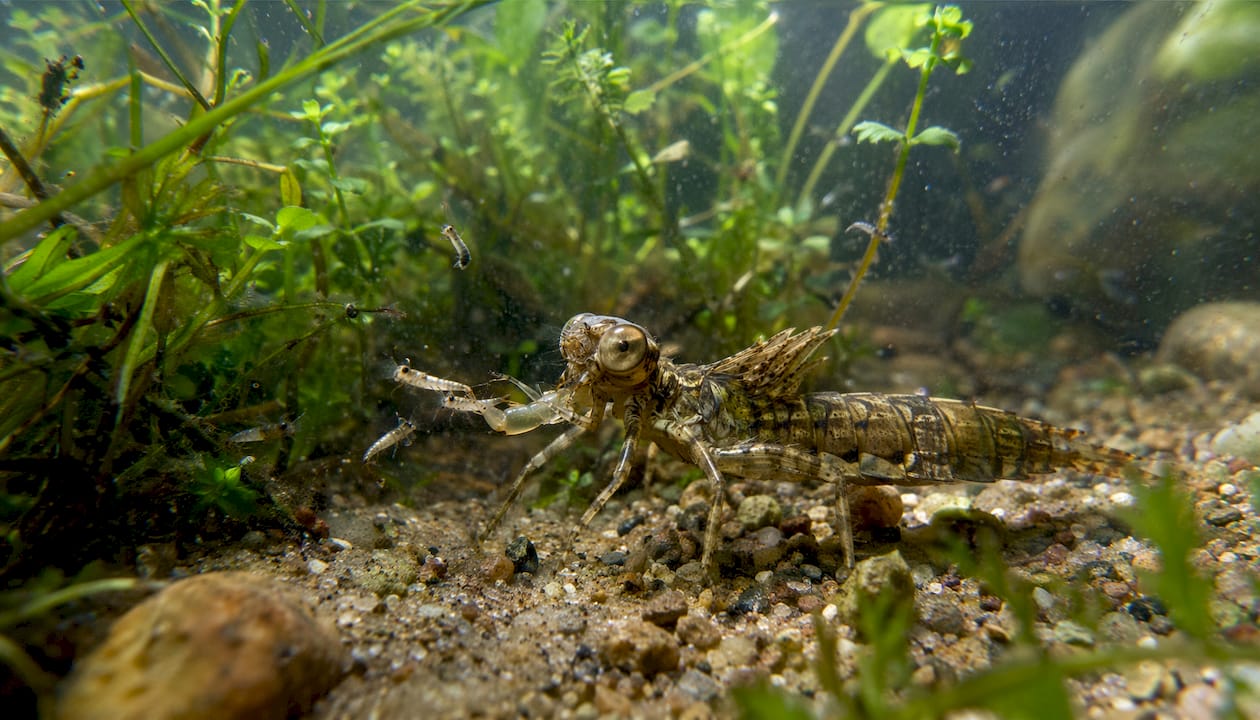
Maintaining the right aquatic habitat is non-negotiable for this stage to work. Nymphs require clean, chemical-free water. Polluted, stagnant, or chlorinated water cannot support dragonfly nymphs, which eliminates the mosquito control benefit entirely regardless of what plants you grow nearby.
Here is what healthy nymph habitat looks like in practice:
- Clean, still or slow-moving water with no chemical treatments or chlorine
- Natural substrate such as mud, leaf litter, or aquatic plants on the pond floor
- Shallow edges where nymphs can hunt and eventually emerge as adults
- No aggressive fish species like goldfish or koi, which prey on dragonfly nymphs
Pro Tip: If you have a decorative pond, skip the fish entirely or choose small native species. Koi and goldfish are notorious nymph predators and will undo your dragonfly habitat efforts fast.
How do adult dragonflies hunt and reduce adult mosquito numbers?
Adult dragonflies are aerial hunters with a catch rate that rivals any predator in the insect world. Studies on Libellula cyanea show a prey catch efficiency of up to 95% when pursuing targeted insects. That means when a dragonfly locks onto a mosquito mid-flight, the mosquito almost never escapes.
This efficiency comes from a combination of physical traits that set dragonflies apart from other flying insects:
- Independent wing control lets them change direction instantly, matching any evasive move a mosquito makes
- Forward-facing compound eyes cover nearly 360 degrees of vision, so they spot prey before the prey spots them
- Predictive flight paths allow them to intercept mosquitoes rather than simply chase them, a technique studied by researchers at Harvard University
- Speed and agility that lets them hunt at dawn and dusk, exactly when mosquitoes are most active
An adult dragonfly consuming up to 100 mosquitoes per day does real damage to the local mosquito population before those mosquitoes can breed. Each female mosquito eliminated before reproduction represents hundreds of eggs that never hatch. The compounding effect on population size is significant over a full summer season.
The honest limitation is scale. Dragonfly populations are naturally tied to prey availability and habitat quality. A small backyard pond will support far fewer dragonflies than a large wetland. Mosquito control agencies note that dragonflies contribute meaningfully to population reduction but work best when integrated with other pest management methods rather than relied on alone.
What ecological factors influence dragonfly effectiveness?
Dragonfly effectiveness as natural mosquito predators depends entirely on the health of the surrounding ecosystem. Four factors determine whether your yard can support a dragonfly population large enough to make a visible difference.
-
Water quality. Clean, unpolluted water is the foundation. Dragonfly nymphs cannot survive in water treated with herbicides, pesticides, or pool chemicals. If your water feature uses any chemical treatment, nymphs will not establish there.
-
Vegetation structure. Adult dragonflies need perches. They hunt from elevated positions, scanning for prey before launching. Tall grasses, native shrubs, and reeds along water edges give them the structure they need. Without perching spots, adults will move on to better habitat.
-
Pesticide avoidance. Urban wildlife biologist Brett Kieschnick advises minimizing pesticide use specifically to protect dragonflies. Broad-spectrum insecticides kill dragonflies alongside mosquitoes, removing the very predators that provide long-term control. This is the single most common mistake homeowners make.
-
Biodiversity balance. A yard with some insect diversity supports dragonfly populations better than a sterile, manicured one. Dragonflies eat other insects beyond mosquitoes, so a complete food web keeps them fed and resident. Eliminating all insects removes the dragonfly’s food source and drives them away.
Penn State Extension notes that dragonflies and damselflies serve as indicators of healthy water ecosystems. Their presence signals that your water and surrounding habitat are in good ecological shape. That dual benefit, mosquito control plus environmental health monitoring, makes attracting them genuinely worthwhile.
Pro Tip: Before adding any mosquito dunks or larvicides to your water feature, check whether they are labeled safe for beneficial insects. Bacillus thuringiensis israelensis (Bti) is generally considered safe for dragonfly nymphs, while broad chemical treatments are not.
How can homeowners attract dragonflies to reduce mosquitoes naturally?
Creating a dragonfly-friendly yard is one of the most satisfying things a gardener can do. The approach combines a clean water feature with thoughtful planting and a hands-off attitude toward chemical sprays. A three-step habitat approach of clean water, diverse vegetation, and pollinator-friendly plants creates a sustained dragonfly population and measurable mosquito reduction.
Here is what to put in place:
- Add a water feature at least 2 feet deep with shallow edges and no chemical treatments. Depth matters because nymphs need stable water temperatures year-round.
- ✅ Plant native aquatic plants like pickerelweed, blue flag iris, and water lilies. These give nymphs shelter and adults a place to lay eggs.
- Border the water with tall native grasses and reeds such as bulrush or soft rush. These are prime perching and hunting spots for adult dragonflies.
- ✅ Include pollinator plants like black-eyed Susans, coneflowers, and native wildflowers nearby. These attract the broader insect community that supports a healthy food chain.
- Remove aggressive fish from your pond. Goldfish and koi eat nymph populations down to zero.
- ✅ Stop broad-spectrum pesticide spraying in the yard entirely. Spot-treat only when absolutely necessary, and choose targeted products.
The table below shows which plant choices support dragonfly habitat most effectively:
| Plant | Type | Benefit for Dragonflies |
|---|---|---|
| Pickerelweed | Aquatic | Egg-laying site and nymph shelter |
| Blue flag iris | Aquatic/marginal | Adult perching and emergence support |
| Bulrush | Marginal grass | Hunting perch for adults |
| Black-eyed Susan | Native wildflower | Attracts prey insects for adults |
| Water lily | Floating aquatic | Surface cover for nymphs |
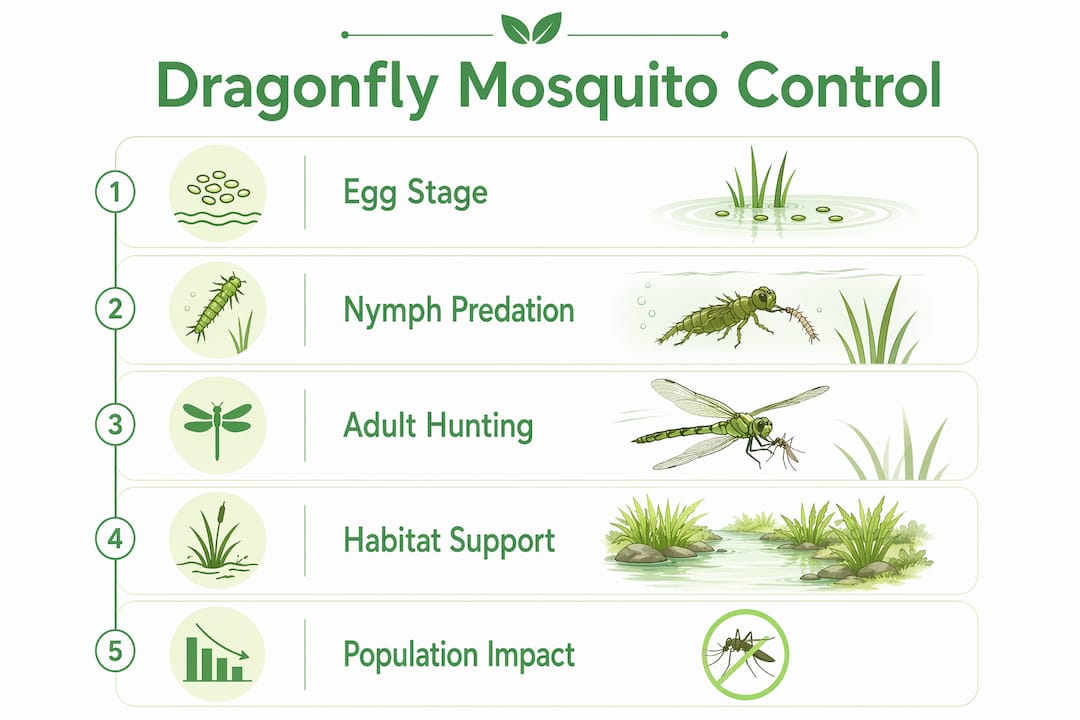
Attracting dragonflies also helps you monitor clean water quality on your property. If nymphs establish and thrive, your water is in good shape. If they disappear, something in the water chemistry has changed and needs attention.
Key Takeaways
Dragonflies reduce mosquito populations most effectively when both the aquatic nymph stage and adult hunting stage are supported by clean water, native vegetation, and a pesticide-free yard.
| Point | Details |
|---|---|
| Nymphs are the primary controllers | Dragonfly nymphs eat up to 40 mosquito larvae daily for 1 to 3 years underwater. |
| Adults are highly efficient hunters | Adult dragonflies catch over 95% of pursued prey, consuming up to 100 mosquitoes per day. |
| Clean water is non-negotiable | Polluted or chemically treated water prevents nymph survival and eliminates the control benefit. |
| Pesticides undermine the system | Broad-spectrum sprays kill dragonflies and remove the natural predation that reduces mosquitoes long-term. |
| Integration works best | Dragonflies work best alongside other natural methods, not as a standalone solution. |
Why I stopped reaching for the spray bottle first
I spent years treating mosquito problems the way most people do: spray first, ask questions later. The yard would be quiet for a week, then the mosquitoes would come back worse than before. It took watching a single dragonfly work a pond edge for about 20 minutes to shift my thinking entirely.
What I observed was not random. That dragonfly made calculated passes, returned to the same perch, and launched precise strikes. It was doing in one afternoon what a can of spray could not sustain for a season. The real lesson was not just that dragonflies eat mosquitoes. It was that the yard I had been maintaining, tidy, sprayed, and chemically managed, was actively hostile to the very insects that could solve my problem naturally.
The shift to a dragonfly-friendly yard required accepting some messiness. Tall grasses along the pond edge. A few more insects buzzing around the wildflowers. Less intervention overall. That discomfort paid off. By mid-summer, the dragonfly presence was visible and the mosquito pressure was noticeably lower without a single spray application.
The deeper point is this: biological control with dragonflies requires accepting some insect presence to maintain the food chain that keeps dragonflies resident. A yard with zero insects is a yard with zero dragonflies. Ecological balance is the goal, not eradication.
— Jeffi
Natural protection for you, while dragonflies handle the yard
Dragonflies are doing real work out there, but they cannot protect your skin while you are sitting on the patio at dusk. That is where Jeffi comes in.

Jeffi’s natural mosquito repellent products are Non-GMO Project verified and made with all-natural ingredients, so they work alongside your dragonfly-friendly yard without introducing chemicals that harm beneficial insects. You get personal protection without undermining the ecological balance you have worked to build. Pair that with Jeffi’s whipped body butters to soothe and nourish skin after time outdoors. Natural pest control in the yard, natural skin care on your body. That combination makes outdoor living genuinely enjoyable, even at peak mosquito hours.
FAQ
How many mosquitoes does a dragonfly eat per day?
Adult dragonflies consume up to 100 mosquitoes per day, while dragonfly nymphs eat up to 40 mosquito larvae daily during their 1 to 3 years underwater.
Do dragonflies eat mosquitoes as larvae too?
Yes. Dragonfly nymphs are active aquatic predators that target mosquito larvae in ponds and water features, often reducing larval populations by as much as 45%.
What water features attract dragonflies to my yard?
A clean, chemical-free pond at least 2 feet deep with shallow edges, native aquatic plants, and no aggressive fish species provides the habitat dragonfly nymphs need to establish and thrive.
Will dragonflies eliminate all mosquitoes in my yard?
Dragonflies significantly reduce mosquito numbers but do not eliminate them entirely. Mosquito control agencies recommend combining dragonfly habitat support with other natural pest management methods for the best results.
Are dragonflies harmed by mosquito sprays?
Yes. Broad-spectrum insecticides kill dragonflies alongside mosquitoes. Urban wildlife biologist Brett Kieschnick advises minimizing pesticide use specifically to protect these beneficial predators.