

The most effective mosquito protection for humid hikes combines layers
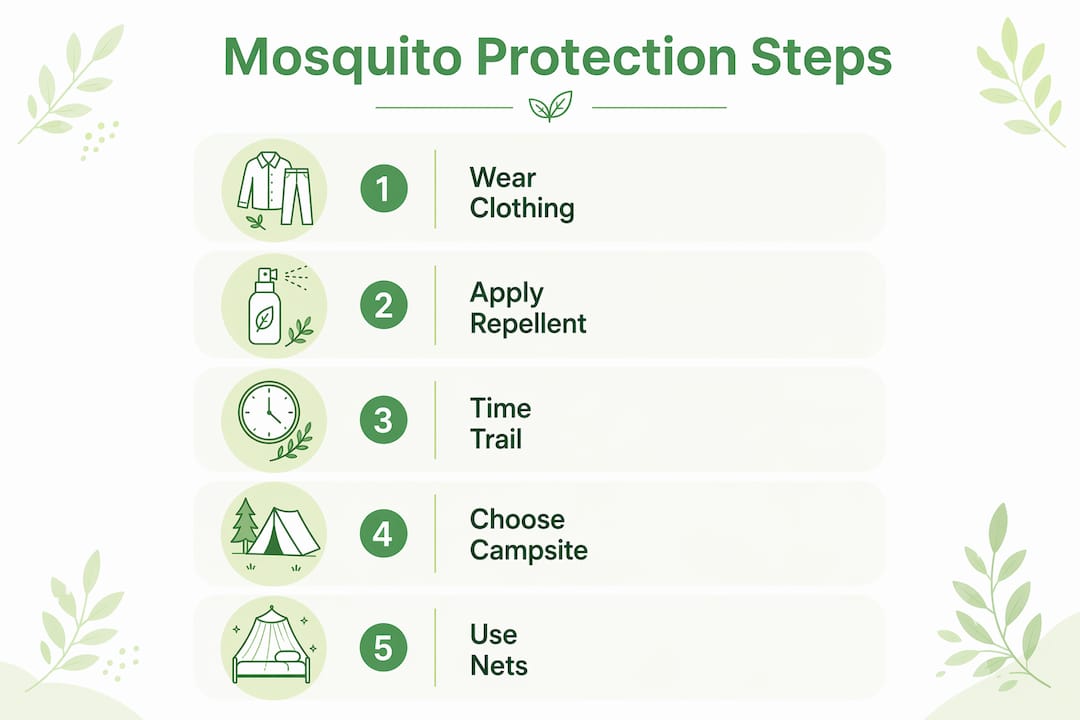
Hiking mosquito protection in high humidity works best when you stack three defenses together: permethrin-treated, moisture-wicking clothing; an EPA-registered repellent in gel or lotion form; and smart trail timing that avoids peak mosquito hours. The CDC recommends a “Drain, Dress, Defend” approach, and that framework holds up especially well when sweat is working against you.
High humidity accelerates sweating, which washes spray repellents off your skin faster than the label suggests. That’s the core challenge. Gel and lotion formulations adhere better to sweat-moist skin and outlast sprays by a meaningful margin on a muggy trail.
Key fact: Higher DEET concentration extends duration of protection, not strength. Appropriate DEET concentrations provide effective coverage duration without over-application.
- ✅ Combine permethrin-treated clothing with an EPA-registered repellent (DEET 20–30%, Picaridin, or IR3535)
- ✅ Choose gel or lotion repellents over aerosol sprays in humid conditions
- ✅ Avoid standing water near trail stops and campsites
- ✅ Wear light-colored, loose-fitting clothing to reduce mosquito attraction
- ✅ Plan hikes for late morning to early afternoon when mosquito activity drops
Pro Tip: Apply a gel or lotion repellent to exposed skin before you start sweating. Once your skin is already wet, the product won’t bond as effectively. Get it on dry skin at the trailhead.
Table of Contents
- 1. Wear the right clothing to block bites in humid conditions
- 2. Choose the right repellent and apply it correctly in the heat
- 3. Use trail timing and campsite placement to cut exposure
- 4. How Jeffi supports your skin before, during, and after a humid hike
- 5. Why natural repellents and essential oils fall short outdoors
- 6. How to apply repellent correctly when you’re already sweating
- 7. Caring for permethrin-treated clothing in humid weather
- 8. Recognizing mosquito-borne illness signs on the trail
- 9. Head nets and mosquito nets: when and how to use them
- 10. US mosquito species and their humid-season behavior by region
- Key Takeaways
- Your skin deserves natural care after every hike
1. Wear the right clothing to block bites in humid conditions
Your clothing is your first line of defense, and in high humidity, fabric choice matters more than most hikers realize.
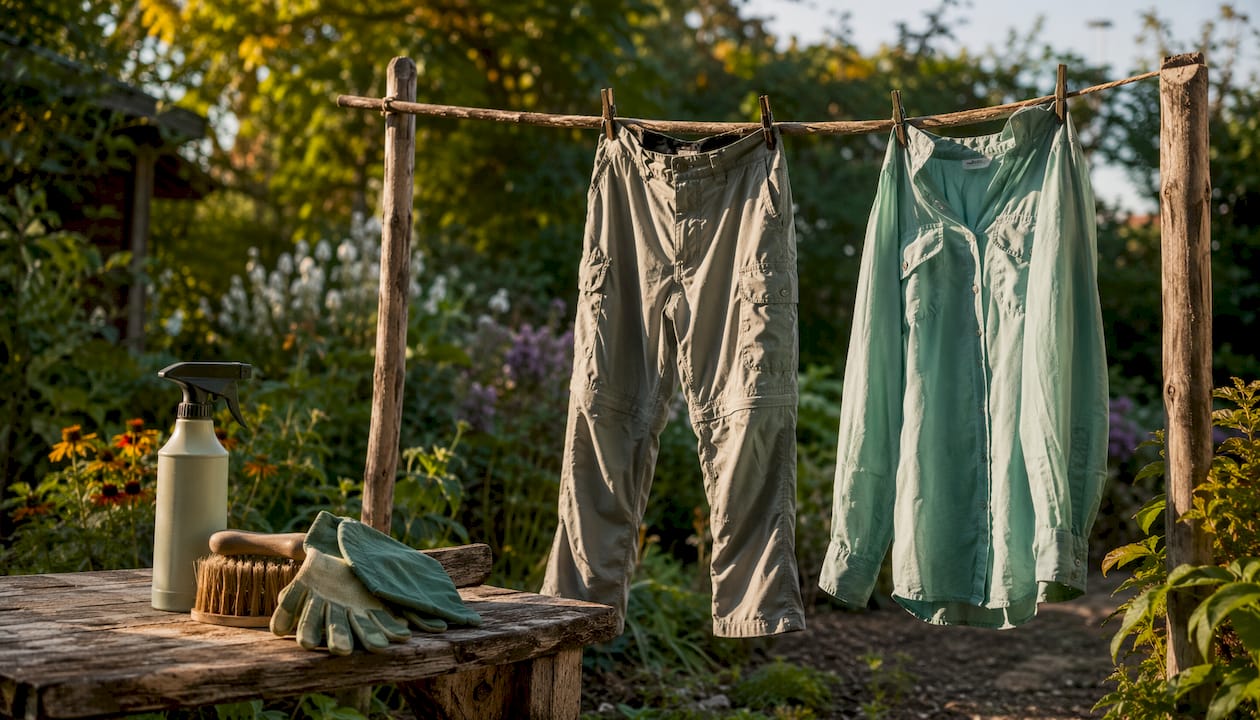
Ditch the cotton. Cotton absorbs moisture and stays wet, which creates a warm, damp surface mosquitoes love. Polyester and nylon blends dry fast, wick sweat away from your skin, and maintain their protective structure even when soaked.
- Tightly woven nylon or polyester blocks mosquito proboscis penetration better than knits or loosely woven fabrics
- Light-colored fabrics attract fewer mosquitoes than dark ones; mosquitoes use visual cues and are drawn to colors resembling human skin heat signatures like red and orange
- Loose-fitting shirts and pants reduce the number of spots where fabric presses against skin, which is where bites through fabric happen
- Gaiters around your ankles seal the gap between socks and pants, a favorite entry point for mosquitoes on humid, brushy trails
- Look for fabric blends with a small percentage of elastane for mobility without sacrificing the tight weave that blocks bites
Permethrin-treated clothing adds a chemical layer on top of the physical barrier. Factory-treated garments retain insecticidal activity after multiple washes, making them a durable investment for anyone who hikes regularly during mosquito season.
Pro Tip: If you DIY-treat clothing with a spray-on permethrin product, expect effectiveness to last about 5 washes. Factory treatments like Insect Shield last up to 70 washes, which is a significant difference for frequent hikers.
2. Choose the right repellent and apply it correctly in the heat
Not all repellents perform equally when humidity is high and you’re sweating through a climb.
EPA-registered active ingredients that hold up in humid conditions:
- DEET (20–30%): The most studied option; higher concentration means longer coverage, not stronger protection
- Picaridin: Odorless, non-greasy, and less likely to irritate sensitive skin; performs comparably to DEET in field conditions
- IR3535: Effective and gentle, often found in products marketed for families
- Oil of Lemon Eucalyptus (OLE): The only plant-based ingredient the CDC recommends as an EPA-registered option; not suitable for children under 3
Gel and lotion formulations outperform sprays on sweaty skin because they bond to the skin surface rather than sitting on top of it. On a humid trail, that difference shows up within the first hour.
Application precautions:
- Apply to all exposed skin, not just arms; mosquitoes find every gap
- On your face, spray the product into your hands first, then rub it in carefully, avoiding eyes and mouth
- Reapply every 2–3 hours on a hot, sweaty hike, or sooner if you’ve been in water
- Never apply repellent under clothing; it goes on top of exposed skin only
- Keep repellents away from cuts, sunburned skin, and sensitive areas
3. Use trail timing and campsite placement to cut exposure
Where and when you hike shapes your mosquito exposure as much as what you put on your skin.
Mosquito activity peaks at dawn and dusk and drops sharply once temperatures climb above 80°F and UV light intensifies. Planning your most exposed stretches for late morning to early afternoon gives you a natural window of lower activity, especially in humid forests where dawn and dusk activity can extend longer than in drier climates.
Terrain matters too. Mosquitoes are weak flyers, and even a light breeze disrupts their ability to land. Elevated campsites on ridgelines or open slopes expose you to more airflow and keep you away from the humid, stagnant air that collects in valleys and dense canopy. Aim to camp at least 200 feet from any standing water source.
Environmental management tips:
- Avoid resting near puddles, bogs, stream edges, or any slow-moving water
- Set up camp on elevated, breezy terrain rather than valley floors
- Use a portable fan at camp to create airflow; mosquitoes can’t fly well in moving air
- Wear a breathable rain shell with vents during humid stretches to protect skin without overheating
- Stay hydrated; proper hydration supports your skin barrier and reduces chafing from sweat-soaked clothing
Skin care matters on humid hikes too. Hydration and topical soothing reduce bite irritation and chafing, especially on multi-day trips where your skin takes a beating from constant moisture.
4. How Jeffi supports your skin before, during, and after a humid hike
Jeffi’s all-natural body butters, lotions, and sugar scrubs are Non-GMO Project verified, meaning every ingredient meets a rigorous third-party standard for natural integrity. That matters when you’re already layering repellents and sunscreen on your skin and want to know exactly what else is going on.
On a humid hike, your skin faces a specific kind of stress: constant moisture, friction from clothing, and the aftermath of mosquito bites. Jeffi’s products are designed to soothe that irritation and restore your skin’s comfort after a day on the trail. The whipped body butters absorb quickly without leaving a greasy layer that would interfere with repellent application, and the sugar scrubs help clear away the residue that builds up from sweat, sunscreen, and repellent over a long day outdoors.
Pro Tip: Apply Jeffi’s body butter to bite sites and chafed areas after you’ve washed off your repellent at the end of the day. Clean skin absorbs the soothing ingredients better, and you’ll feel the difference the next morning.
Integrating natural skincare into your mosquito protection routine isn’t about replacing EPA-registered repellents. It’s about keeping your skin healthy enough to tolerate the protection layers you need. Healthy, well-moisturized skin also forms a better barrier against irritation from repeated repellent application.
5. Why natural repellents and essential oils fall short outdoors
Citronella candles, essential oil sprays, wristbands, and ultrasonic devices are popular, but the CDC is direct on this: the effectiveness of non-EPA-registered repellents, including natural alternatives, is not established. On a humid trail with real mosquito pressure, that uncertainty has consequences.
Essential oils like citronella, lavender, and eucalyptus (not to be confused with Oil of Lemon Eucalyptus, which is EPA-registered) evaporate quickly even in normal conditions. In high humidity with sweat involved, their staying power is minimal. Wristbands create a small protected zone around one spot on your wrist, not across your whole body. Dermatological research on skincare ingredient efficacy reinforces that topical products need proper formulation and testing to deliver consistent results, a standard most DIY natural repellents don’t meet.
Use Jeffi’s natural skincare products for what they do well: soothing bites, restoring skin comfort, and supporting your skin barrier. For active mosquito deterrence on the trail, stick with EPA-registered ingredients.
6. How to apply repellent correctly when you’re already sweating
Timing your repellent application is everything in humid conditions. Apply to dry skin before you start moving, ideally at the trailhead before the first climb. Once you’re sweating, the product won’t bond as effectively to your skin surface.
Spray repellents work best when applied in a slow, even pass about 6 inches from the skin. Don’t rush it. For your face, spray into your palm and pat it on, keeping it away from your eyes and lips. Gel and lotion formats can be applied directly and rubbed in like sunscreen, which gives you more control over coverage.
On a long humid hike, reapply every 2 hours as a baseline. If you cross a stream, swim, or have a heavy sweat session on a steep climb, reapply sooner. Carry a travel-size gel repellent in an accessible pocket so you don’t skip reapplication because it’s buried in your pack.
7. Caring for permethrin-treated clothing in humid weather
Permethrin-treated clothing needs specific handling to stay effective. Heat degrades permethrin faster than washing does, so avoid leaving treated garments in a hot car or in direct sunlight for extended periods when not in use.
Wash treated clothing separately from untreated items, and use warm water rather than hot. High heat in the dryer also shortens the treatment’s lifespan. Air drying is the gentler option. Factory-treated garments hold up through many more wash cycles than DIY-sprayed clothing, but both benefit from careful handling.
Store treated clothing in a sealed bag or container when not in use during the off-season. This preserves the treatment and keeps the garment ready for the next trip without needing re-treatment.
8. Recognizing mosquito-borne illness signs on the trail
Most mosquito bites are just itchy and annoying. But in humid regions of the US, mosquitoes can carry West Nile virus, La Crosse encephalitis, and Eastern equine encephalitis, among others. Knowing the warning signs matters when you’re days into a backcountry trip.
Watch for fever, headache, body aches, joint pain, vomiting, or a rash appearing within a few days to two weeks after heavy mosquito exposure. Neurological symptoms like confusion, stiff neck, or sensitivity to light are more serious and warrant immediate medical attention.
For trail first aid, clean bite sites with soap and water to reduce infection risk. An antihistamine like diphenhydramine (Benadryl) reduces itching and swelling. Hydrocortisone cream helps with localized inflammation. If you develop a fever during or shortly after a humid-weather hike with significant mosquito exposure, contact a healthcare provider and mention where you hiked.
9. Head nets and mosquito nets: when and how to use them
A head net is one of the most underused pieces of hiking gear for mosquito season. In peak bug pressure, particularly in the Southeast, Great Lakes region, and Pacific Northwest during late spring and early summer, a head net turns a miserable rest break into a bearable one.
Mosquito-grade netting balances protection and breathability better than finer no-see-um mesh, which can feel suffocating in high humidity. Pair your head net with a wide-brim hat so the netting stays off your face and neck rather than resting against your skin, where mosquitoes can bite through the mesh.
For camp, a freestanding mosquito net over your sleeping area adds a chemical-free layer of protection at night. Inspect nets before each trip for holes or tears. Even a small gap defeats the purpose. Rinse nets in clean water after muddy or dusty trips, and let them air dry fully before packing to prevent mildew in humid conditions.
10. US mosquito species and their humid-season behavior by region
The species you’re dealing with shapes your protection strategy. Culex quinquefasciatus, the Southern house mosquito, thrives in the humid Southeast and Gulf Coast from May through October and is a primary West Nile virus vector. Aedes albopictus, the Asian tiger mosquito, bites aggressively during the day, not just at dusk, and has spread across the Eastern US into humid suburban and forested areas.
In the Great Lakes and Upper Midwest, Aedes vexans emerges in large numbers after summer rains, peaking in July and August. The Pacific Northwest sees heavy Aedes and Culex pressure in humid river valleys from June through September. Florida and the Gulf Coast deal with year-round activity, with peak pressure in the summer rainy season when standing water is everywhere.
Knowing your region’s dominant species helps you time hikes, choose the right repellent concentration, and understand whether daytime or dusk protection is the bigger priority. The American Mosquito Control Association maintains regional activity updates that are worth checking before a trip to an unfamiliar area.
Key Takeaways
Layering permethrin-treated clothing, gel-based EPA-registered repellents, and smart trail timing gives you the most reliable mosquito protection when humidity is working against you.
| Point | Details |
|---|---|
| Layer your defenses | Combine permethrin clothing, EPA-registered repellent, and terrain strategy for best results. |
| Gel beats spray in humidity | Gel and lotion repellents bond to sweaty skin and last longer than aerosol sprays on humid trails. |
| Timing cuts exposure | Hiking late morning to early afternoon avoids peak mosquito activity at dawn and dusk. |
| Natural oils aren’t enough | Essential oils and wristbands lack proven efficacy; use them for comfort, not primary protection. |
| Jeffi for skin recovery | Jeffi’s Non-GMO Project verified body butters and lotions soothe bites and restore skin after humid hikes. |
Your skin deserves natural care after every hike
Repellents and permethrin do the heavy lifting on the trail, but your skin pays the price after a long, sweaty day in the humidity. That’s exactly where Jeffi comes in.

Jeffi’s Non-GMO Project verified natural mosquito relief products are formulated to soothe bite irritation, calm inflamed skin, and restore moisture after hours of repellent, sweat, and sun exposure. The whipped body butters absorb without greasiness, making them ideal for post-hike recovery when your skin needs real relief, not another layer of chemicals. Every ingredient is all-natural, every product is certified, and the whole line is built for people who care about what goes on their skin as much as what keeps bugs off it. Browse Jeffi’s full collection at jeffi.us and find the right recovery routine for your next outdoor adventure.