

Backyard bug bite prevention best practices rely on combining EPA-registered insect repellents, permethrin-treated clothing, and habitat management to protect your family effectively. A single approach never covers all the angles. Mosquitoes exploit standing water, peak activity windows, and exposed skin simultaneously. The families who enjoy their yards most are the ones who layer their defenses, treating both the environment and themselves before bugs ever get a chance to bite.
1. What are the best insect repellents for backyard use?
EPA-registered repellents are the gold standard for outdoor insect protection. Active ingredients like DEET (20–30%), Picaridin (20%), and Oil of Lemon Eucalyptus or PMD (30%) deliver multi-hour protection that natural-only products simply cannot match. That gap matters when your family is spending a full afternoon outside.
Natural and essential oil repellents often protect for less than one hour. That is fine for a quick walk, but not for a backyard cookout or a kids’ birthday party. The “natural” label on repellents is also unregulated, which means it carries no quality guarantee. EPA registration is the real marker of a tested, effective product.
Application order also affects how well repellents work. Sunscreen goes on first, then insect repellent second. Applying sunscreen over repellent degrades the protection of both products. Reapply repellent every 4–8 hours depending on heat, sweat, and water exposure.
- ✅ DEET 20–30%: long-lasting, widely available, safe for adults and children over 2 months
- ✅ Picaridin 20%: odorless, non-greasy, gentle on skin and plastics
- ✅ PMD 30%: plant-derived, EPA-registered, effective for several hours
- ✅ IR3535: mild, good for sensitive skin and young children
Pro Tip: Apply repellent to your hands first, then rub it onto a child’s face. Avoid the eyes, mouth, and hands of young kids.
2. How to use permethrin-treated clothing for lasting protection
Permethrin is an insecticide applied to fabric, not skin. It kills and repels mosquitoes, ticks, and other insects on contact with treated material. This makes it a passive protection layer that works even when you forget to reapply a spray.
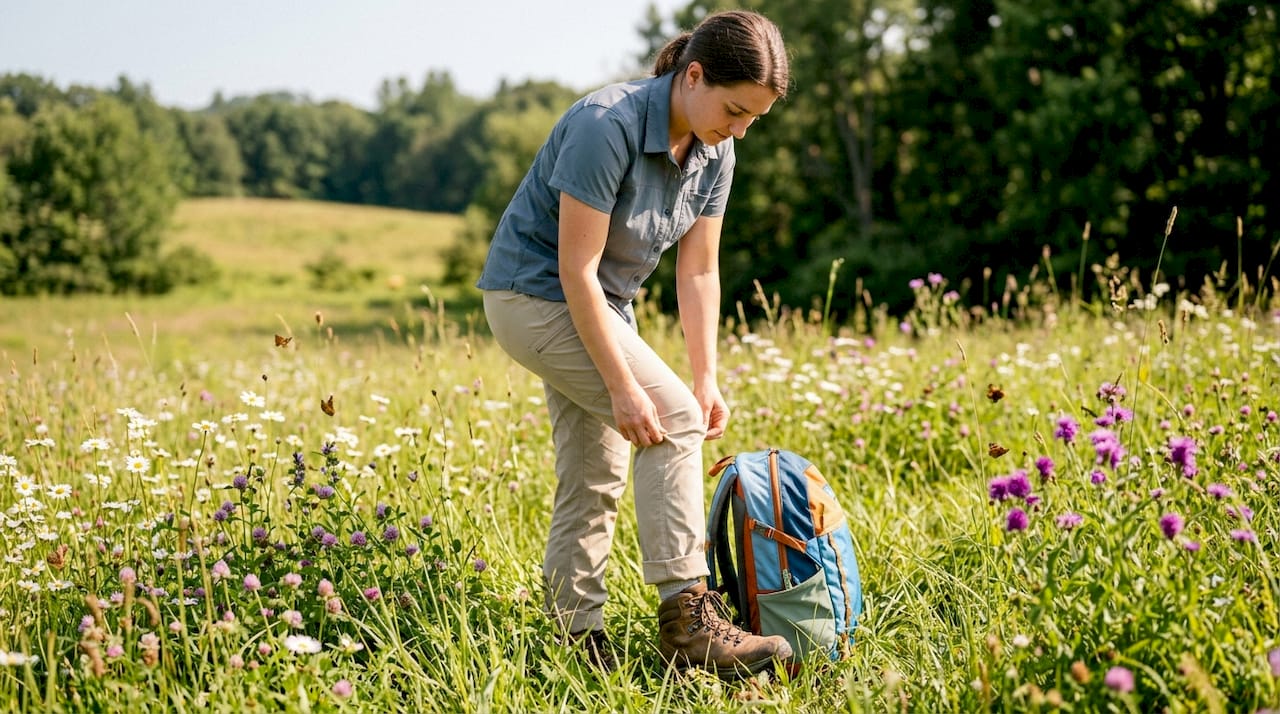
Spray permethrin on clothing outdoors, then let it dry fully for 2–4 hours before wearing. Once dry, it bonds to the fabric and lasts through about six washes. That is a full season of protection from a single treatment for most families.
Permethrin must never go directly on skin. Keep it away from cats, as it is toxic to them until fully dry on fabric. Treat clothing in a well-ventilated area and store treated gear separately until dry.
- Treat long-sleeved shirts, pants, and hats for full-body coverage
- Treat socks and shoes first, since ticks typically climb from the ground up
- Pre-treated clothing is available if you prefer a ready-to-wear option
- Combine treated clothing with skin-applied repellent for the strongest defense
Pro Tip: Treat a dedicated pair of outdoor socks and shoes at the start of each season. Ticks attach at the ankle first, so treated footwear stops them before they reach skin.
Experts recommend a layered protection approach that combines repellent on exposed skin, permethrin-treated clothing, and environmental controls. No single method covers every scenario.
3. What yard maintenance reduces mosquito populations?
Source reduction is the most effective long-term mosquito control strategy. Mosquito larvae can develop in as little as one tablespoon of standing water in roughly four days. That is the size of a bottle cap. Every container in your yard that holds water is a potential breeding site.
Walk your yard every week and drain or cover anything that collects water. Common problem spots include clogged gutters, flowerpot saucers, kiddie pools, bird baths, and tarps. Even a folded tarp or an upturned lid holds enough water to produce a new generation of mosquitoes.
| Breeding site | Fix |
|---|---|
| Clogged gutters | Clean monthly; install gutter guards |
| Flowerpot saucers | Empty weekly or remove entirely |
| Kiddie pools | Drain after each use |
| Bird baths | Change water every 3–4 days |
| Tarps and covers | Store flat or hang to dry |
Trim grass and brush regularly to reduce resting spots for adult mosquitoes. For ornamental ponds or water features you cannot drain, use Bacillus thuringiensis israelensis (Bti), a naturally occurring larvicide that kills mosquito larvae without harming fish, birds, or beneficial insects.
Outdoor fans on patios and decks also work well. Mosquitoes are weak fliers, and a steady breeze disrupts their ability to detect the carbon dioxide you exhale. A box fan pointed outward at a patio table is a chemical-free way to keep bites down during outdoor meals.
4. Which clothing and behavior choices help families avoid bug bites?
Clothing color and fit affect how many mosquitoes find you. Mosquitoes are most active at dawn and dusk, and dark colors attract them more than light ones. Wearing light-colored, loose-fitting, tightly woven fabrics reduces both attractiveness and skin exposure.
Schedule your outdoor activities accordingly. A backyard gathering that starts at 10:00 AM and wraps up by 5:00 PM avoids the two peak mosquito windows entirely. If you are outside at dusk, add a repellent layer and cover up.
- ✅ Wear long sleeves and pants during peak hours
- ✅ Choose light colors: white, khaki, and light gray
- ✅ Tuck pants into socks to block tick access at the ankle
- ✅ Skip scented lotions, perfumes, and hair products before outdoor time
- ✅ Use a fan near seating areas to disrupt mosquito flight
Scented personal care products attract mosquitoes. Unscented options before outdoor activities make a real difference, especially for kids who are playing close to the ground where mosquito activity is highest.
Tick prevention follows the same clothing logic. Light colors make ticks easier to spot. Tucked pants and treated footwear stop them before they reach skin. Do a full-body tick check after every outdoor session, paying attention to the scalp, behind the knees, and underarms.
5. What should families do after a bug bite?
Wash the bite site with soap and water right away. Apply a cold compress for 10 minutes to reduce swelling. For itch relief, 1% hydrocortisone cream or an oral antihistamine like diphenhydramine works well for most people.
Watch for signs of a serious reaction: spreading redness, warmth, fever, or a bullseye rash around a tick bite. These symptoms need medical attention. A bullseye rash is a classic early sign of Lyme disease and should never be ignored.
For tick removal, use fine-tipped tweezers. Grasp the tick as close to the skin as possible and pull steadily upward without twisting. Do not use heat, petroleum jelly, or nail polish. Ticks generally need 36–48 hours of attachment to transmit Lyme disease, so early removal is critical.
- Wash the bite with soap and water immediately
- Apply a cold compress to reduce swelling
- Use 1% hydrocortisone cream for itch relief
- Remove ticks with fine-tipped tweezers, pulling straight up
- Monitor the site for 30 days for rash or flu-like symptoms
Pro Tip: After outdoor time in tick-prone areas, toss clothes in the dryer on high heat for 10 minutes before washing. Heat kills ticks that washing alone does not.
Key takeaways
Effective home bug bite prevention requires layering repellents, treated clothing, and yard maintenance together, because no single method protects against every mosquito and tick exposure point.
| Point | Details |
|---|---|
| Use EPA-registered repellents | DEET, Picaridin, and PMD provide multi-hour protection that natural oils cannot match. |
| Apply products in the right order | Sunscreen goes on first, then insect repellent, to preserve the effectiveness of both. |
| Treat clothing with permethrin | One application lasts about six washes and creates a passive protection layer. |
| Eliminate standing water weekly | Mosquito larvae develop in as little as one tablespoon of water in roughly four days. |
| Adjust timing and clothing choices | Avoid dawn and dusk outdoors; wear light-colored, loose-fitting, tightly woven fabrics. |
What I’ve learned about making bug prevention actually stick
Most families I talk to rely on one thing: a can of spray they grab on the way out the door. That approach works until it doesn’t. The moment the repellent wears off, or someone forgets to reapply, the bites start.
The shift that makes the biggest difference is treating prevention as a system, not a product. Permethrin-treated clothing works while you are distracted. A weekly yard check removes breeding sites before mosquitoes hatch. A fan on the patio cuts bites without anyone thinking about it. These are passive layers that protect your family even when no one is paying attention.
Citronella candles are the most common misconception I see. Families light them and feel protected. The reality is that citronella provides only short-term, unreliable coverage in open outdoor spaces. PMD-based products are a far more effective plant-derived option if you want something closer to a natural repellent with real staying power.
Consistency matters more than any single product choice. A family that does a five-minute yard check every week, keeps treated clothing ready, and applies repellent before heading outside will have a dramatically better summer than one that reacts only after bites happen. Build the habit, and the backyard becomes a place where laughter fills the air, not swatting.
— Jeffi
Natural skin care and repellent products from Jeffi
Protecting your family outdoors does not have to mean harsh chemicals or greasy sprays. Jeffi offers Non-GMO Project verified, all-natural skin care and bug bite relief products formulated for families who want effective, gentle options.

From natural mosquito repellents to soothing hand and body lotions, sugar scrubs, and whipped body butters, Jeffi’s line is built for skin that spends time outside. The whipped body butters are especially popular after outdoor days, helping restore moisture after sun and repellent exposure. Every product is made with ingredients you can feel good about putting on your family’s skin. Visit Jeffi to find the right products for your outdoor routine.
FAQ
What is the most effective insect repellent for backyard use?
EPA-registered repellents containing DEET (20–30%), Picaridin (20%), or PMD (30%) provide the most reliable multi-hour protection for backyard use. Natural essential oil products typically protect for less than one hour and are not EPA-registered.
How often should I reapply insect repellent outdoors?
Reapply repellent every 4–8 hours, adjusting for heat, sweat, and water exposure. Swimming or heavy sweating shortens protection time significantly, so reapply sooner after water activities.
How do I get rid of mosquito breeding sites in my yard?
Drain or cover any container that holds standing water, including gutters, flowerpot saucers, bird baths, and kiddie pools. Mosquito larvae need only one tablespoon of water to develop, so inspect your yard every week.
Is permethrin-treated clothing safe for kids?
Permethrin-treated clothing is safe for children once it is fully dry. Never apply permethrin directly to skin, and keep treated clothing away from cats until completely dry. Pre-treated clothing is a convenient and safe option for active kids.
What should I do if I find a tick after being outside?
Use fine-tipped tweezers to grasp the tick close to the skin and pull steadily upward without twisting. Monitor the bite site for 30 days for a bullseye rash or flu-like symptoms, and seek medical attention if either appears.